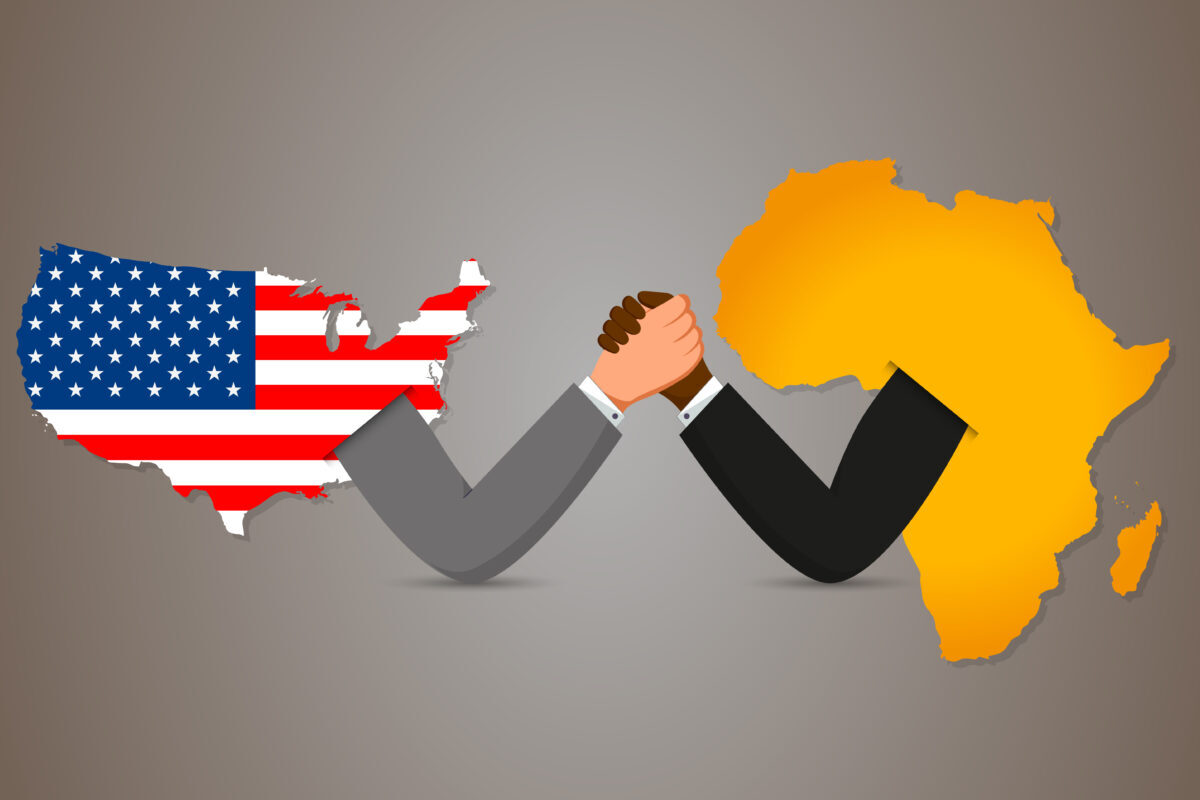
US-Africa relations are entering a more strategic phase in 2026, shaped by geopolitics, capital flows, and security priorities.
With competition from China, Russia, and Gulf states intensifying, Washington is recalibrating its economic and diplomatic engagement across the continent.
For African economies, the challenge is turning global attention into sustainable investment, infrastructure development, and long-term partnerships.
US-Africa Relations Enter Strategic Phase
According to Invest Africa's event briefing on the US-Africa Outlook 2026, Washington's approach now blends diplomacy, security cooperation, and investment mobilisation, reflecting Africa's growing importance in global supply chains, energy markets, and political alliances.
As China, Russia, and Gulf states expand their footprint, the US is repositioning itself to protect economic interests, secure partnerships, and strengthen influence across key African markets.
Why Africa Matters More Now
Africa's strategic value has increased due to:
- Critical minerals for clean-energy supply chains
- Expanding consumer markets
- Energy and infrastructure investment needs
- Geopolitical alignment in global forums
US policymakers increasingly view Africa as essential to economic competitiveness, climate goals, and global security.
At the same time, African governments are seeking diversified partnerships to finance infrastructure, support industrialisation, and reduce reliance on any single external power.
Key Drivers of US-Africa Engagement
| Driver | Strategic Importance |
|---|---|
| Critical minerals | Energy transition supply |
| Energy security | LNG, renewables |
| Trade & investment | Market access |
| Geopolitics | Global influence |
| Security | Regional stability |
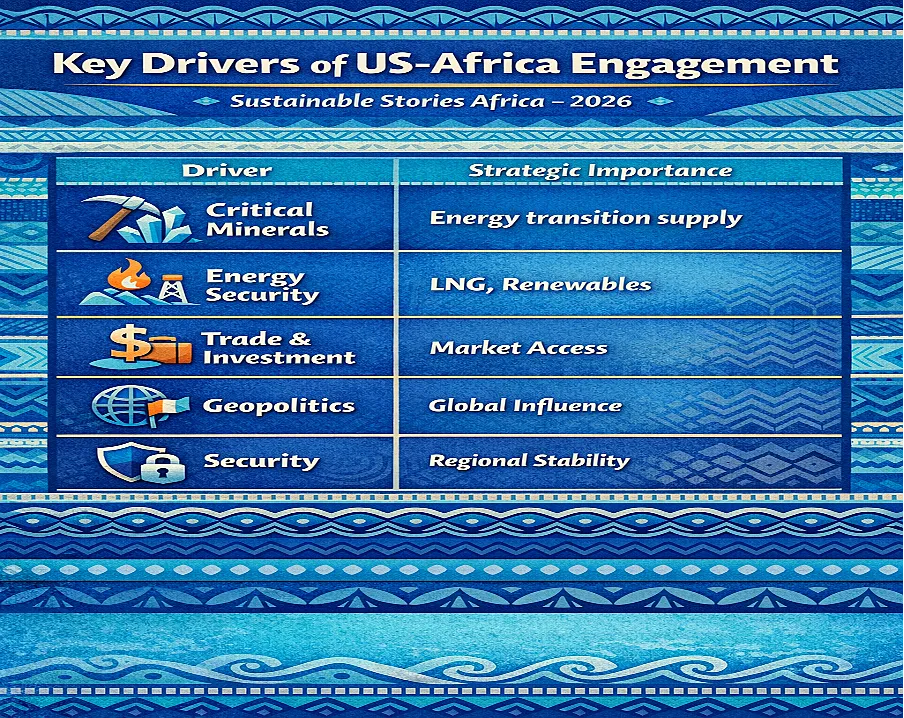
This shift reflects Africa's growing role in shaping global economic and political outcomes.
Capital and Investment Take Centre Stage
Investment is now a central pillar of US-Africa relations.
Washington is promoting private-sector engagement through:
- Development finance institutions
- Trade facilitation tools
- Infrastructure partnerships
- Energy and digital-economy initiatives
US investors are showing increasing interest in:
- Renewable energy
- Critical minerals
- Agribusiness
- Technology and fintech
- Logistics and infrastructure
However, Africa continues to face challenges in attracting large-scale capital, including regulatory uncertainty, currency risk, and infrastructure gaps.
Priority Investment Sectors
| Sector | Opportunity |
|---|---|
| Renewable energy | Energy transition |
| Critical minerals | Supply security |
| Digital economy | Growth and inclusion |
| Agribusiness | Food security |
| Infrastructure | Trade efficiency |
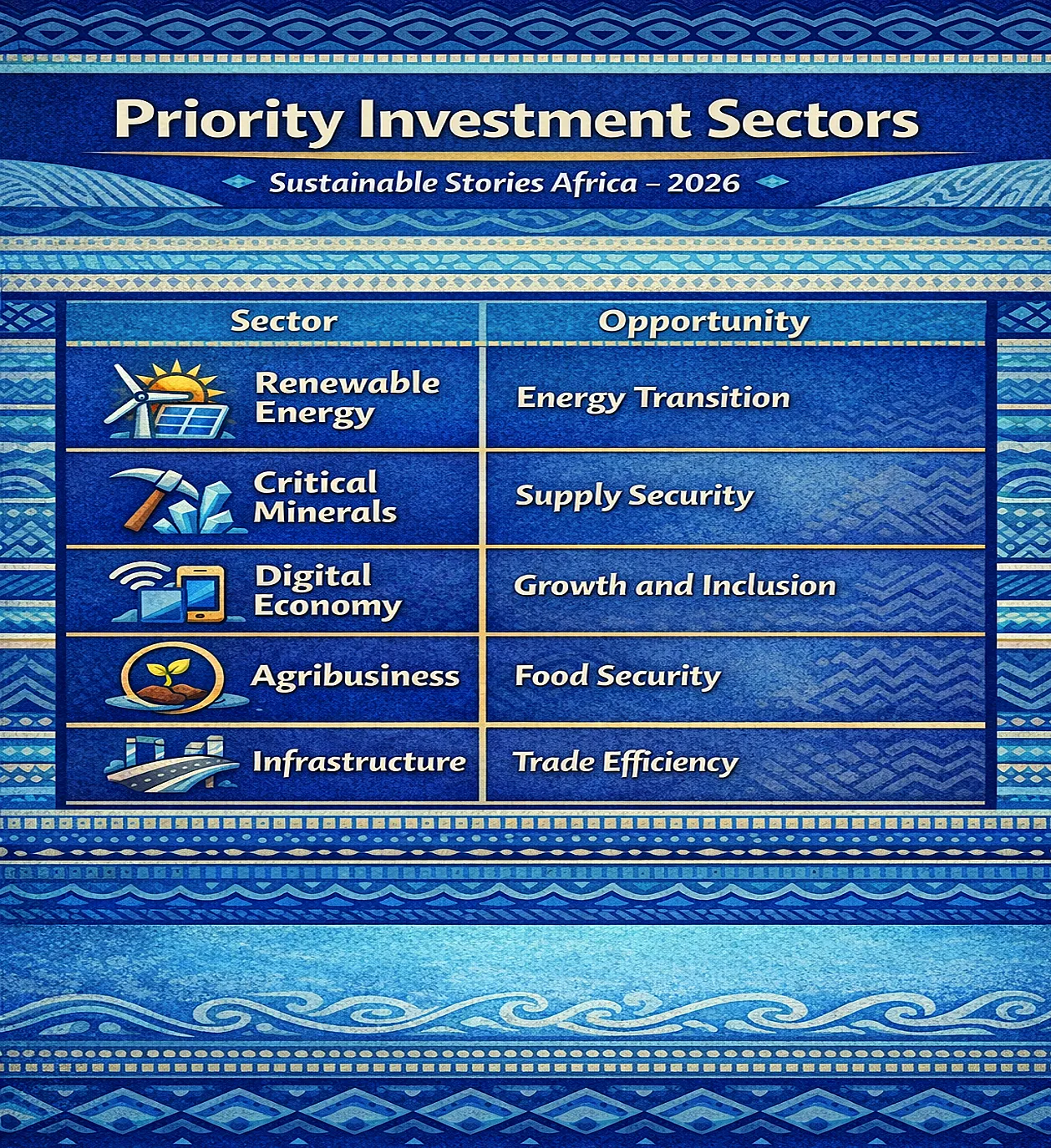
For African economies, converting geopolitical interest into productive investment remains the key test.
Geopolitics Shapes Economic Strategy
Geopolitical competition is increasingly shaping economic engagement.
The US is seeking to:
- Counter China's infrastructure dominance
- Respond to Russia's security footprint
- Balance Gulf-state capital flows
- Strengthen democratic alliances
This has translated into renewed diplomatic engagement, security cooperation, and economic dialogues with African leaders.
For African governments, this competition creates leverage but also risk.
Strategic partnerships must be managed carefully to avoid debt stress, political dependency, or misaligned development priorities.
The Invest Africa briefing highlights the importance of clear national strategies to ensure foreign engagement supports long-term economic goals.
What Africa Can Gain
Stronger US-Africa engagement could support:
- Infrastructure financing
- Energy-transition investment
- Trade diversification
- Skills and technology transfer
- Private-sector growth
If structured effectively, partnerships can accelerate industrial development, improve energy access, and strengthen regional integration.
However, without strong governance and project pipelines, geopolitical interest may translate into missed opportunities rather than transformative growth.
PATH FORWARD – Turning Strategy into Sustainable Partnerships
US-Africa relations in 2026 reflect a shift from symbolic diplomacy to strategic engagement.
Capital flows, geopolitical competition, and economic interests are reshaping Washington's engagements with African markets.
For Africa, the priority is converting global attention into sustainable investment, resilient infrastructure, and long-term economic partnerships that support inclusive growth and regional stability.