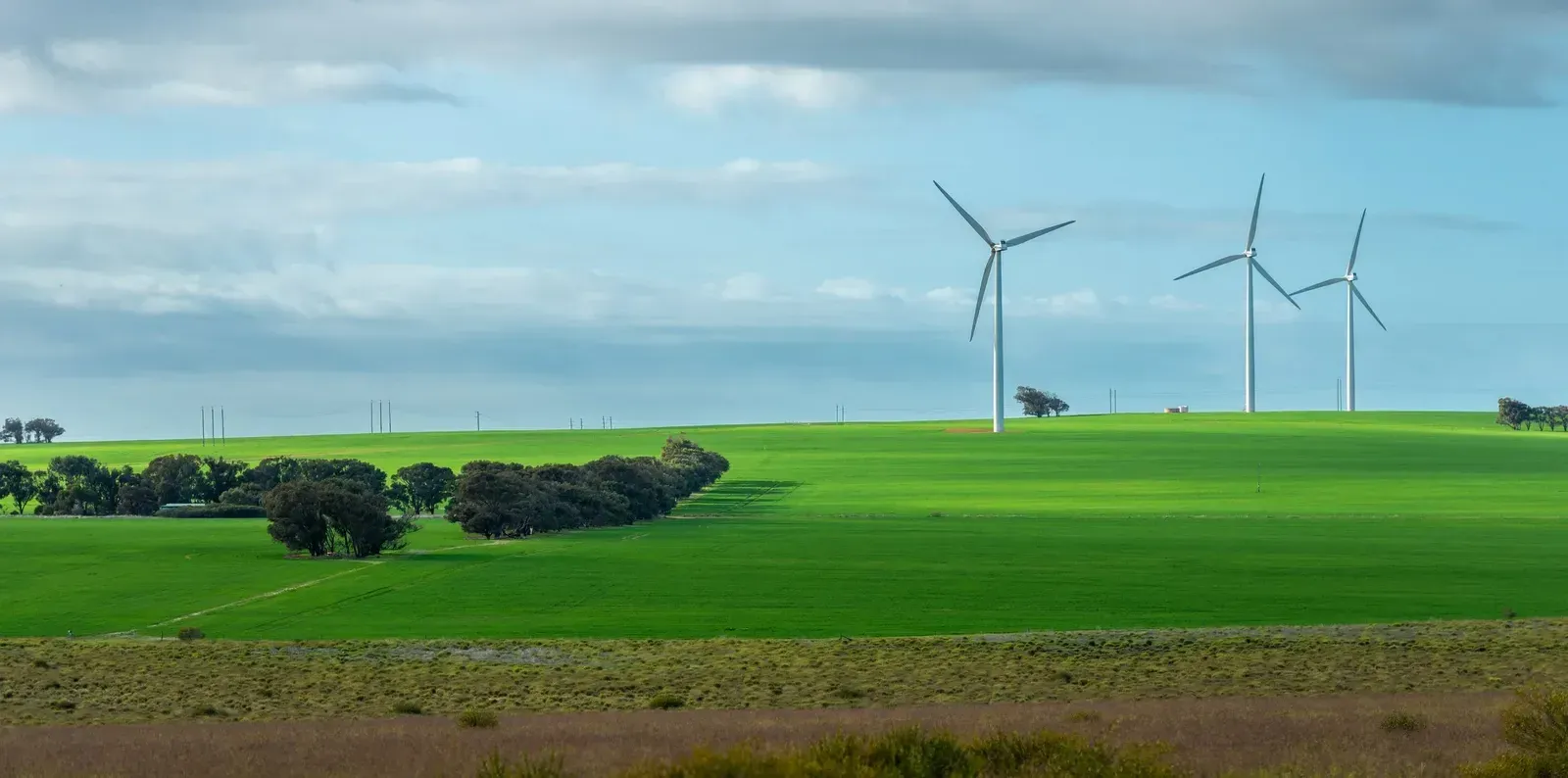
Africa's energy transition is accelerating; however, without justice, it risks repeating the extractive mistakes of the past. New insights from IRENA show that large-scale solar and wind projects can either unlock shared prosperity or deepen local marginalisation.
Energy Transition Without Communities Fails
Africa stands at the intersection of two global imperatives: accelerating the clean energy transition while closing deep development gaps. Renewable energy is central to both. However, as the International Renewable Energy Agency (IRENA) makes clear in its 2025 report on Just Energy Transitions for Communities, megawatts alone will not deliver justice, resilience, or prosperity.
Across Sub-Saharan Africa, large-scale wind and solar projects are expanding rapidly, often backed by international finance, climate commitments, and national reform agendas.
But many are landing in rural, marginalised communities with weak land rights, limited political voice, and fragile livelihoods. Without careful design, these projects risk becoming the next chapter of uneven development.
IRENA's warning is stark: a transition that decarbonises energy systems, but sidelines people will fail socially, even if it succeeds technically. A just energy transition must be people-centred, locally grounded, and development-driven.
Africa's Clean Energy Paradox Deepens
Africa contributes just 2.7% of cumulative global emissions, yet hosts 83% of the world's electricity-poor population. The continent must connect 75 million people annually to electricity by 2030 to meet SDG 7, while transitioning 124 million people each year to clean cooking solutions.
At the same time, Africa has extraordinary renewable potential, estimated to be 7,900 GW for solar and 461 GW for wind; however, it attracts only 1.5% of global renewable investment.
Worse still, 75% of investment between 2010 and 2020 flowed to just four countries with relatively higher electricity access: Egypt, Kenya, Morocco, and South Africa.
This imbalance reveals the dilemma: Africa is central to the global energy transition, yet communities closest to renewable resources often remain energy-poor, excluded from ownership, and marginalised from decision-making.
When Projects Ignore People, Resistance Follows
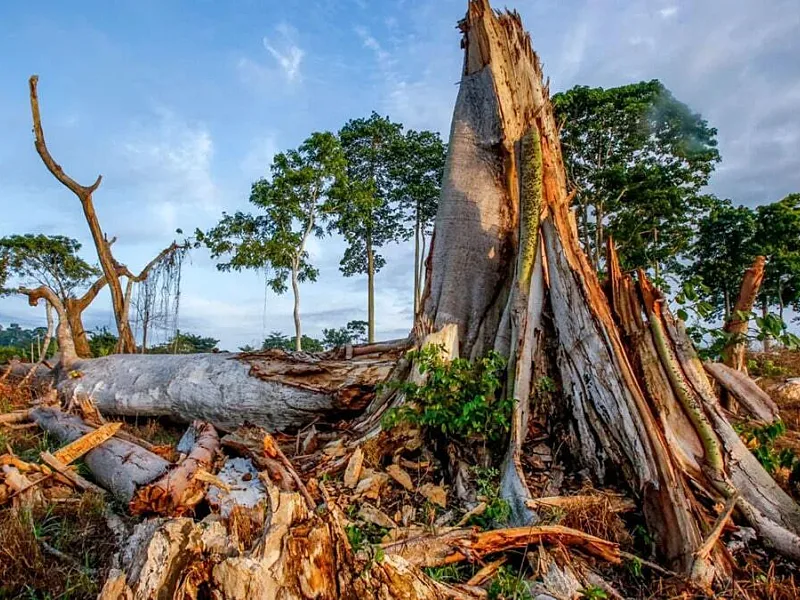
As has been the case with extractive minerals across Africa over several decades, the IRENA report documents how land-intensive renewable projects, especially utility-scale solar, are increasingly competing with agriculture, grazing, and communal land uses.
Weak land tenure systems, limited consultation, and rushed project timelines amplify risks of displacement, livelihood loss, and social conflict.
The report cites multiple stalled or failed projects, including Kenya's Kinangop wind project, where community disputes depleted funding and halted construction. These failures are not anomalies, they are warnings.
Structural Risks In Africa's Renewable Rollout
| Risk Area | Community Impact |
|---|---|
| Land acquisition | Displacement, livelihood loss |
| Weak consultation | Social conflict, project delays |
| Limited local jobs | Perceived exclusion |
| External ownership | Loss of legitimacy |
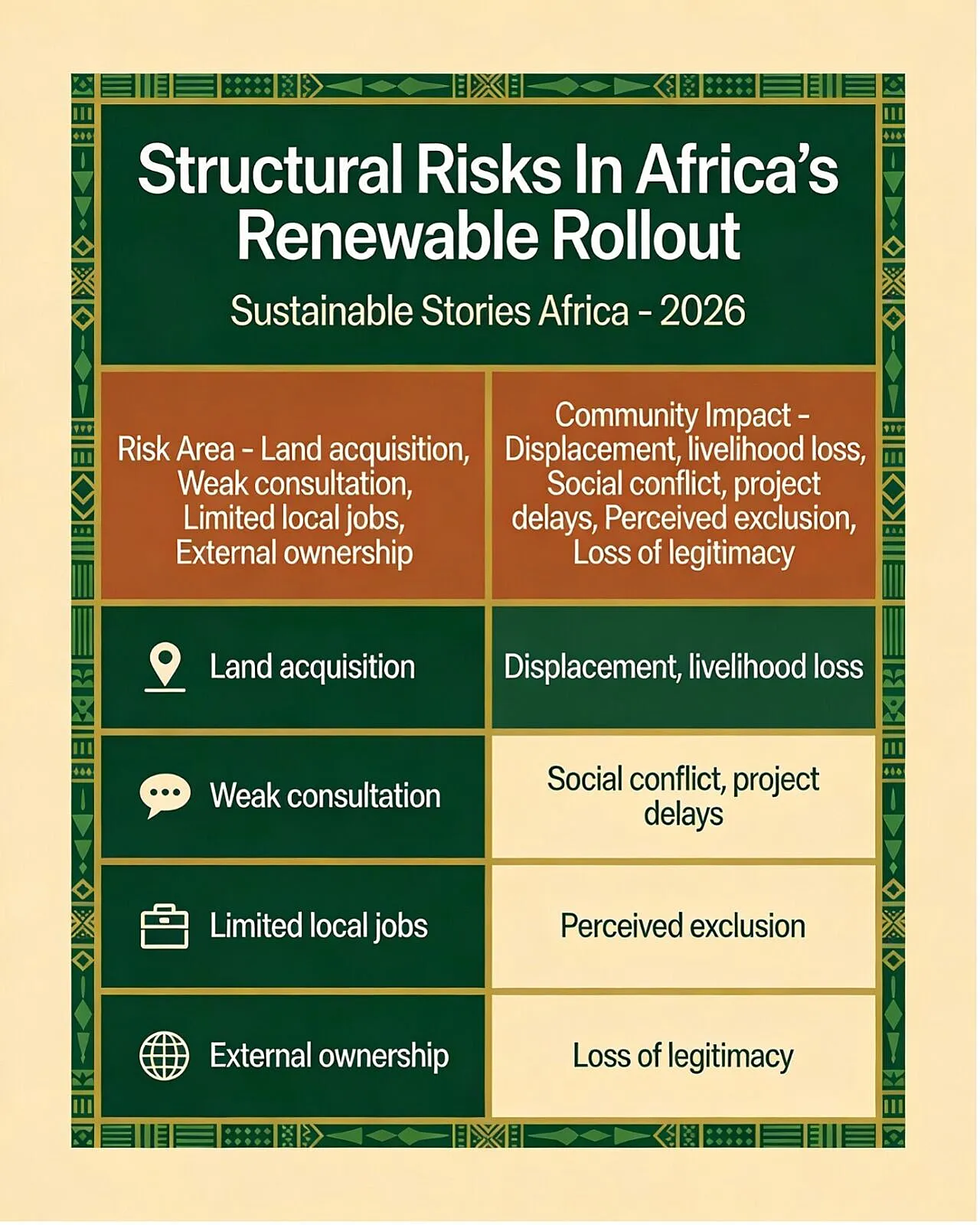
Without early and meaningful engagement, renewable energy risks mirroring the extractive industries it seeks to replace.
What A Just Energy Transition Delivers
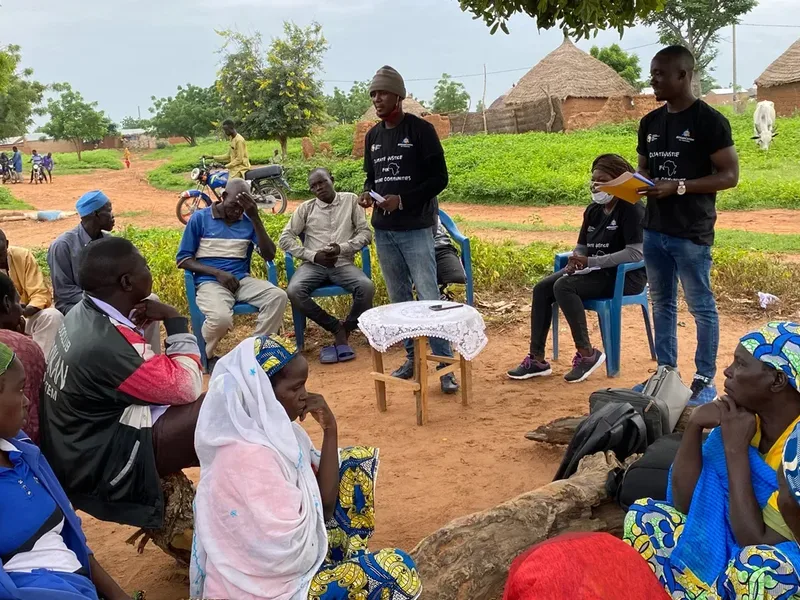
When done right, IRENA shows, renewable energy projects can become engines of inclusive development. Across South Africa, Kenya, Namibia, Rwanda, Senegal, Zambia, and Cape Verde, projects that embedded justice principles delivered tangible benefits.
These include:
- Community ownership stakes (e.g., Kenya's Kipeto Wind Farm, Namibia's Lüderitz Wind Farm)
- Local employment and skills training (over 350 trained workers in Rwanda's ASYV solar project)
- Community trusts and revenue sharing (South Africa's REIPPPP-linked trusts)
- Social investments in schools, clinics, water, and enterprise development
Justice Pathways In Renewable Projects
| Mechanism | Development Outcome |
|---|---|
| Community shareholding | Long-term income streams |
| Local hiring & training | Jobs, skills transfer |
| Community trusts | Local development planning |
| Inclusive siting | Social licence to operate |
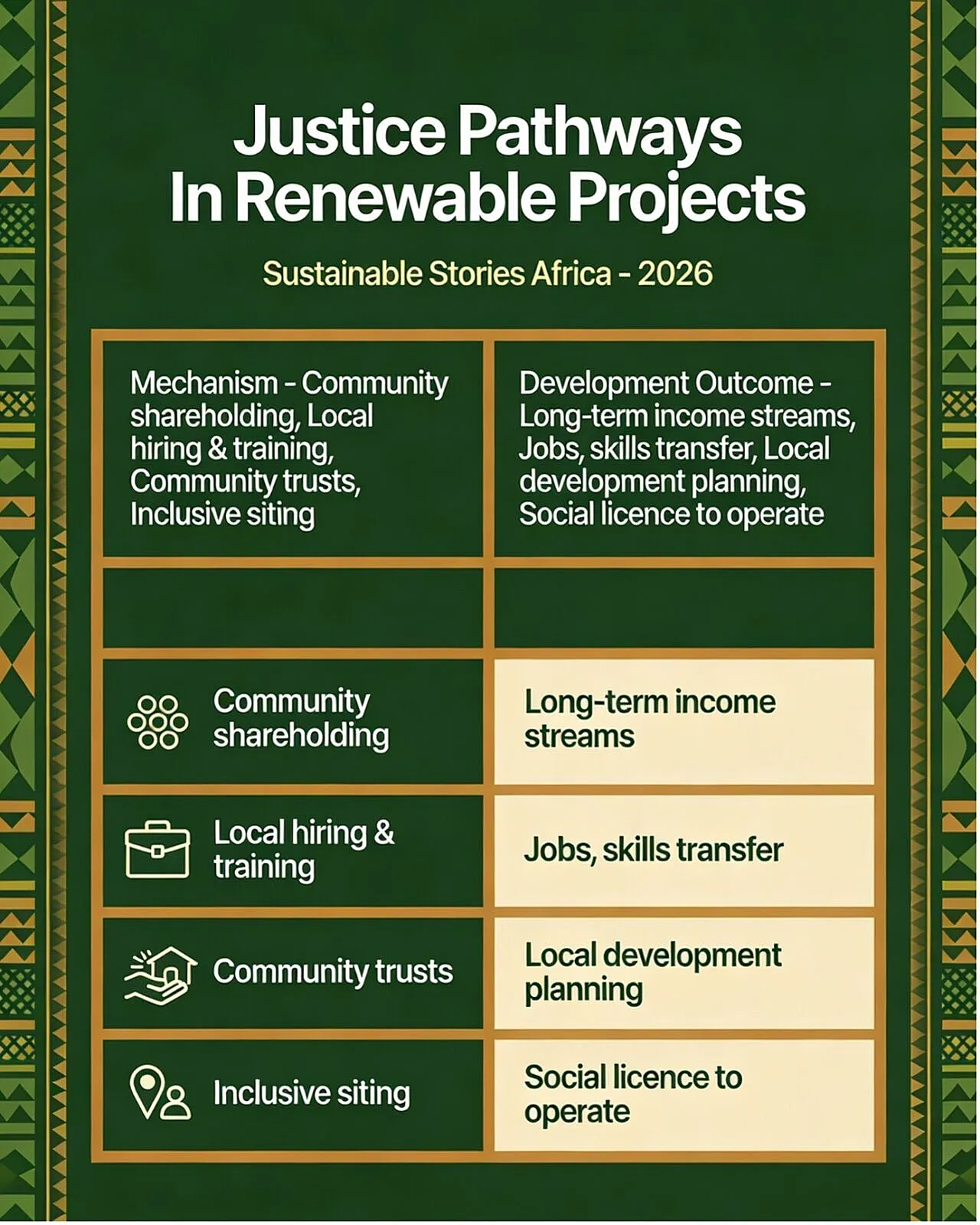
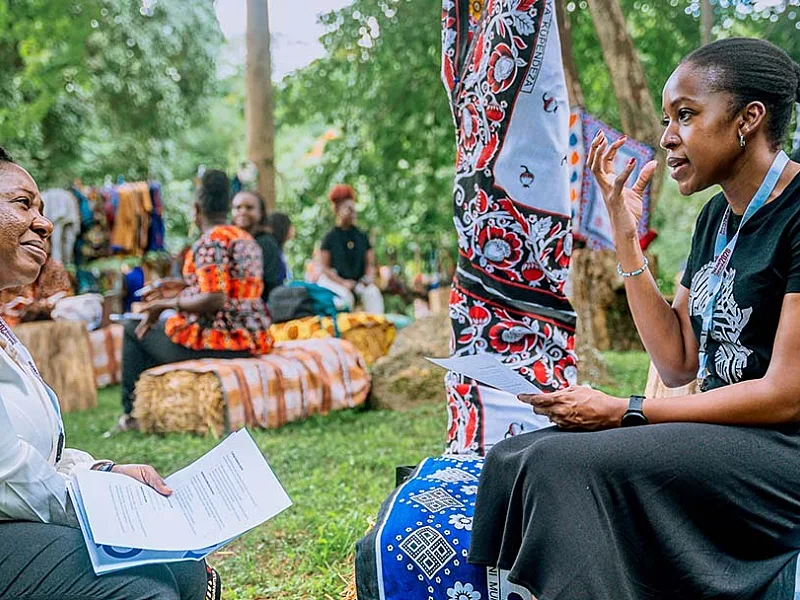
These projects earned trust because communities were treated not as stakeholders to manage, but as partners to empower.
Policy Must Move Beyond Compliance
IRENA argues that compliance-based approaches, such as environmental and social impact assessments conducted late in project cycles, are insufficient. Instead, social performance must shape project design from inception, guided by local data, participation, and human rights principles.
Governments and financiers must:
- Mandate early community participation
- Require benefit-sharing and ownership models
- Strengthen land governance and tenure clarity
- Align energy planning with local development priorities
- Fund capacity-building for communities, not just developers
The report highlights South Africa's REIPPPP as a global benchmark, where economic development criteria once carried up to 30% weighting in bid evaluations, driving jobs, ownership, and enterprise development. The recent removal of these requirements risks reversing hard-won trust.
PATH FORWARD – Justice Anchors Africa's Energy Future
Africa's energy transition will be judged not by capacity installed, but by lives improved. IRENA's evidence is clear: projects that embed justice secure legitimacy, resilience, and durability.
A just transition aligns climate goals with jobs, ownership, and dignity. Without communities, Africa's renewable future will stall. With them, it can transform economies and change histories.