
Demand-side climate solutions promise deep emission cuts of up to 80% in major sectors, while boosting everyday well-being. From mobility and food to buildings, people's everyday choices matter far more than policy alone.
As global attention shifts from supply to demand, Africa and the world stand at an intersection. Can communities, businesses, and governments harness "avoid, shift, improve" strategies for lasting prosperity and rapid mitigation? This feature examines evidence, impacts, and actionable next steps.
Everyday Choices Drive Africa's Climate Shift
Africa's climate future depends not only on energy supply, but on millions of daily decisions. Groundbreaking research now shows that demand-side choices - what we eat, how we travel, where we live - can cut emissions by up to 80% in key sectors, often enhancing well-being.
Demand-side solutions are more than eco-tweaks. They bridge behaviour, infrastructure, and technology, enabling communities to avoid carbon-intensive activities, shift to greener options, and improve efficiency. Evidence suggests such measures deliver 79% positive and just 3% negative impacts on well-being.
For Nigeria, Ghana, Kenya, and emerging African economies, these findings signal opportunity. Rapid urbanisation, social change, and youthful dynamism could fast-track a climate-resilient, prosperous future if the right demand-side options win support.
Demand-Side Climate Solutions – Why Choices Matter Now
While policymakers focus on supply, such as renewables, grid upgrades, one of the biggest mitigation strategies may lie with citizens.
Avoid, shift, and improve (ASI) strategies enable ordinary people and businesses to reshape demand.
Infographic: Potential Sectoral Emission Reductions Using Demand-Side Measures
| Sector | ASI Mitigation Potential | Example Demand-Side Option |
|---|---|---|
| Mobility | 40–72% | Active travel, EVs, shared rides |
| Buildings | 40–70% | Efficient design, retrofits |
| Food | 40–74% | Plant-based diets, local sourcing |
| Cities | 40–65% | Mixed land use, accessible transit |
Avoid, Shift, Improve – Decoding the ASI Framework
Avoid: Reduce overall demand. Example—City planning to minimise car journeys.
Shift: Move to greener alternatives. Example—Swapping personal driving for shared electric rides.
Improve: Boost efficiency. Example - Upgrading insulation or appliances.
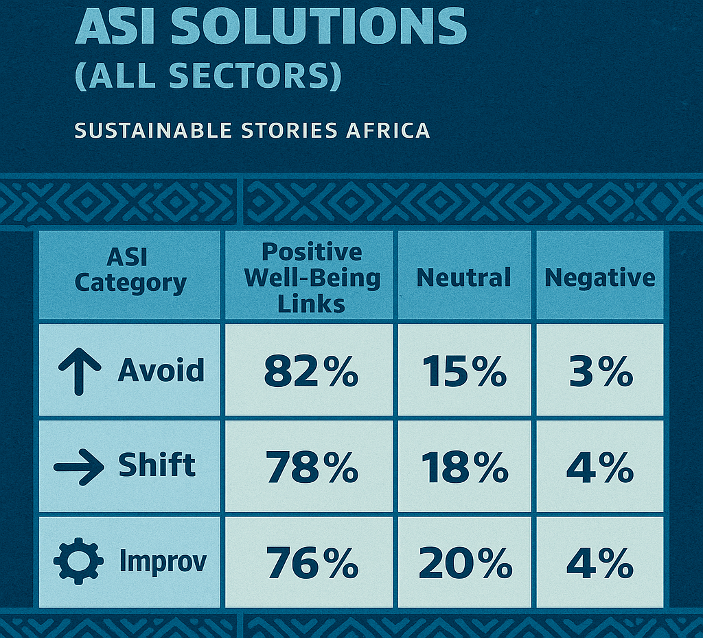
Data Table: Well-Being Impacts of ASI Solutions (All Sectors)
| ASI Category | Positive Well-Being Links | Neutral | Negative |
|---|---|---|---|
| Avoid | 82% | 15% | 3% |
| Shift | 78% | 18% | 4% |
| Improve | 76% | 20% | 4% |
Unlocking Prosperity – Why Communities Should Embrace ASI
Success goes beyond lowering carbon. Africa needs solutions that build health, happiness, and equity.
Cycling and walking (active mobility), green buildings, and "prosumers" who generate renewables consistently deliver broad well-being gains with ZERO negative outcomes.
Top Demand-Side Solutions With Maximum Synergy for Well-Being
- Active mobility
- Efficient, comfortable buildings
- Community renewables
- Local food with fewer emissions
Pathways for Policymakers, Businesses, Citizens
- Expand infrastructure for walking, cycling, and shared mobility.
- Design and retrofit energy-smart buildings.
- Incentivise plant-based and locally sourced food.
- Drive participation in renewable generation.
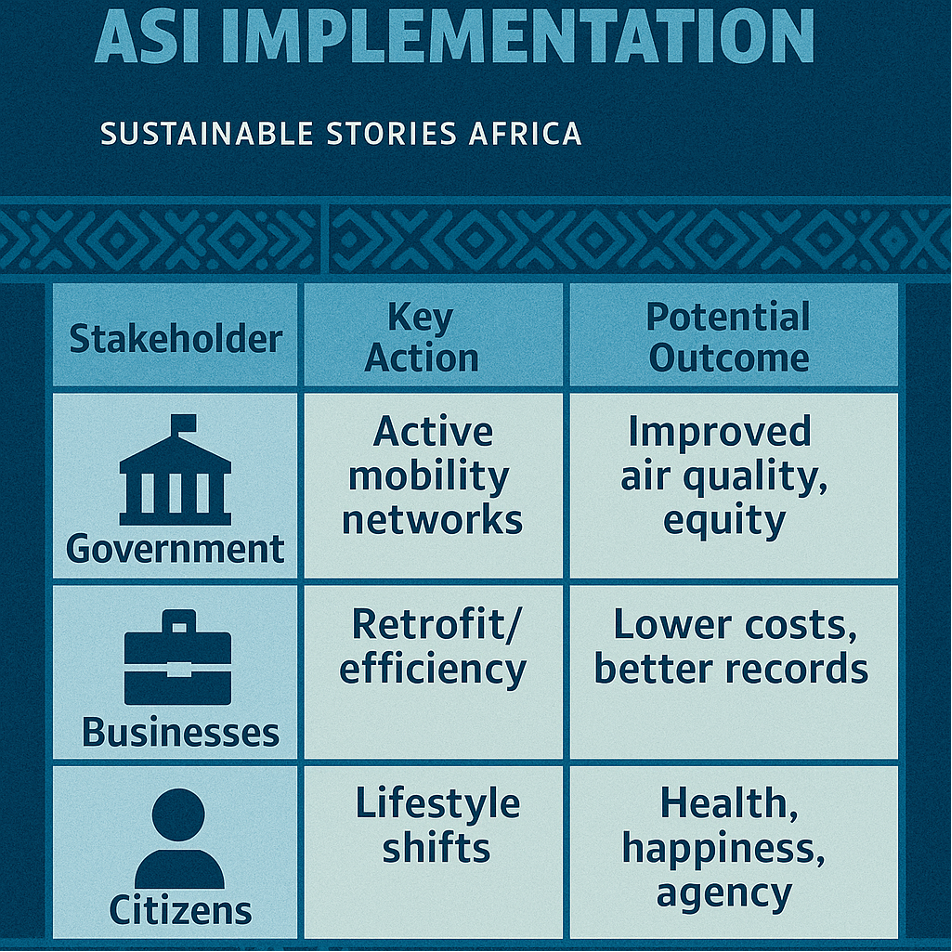
Data Table: Steps for Rapid ASI Implementation
| Stakeholder | Key Action | Potential Outcome |
|---|---|---|
| Government | Active mobility networks | Improved air quality, equity |
| Businesses | Retrofit/efficiency | Lower costs, better records |
| Citizens | Lifestyle shifts | Health, happiness, agency |
Path Forward – Africa's Opportunity
Africa's youth, cities, and culture are primed for ASI solutions.
By shifting focus to choices and infrastructures that "avoid, shift, improve," countries can leapfrog supply-side lock-in and unlock robust prosperity.
Aligning well-being goals with mitigation means that climate solutions are not just effective, they are desirable. A new future is possible, built from the ground up by everyday actions.