Somalia's energy transition is often discussed through the lens of fragility and aid dependence. A new IRENA country assessment reframes the narrative.
With some of Africa's highest renewable energy potential but one of the world's weakest power systems, Somalia sits at a crossroads.
The evidence shows that decentralised renewables are not just a climate option; they are the country's fastest route to stability, inclusion, and economic rebuilding.
Powering Stability in a Fragile State
Somalia's energy story is unlike that of most emerging economies. Decades of conflict dismantled national power infrastructure, leaving electricity supply fragmented, privately run, and among the most expensive in Africa. However, within this fragility lies an unexpected advantage: Somalia is not locked into fossil-heavy legacy systems.
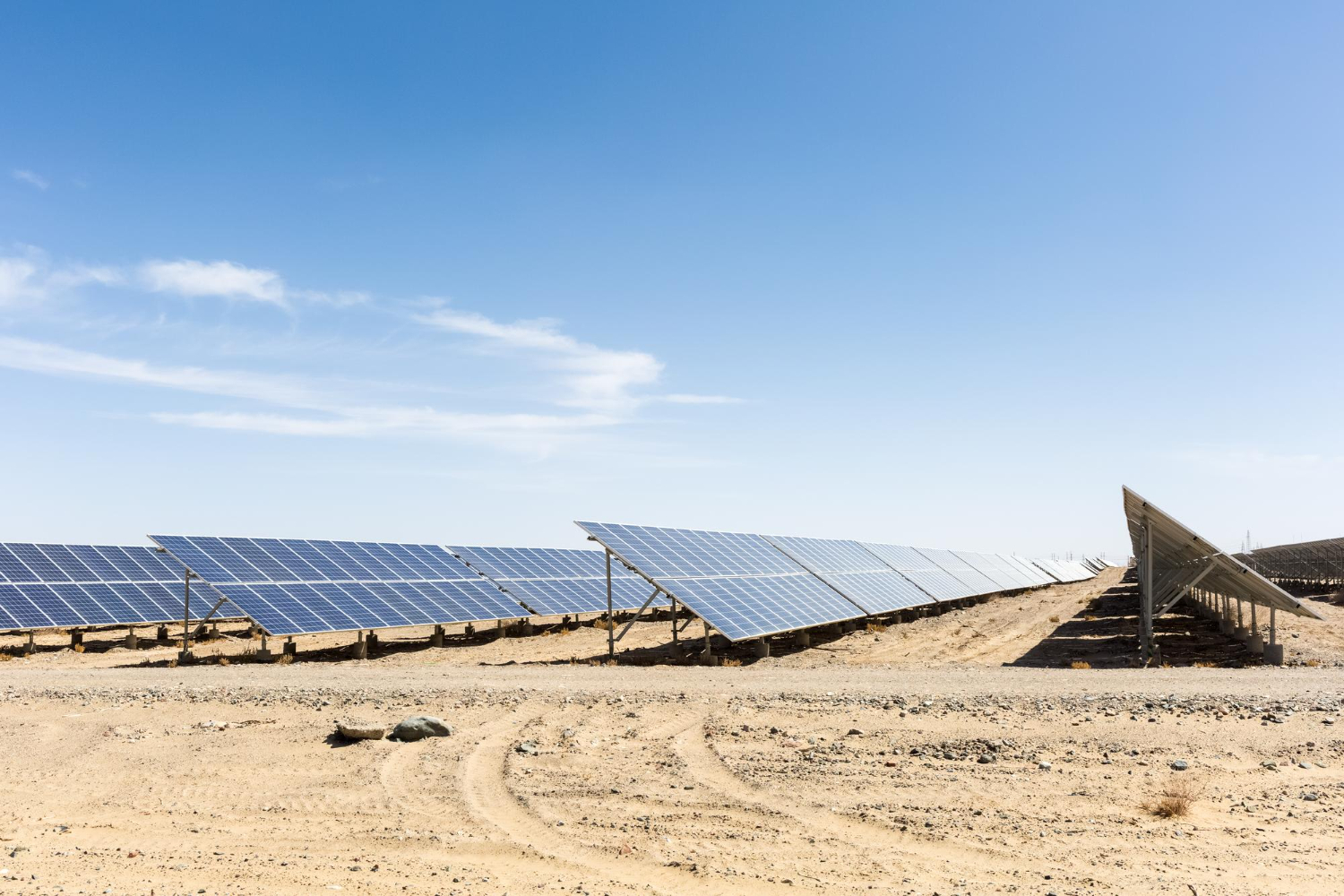
According to the International Renewable Energy Agency (IRENA) Country Energy Transition Assessment for Somalia (2025), the country possesses abundant solar and wind resources capable of meeting future demand at lower cost and higher resilience than conventional generation pathways. Today's challenge is not potential, but coordination, governance, and finance.
This SSA feature examines how Somalia's energy transition is evolving, why decentralised renewables have become a development necessity rather than a climate luxury, and what must change for energy to move from survival infrastructure to an engine of stability, livelihoods, and long-term growth.
An Energy System Built on Survival
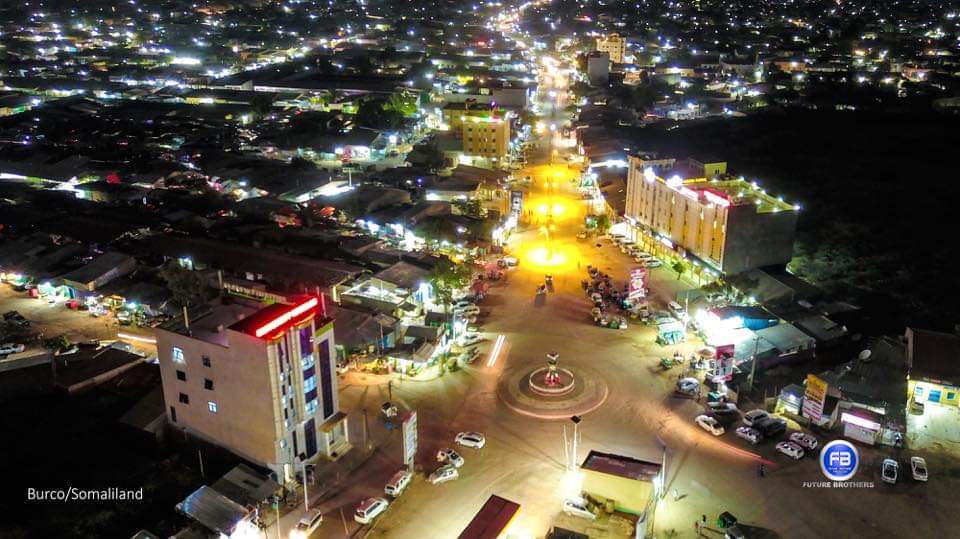
Somalia's electricity sector operates under extreme constraints. Power generation is dominated by small, privately operated diesel mini grids, serving urban pockets with limited coverage. Electricity tariffs remain among the highest globally, while access outside major cities is severely constrained.
IRENA's assessment highlights a defining paradox: Somalia's weakest institutions coexist with some of Africa's strongest renewable energy endowments, particularly solar irradiation and wind corridors along the coast.
This disconnect matters. Energy access is directly linked to health, water supply, education, digital connectivity, and enterprise development. In Somalia's case, the energy transition is inseparable from state-building itself.
What the Data Reveals About Somalia's Energy Reality
IRENA's analysis paints a clear picture of a system shaped by necessity rather than planning.
Somalia's Power Sector at a Glance
| Indicator | Current Reality |
|---|---|
| Dominant generation | Diesel-based private mini-grids |
| Electricity access | Low, uneven, urban-biased |
| Tariff levels | Among the highest in Africa |
| Grid integration | Fragmented, non-national |
| Renewable potential | Very high (solar, wind) |
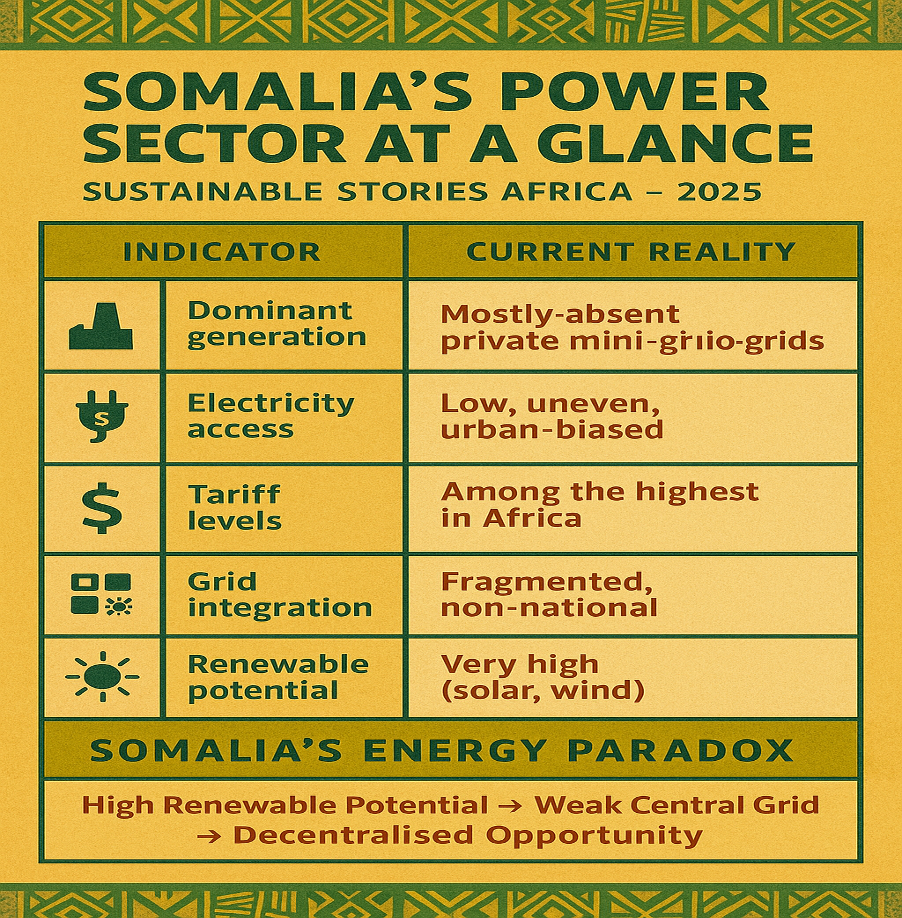
The absence of a unified national grid has driven innovation by default. Private operators stepped into the vacuum, providing essential services but at high cost and without long-term optimisation.
IRENA identifies decentralised renewable energy, especially solar PV, hybrid mini-grids, and wind-solar systems, as the most cost-effective pathway to expand access, reduce tariffs, and improve resilience.
Why Decentralised Renewables Are the Logical Choice
Unlike many countries transitioning away from entrenched fossil systems, Somalia's starting point offers flexibility. IRENA argues that leapfrogging directly into decentralised renewable systems avoids costly grid lock-in while delivering faster social returns.
Key advantages include:
- Lower generation costs over time compared to diesel
- Modularity, allowing systems to scale with demand
- Improved resilience in fragile and climate-exposed settings
- Reduced fuel import dependence
Yet the report is clear: technology alone will not deliver transformation. Regulatory fragmentation, limited public planning capacity, and weak financing frameworks continue to constrain scale.
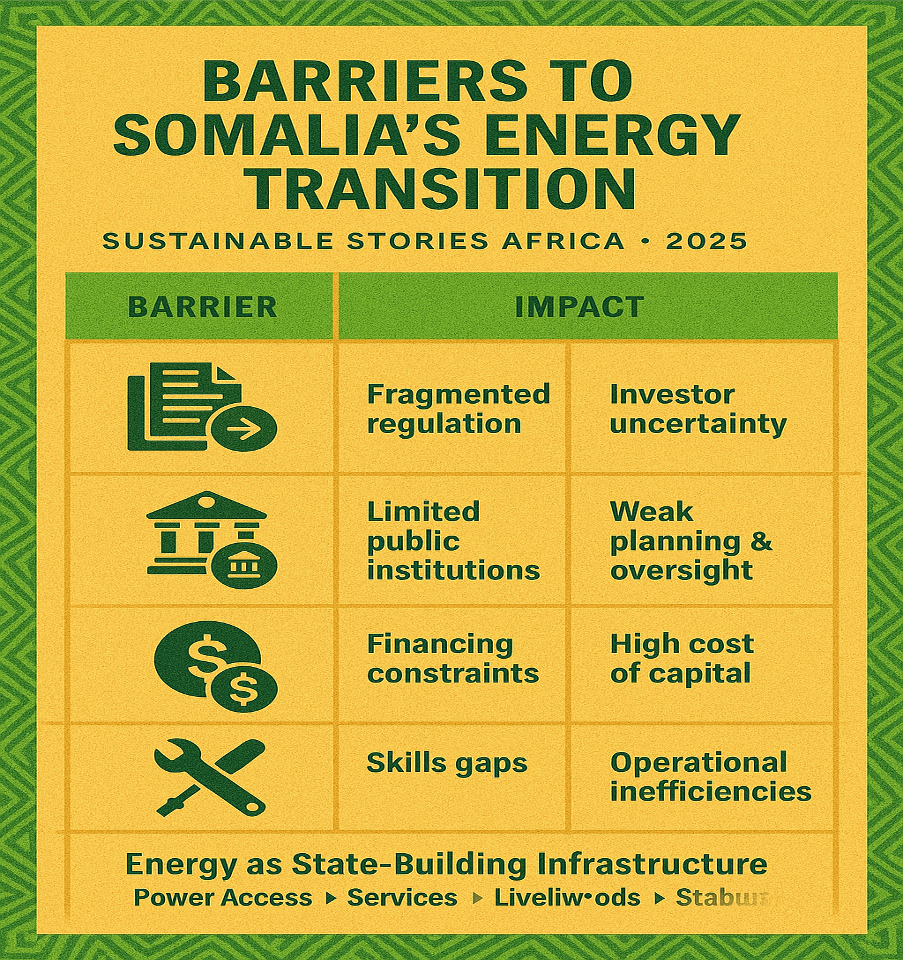
Barriers to Somalia's Energy Transition
| Barrier | Impact |
|---|---|
| Fragmented regulation | Investor uncertainty |
| Limited public institutions | Weak planning & oversight |
| Financing constraints | High cost of capital |
| Skills gaps | Operational inefficiencies |
From Emergency Power to Economic Infrastructure
IRENA's assessment outlines a practical pathway forward. One that treats energy not as a humanitarian input, but as economic infrastructure.
Priority actions include:
- Establishing coherent national and sub-national energy governance
- Harmonising standards across private operators
- Creating risk-mitigation tools to crowd-in private and diaspora capital
- Integrating renewables with productive uses: water, telecoms, cold chains, SMEs
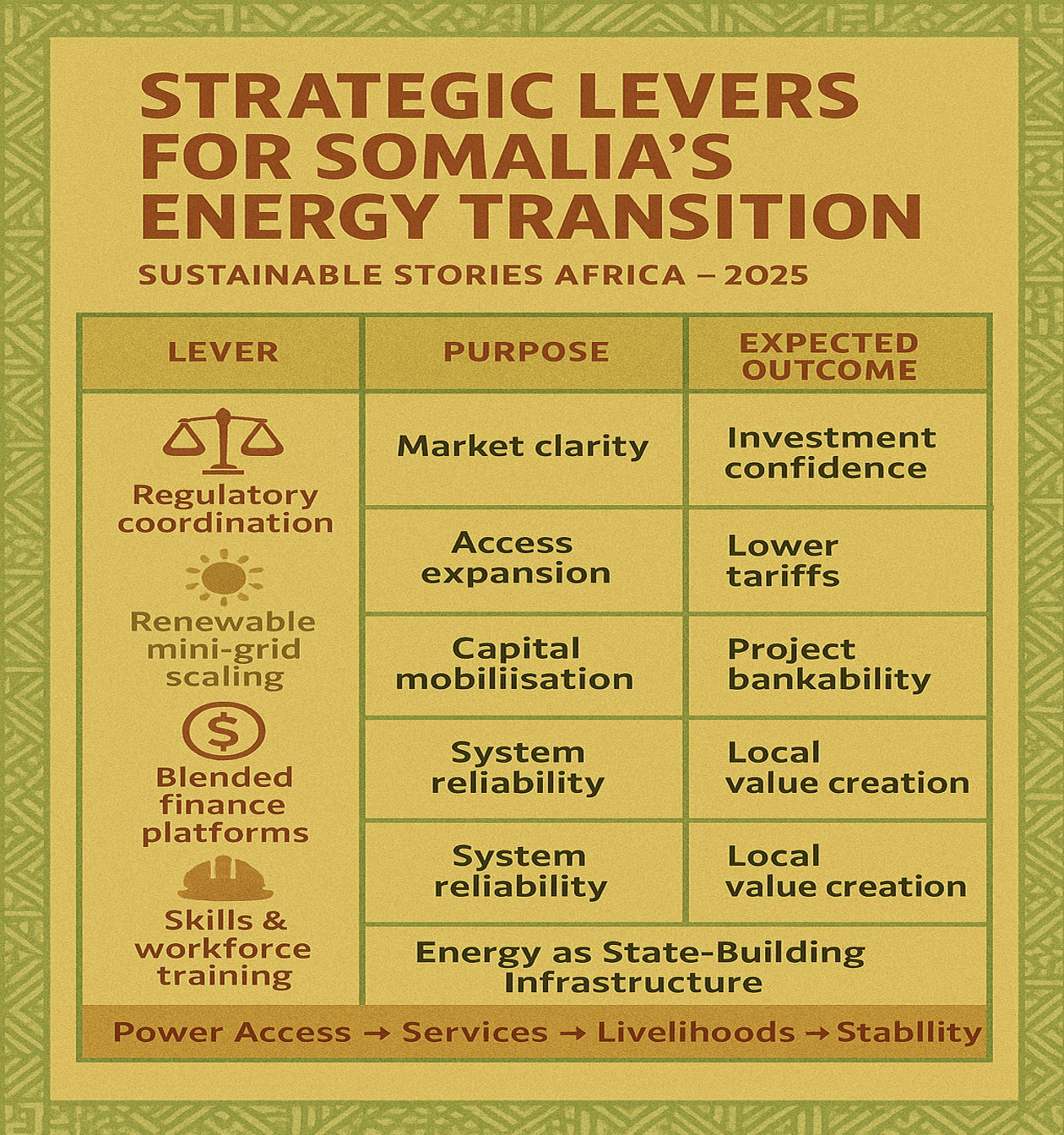
Strategic Levers for Somalia's Energy Transition
| Lever | Purpose | Expected Outcome |
|---|---|---|
| Regulatory coordination | Market clarity | Investment confidence |
| Renewable mini-grid scaling | Access expansion | Lower tariffs |
| Blended finance platforms | Capital mobilisation | Project bankability |
| Skills & workforce training | System reliability | Local value creation |
PATH FORWARD – Powering Somalia's Next Chapter
Somalia's energy transition is not about catching up—it is about choosing the right path forward. Decentralised renewables offer the fastest, most resilient route to access, affordability, and economic participation.
With coordinated governance, targeted finance, and private-sector integration, energy can shift from survival infrastructure to a foundation for recovery. In Somalia's case, powering homes is inseparable from rebuilding the state.