People of high socioeconomic status exert outsized control over the world's energy-driven emissions, both through direct consumption and broader social influence. As climate pressures mount, their decisions can lock in carbon or unleash bold progress.
This feature explores how elite citizens, investors, role models, and decision-makers hold the key to rapid decarbonisation and what must shift to unlock their full potential. We spotlight data, roles, and actionable paths for Africa and beyond.
Affluence Shapes Africa's Climate Destiny
Climate action is at a crossroads, and those with wealth and influence stand squarely in the spotlight. New research reveals the richest 10% drive up to 60% of energy-related global emissions, but also possess the tools and networks needed to change that course fast.
Beyond the stereotype of billionaires, the climate impact and opportunity span a broad spectrum: professionals, investors, business leaders, and citizens earning well above average, but not super-rich. Their everyday choices, from travel to investments, can shape society's carbon trajectory.
In Africa's rapidly urbanising economies, ambition meets responsibility. The next moves by high-status individuals, whether buying electric cars, funding renewables, or influencing policy, may determine the continent's climate legacy and its path toward shared prosperity.
Wealth and Network Power – Why This Moment Matters
A small global group influences history's climate outcome. The richest 10% account for up to 60% of global energy emissions.
In Nigeria, South Africa, and Kenya, their choices, from air travel to land and resource investments, impact millions.
Energy-related emissions by top income tiers (Global)
| Group | % of Population | % of Emissions |
|---|---|---|
| Top 1% | 1% | 15-20% |
| Top 10% | 10% | 40-60% |
| Bottom 50% | 50% | <15% |
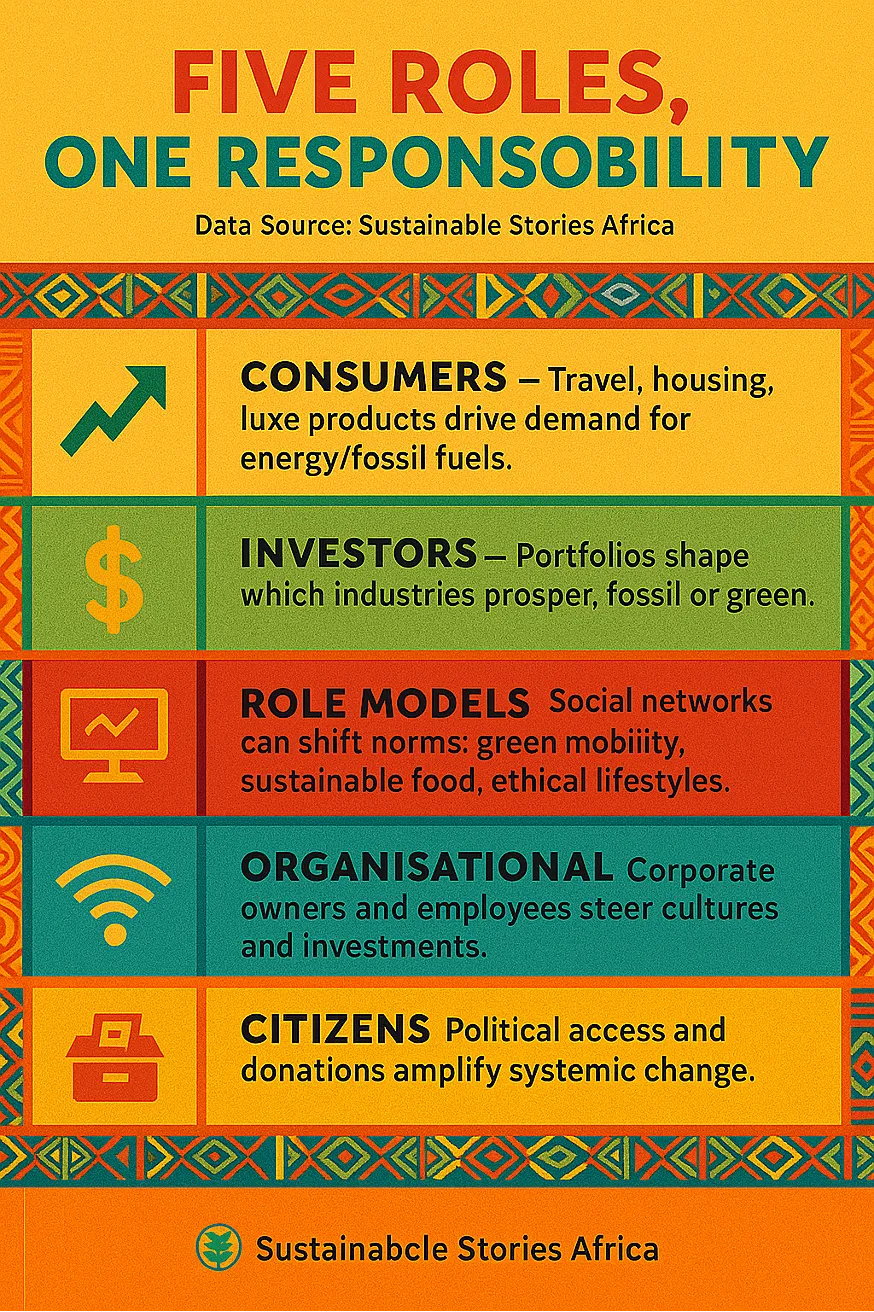
Five Roles, One Responsibility
Elites wield power as:
- Consumers – Travel, housing, luxe products drive demand for energy/fossil fuels.
- Investors – Portfolios shape which industries prosper, fossil or green.
- Role Models – Social networks can shift norms: green mobility, sustainable food, ethical lifestyles.
- Organisational Participants – Corporate owners and employees steer cultures and investments.
- Citizens – Political access and donations amplify systemic change.
Data Table: Role Impact Breakdown
| Role | Example Action | Potential GHG Impact (Annual, Est.) |
|---|---|---|
| Consumer | Frequent flying | 3-10 tonnes CO₂ per person |
| Investor | Pension funds | $100k+ could divest/fund clean energy |
| Role Model | Vegan diet promotion | Community, 0.5-2 tonnes CO₂ ripple |
| Org Participant | Green sourcing | Company-wide emissions drops (variable) |
| Citizen | Advocacy/Donations | Policy shifts—national/international |
Unlocking a Just Climate Future
Success means rapid emissions drops while strengthening resilience and equity.
Acting now, by aligning investments, daily choices, and social networks, creates tangible wins.
Infographic: Pathways for Impactful Action
- Switch to renewables: Personal and portfolio-level
- Low-carbon travel: Electric vehicles, reduced flying
- Ethical leadership: Influence professional circles
- Active citizenship: Push for climate policy
Projected Outcome Table (If 10% Reduce Emissions by 25%)
| Scenario | Annual Global GHG Reduction |
|---|---|
| Status Quo | >2% (2015-2025) |
| 10% Elite Lead (25% reduction) | Up to 15% |
From Influence to Impact – Concrete Steps Forward
African leaders, urban professionals, and value-aligned investors can:
- Commit to measurable low-carbon targets (corporate/personal)
- Shift investment to renewables, away from fossil fuel holdings
- Harness social capital to spread sustainable norms
- Advocate at the intersection of policy, business, and civil society
- Develop mentorship and visibility for climate leaders
The opportunity lies in transforming privilege into purpose, making climate-positive living aspirational, mainstream, and permanent.
Path Forward – Summary of Priorities and Promises
Elite actors must leverage influence to set new climate standards, investing in renewables, modelling green choices, and advocating for systemic change. Cross-sector collaboration is essential to move from incremental shifts to bold transitions.
From Lagos to London, building community and accountability among the influential people will unlock Africa's and the world's best chance for climate prosperity.