
Business failures are rising globally amid geopolitical uncertainty, AI disruption and shifting trade patterns.
When companies collapse across borders, recovering assets becomes a legal, financial and technological race, one that creditors in Africa and the Global South are poorly equipped to win.
From cryptocurrency wallets to shell structures in unfamiliar jurisdictions, insolvency asset recovery in 2026 demands expertise, technology and strategic coordination that remain in short supply across much of the continent.
The cost of inaction, lost creditor value, corporate impunity and weakened market trust is too high to ignore.
When Companies Collapse Across Borders
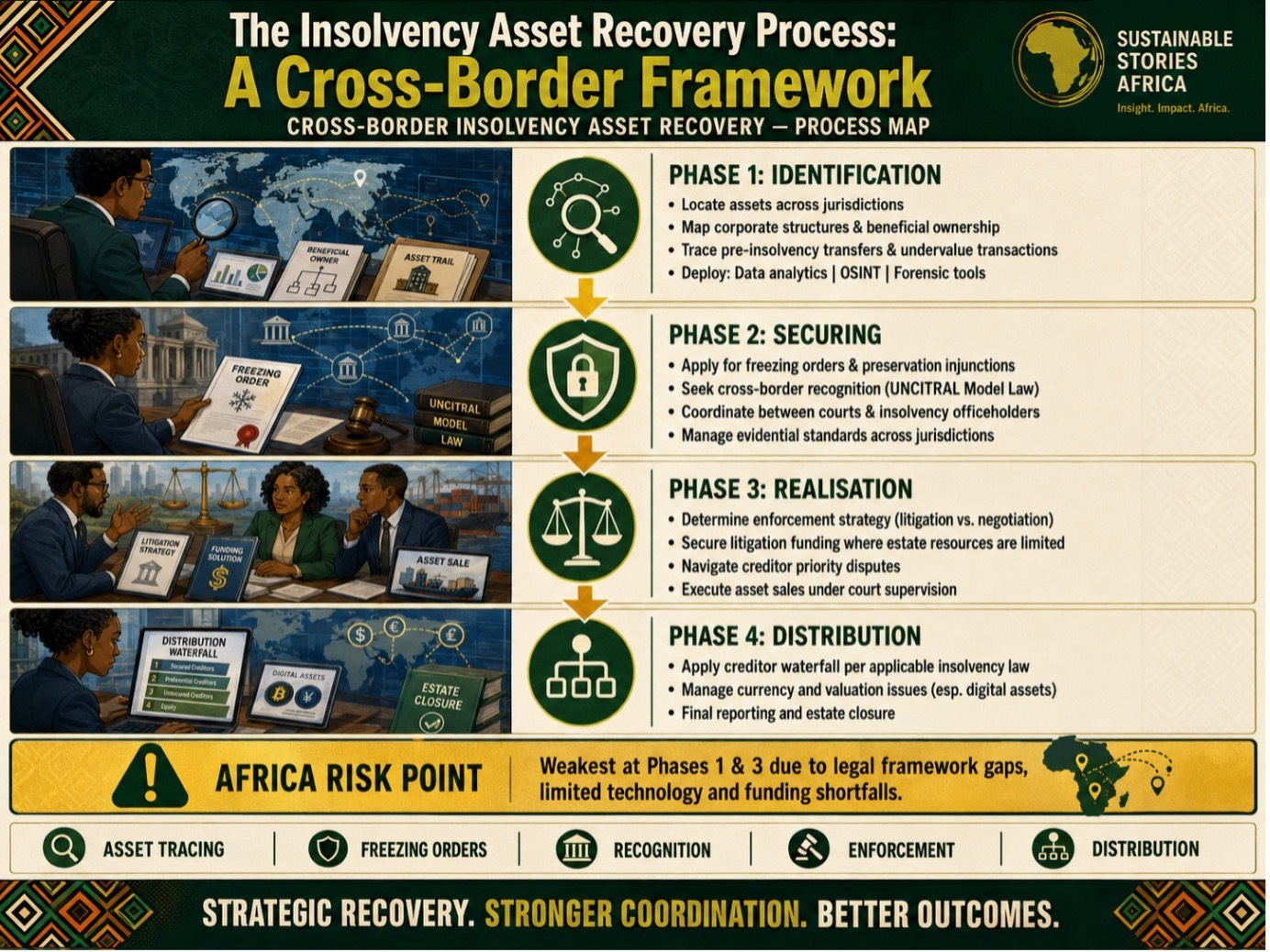
Insolvency is rarely tidy. When companies operating across multiple jurisdictions fail, as more are doing in today's volatile economic environment, the process of identifying, securing and realising remaining assets for creditors becomes a labyrinthine exercise in legal coordination, forensic investigation and strategic patience.
For African markets, this challenge is amplified. Creditor frameworks remain underdeveloped across many jurisdictions.
Cross-border cooperation between insolvency regimes is inconsistent. A growing portion of corporate assets, particularly in fintech, digital banking and cryptocurrency-adjacent sectors, now exist in digital form, governed by legal frameworks that are still evolving globally and largely absent domestically.
As corporate insolvency rates rise across Africa and globally, understanding the tools, techniques and risks of cross-border asset recovery is no longer a specialist concern. It is a systemic imperative.
Rising Defaults, Rising Complexity
Business failures are increasing. With significant uncertainty around US trade policy, geopolitical tensions and the disruptive spread of artificial intelligence across industries, the IMF and World Bank have both flagged elevated corporate default risk across emerging markets in 2026.
Africa is not immune: currency pressures, commodity volatility and post-pandemic balance sheet stress have pushed insolvency rates higher across Nigeria, Kenya, Ghana and South Africa.
The central challenge is not simply that companies are failing; it is that they are failing in ways that make asset recovery genuinely difficult.
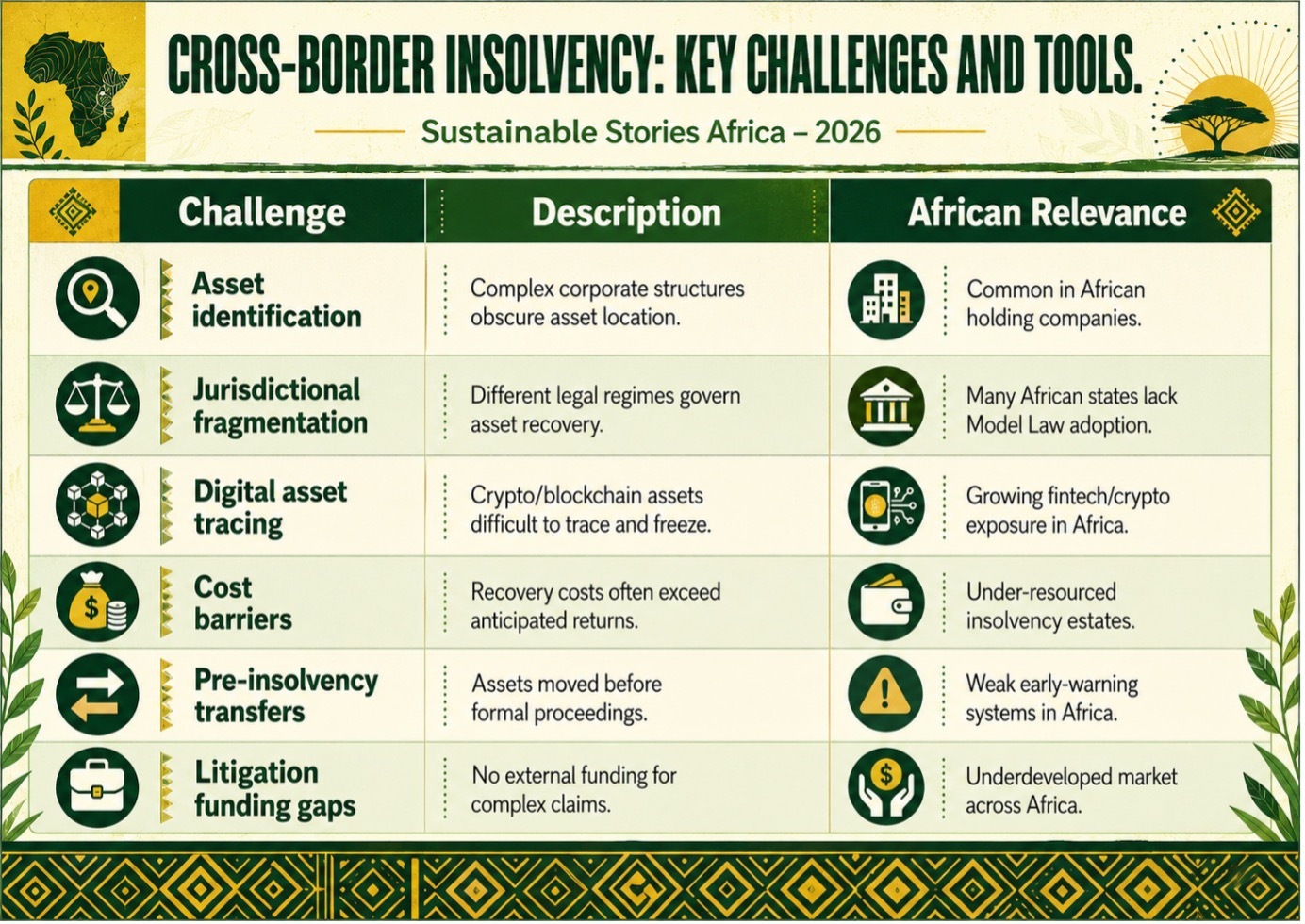
Sophisticated corporate structures, multi-jurisdictional operations, digital asset holdings and pre-insolvency asset stripping all complicate what should be a straightforward process of protecting creditor value.
The Tools That Work and Those That Don't
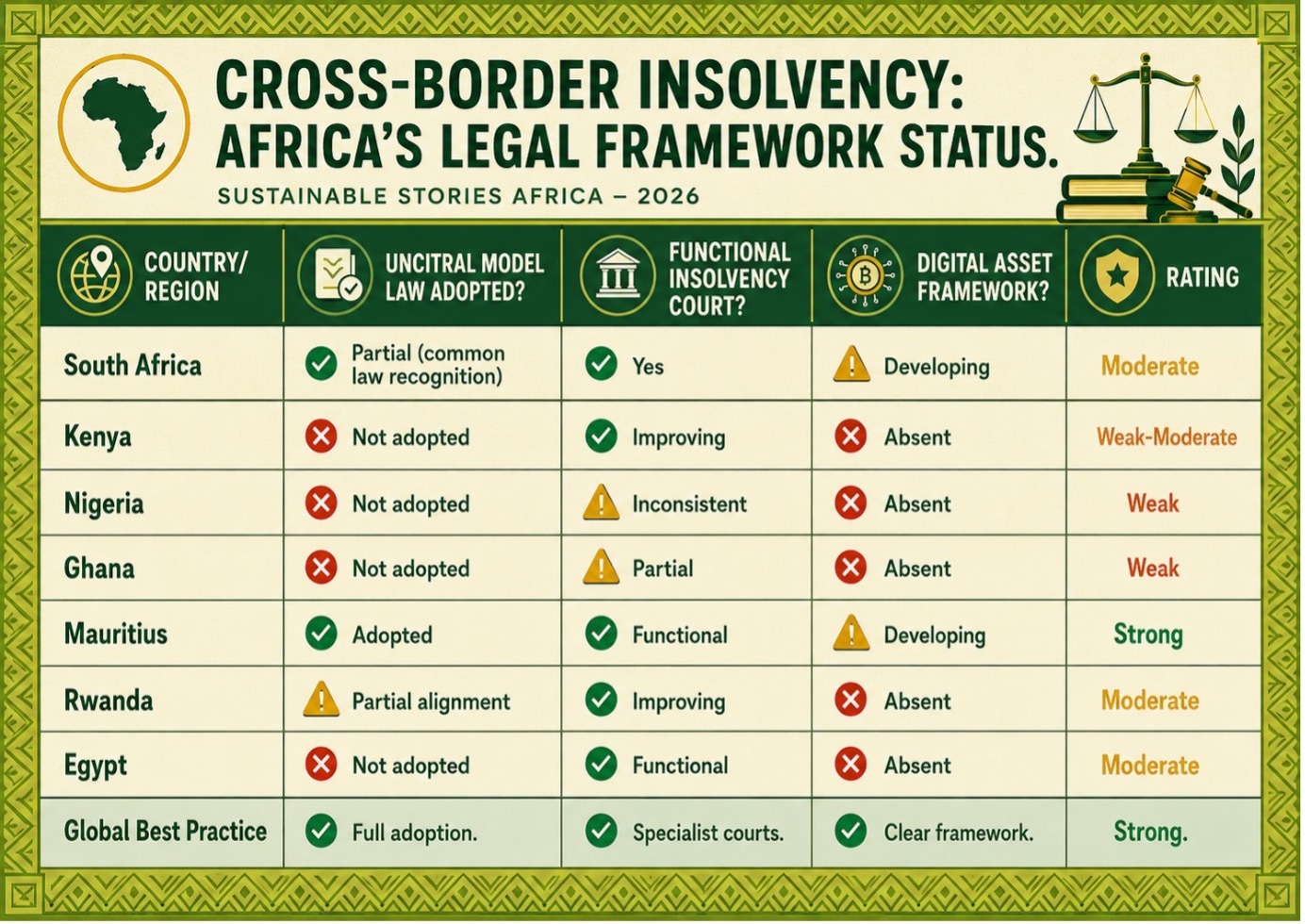
The most effective international instrument for cross-border insolvency coordination remains the UNCITRAL Model Law on Cross-Border Insolvency, which establishes a structural framework for recognising foreign proceedings and coordinating creditor relief across jurisdictions.
It has, according to insolvency expert Rob Child of Ashurst, "clearly increased efficiencies in terms of cost and time in pursuing cross-border asset recovery."
However, the Model Law's fundamental limitation is geographic: its adoption remains incomplete globally and is particularly sparse across Africa.
Where it has not been adopted, insolvency practitioners must rely on less structured recognition mechanisms, bilateral frameworks, judicial comity, or diplomatic channels, all of which are slower, costlier and less predictable.
Technology is filling some of the gap. Data analytics platforms can analyse large datasets to identify unusual transaction patterns.
Digital forensics tools recover evidence from emails, devices and cloud systems. Blockchain analysis tools like Chainalysis can trace the movement of digital assets across networks.
Open-source intelligence techniques assist in mapping corporate structures across multiple jurisdictions.
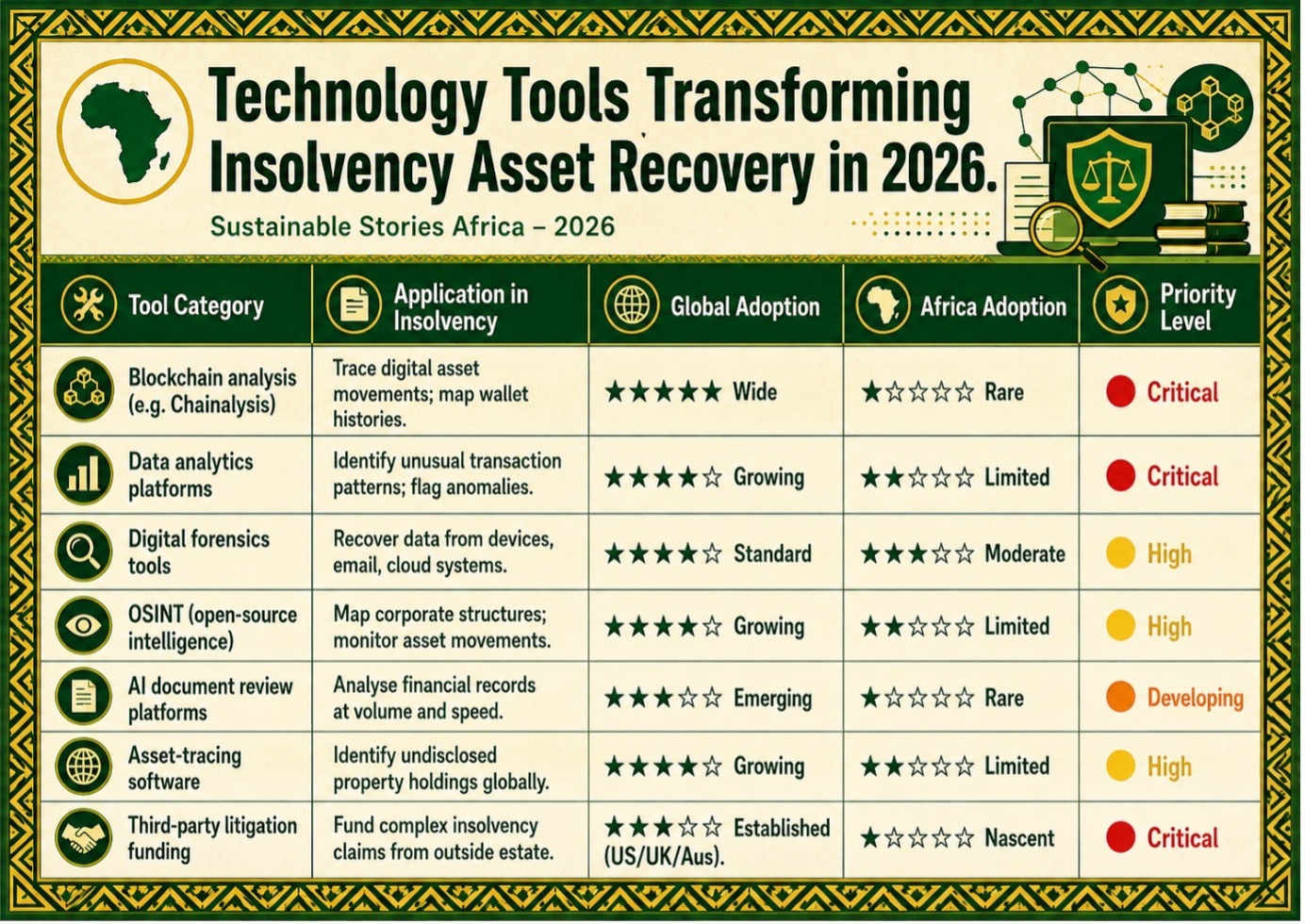
However, Africa's insolvency practitioners often lack access to these tools. Capacity constraints, in both technology infrastructure and specialist legal expertise, mean that even where assets can theoretically be traced, the practical ability to do so remains limited.
The result is a systemic under-recovery of creditor value: assets are lost, corporate misconduct goes unpunished, and market confidence erodes.
What a Functional Recovery System Unlocks
A well-functioning insolvency and asset recovery framework is not just about legal efficiency. It is foundational infrastructure for credit markets, investment confidence and economic governance.
Countries with credible insolvency systems attract lower-cost capital, support deeper credit markets and enable higher rates of entrepreneurial risk-taking, because failure, when it comes, is manageable rather than catastrophic.
For Africa, the stakes are particularly clear. If lenders and investors believe that African insolvency frameworks will protect their rights, that assets can be recovered, claims prioritised and processes respected, the risk premium on African debt narrows.
Pension funds, sovereign wealth funds and institutional investors are more likely to allocate at scale when the legal infrastructure of recovery is credible.
Conversely, the current patchwork of insolvency regimes, some effective, many rudimentary, signals systemic risk.
Addressing this gap is among the highest-value legal and governance reforms available to African governments seeking to attract sustainable investment.
Building Recovery Capacity Across Africa
Specific, actionable steps are available to governments, regulators and practitioners:
- Adopt the UNCITRAL Model Law. African states that have not yet adopted this framework should prioritise doing so. The economic cost of non-adoption, in delayed recoveries, lost creditor value and deterred investment, far exceeds the legislative effort required.
- Invest in digital asset legal frameworks. As African fintech ecosystems mature and cryptocurrency adoption deepens, insolvency laws must explicitly address digital asset ownership, tracing and realisation.
- Build specialist insolvency practitioner capacity. Training, accreditation and resourcing of insolvency professionals, including access to modern forensic tools, must be treated as economic infrastructure investment.
- Develop litigation funding markets. Third-party litigation funding is nascent across Africa. Policy frameworks that encourage the emergence of professional litigation funders can unlock recovery actions that creditor estates cannot currently pursue.
- Strengthen early-warning corporate surveillance. Regulatory bodies and credit bureaux should invest in monitoring tools that flag pre-insolvency asset movements to reduce the risk for asset stripping before formal proceedings commence.
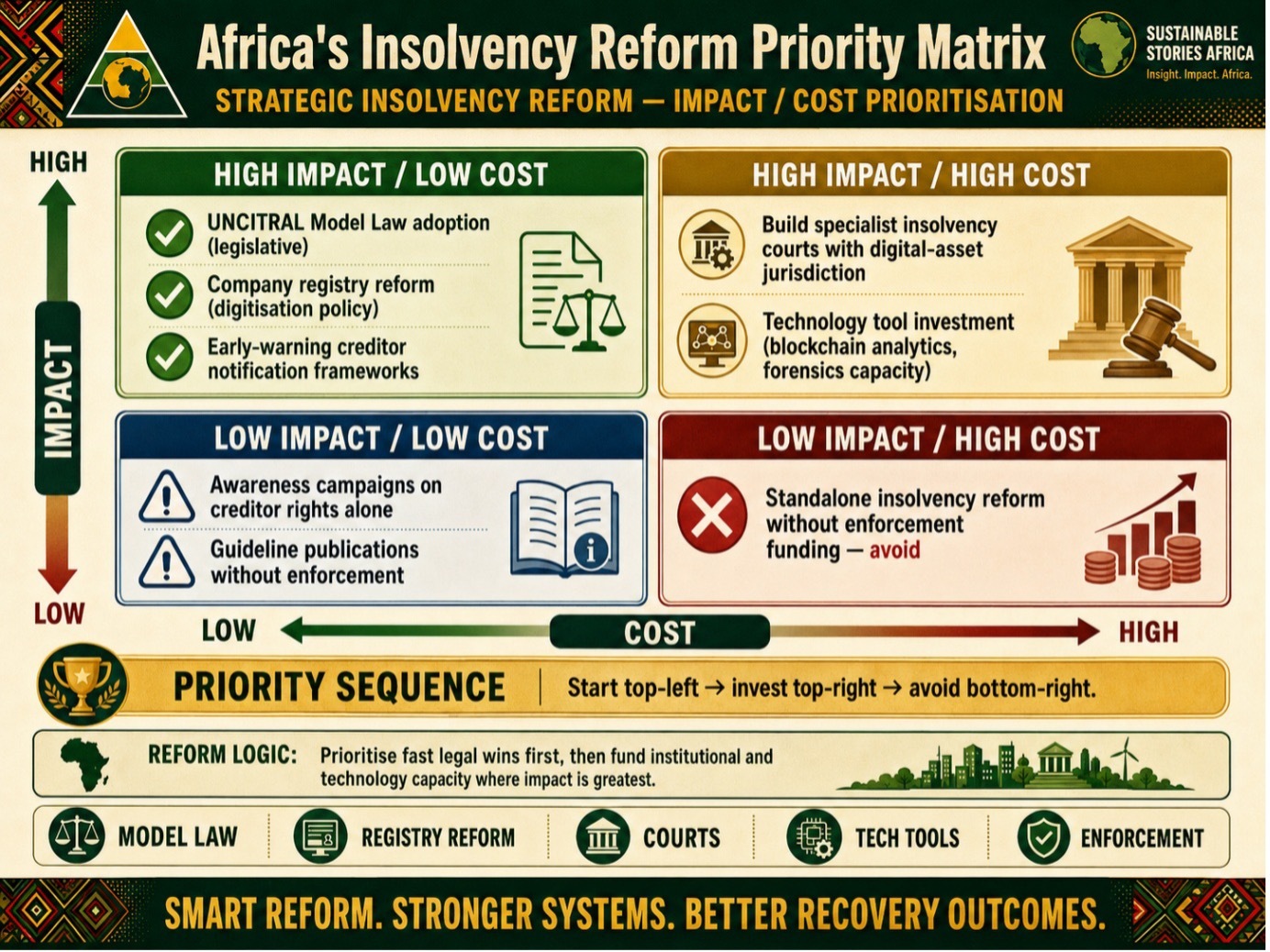
Path Forward – Recovery Reform Cannot Wait for Crisis
Africa's insolvency systems are an underdeveloped but correctable vulnerability. The reforms required, legal framework adoption, technology investment, and practitioner capacity building, are within reach.
The political and institutional will to pursue them must match the economic urgency.
Creditors, courts and capitals must act in concert. The assets lost to inadequate systems today represent the investment confidence lost tomorrow.