Africa is emerging as the next frontier for solar manufacturing and deployment.
Structural shifts in global supply chains and rising demand for clean power are accelerating investment.
The continent’s solar potential, policy reforms and growing domestic markets are positioning Africa as a strategic industrial hub.
Africa’s Solar Future Moves Industrial Centre
Africa is rapidly positioning itself as the next major centre for solar energy manufacturing, marking a structural shift in the global clean energy economy.
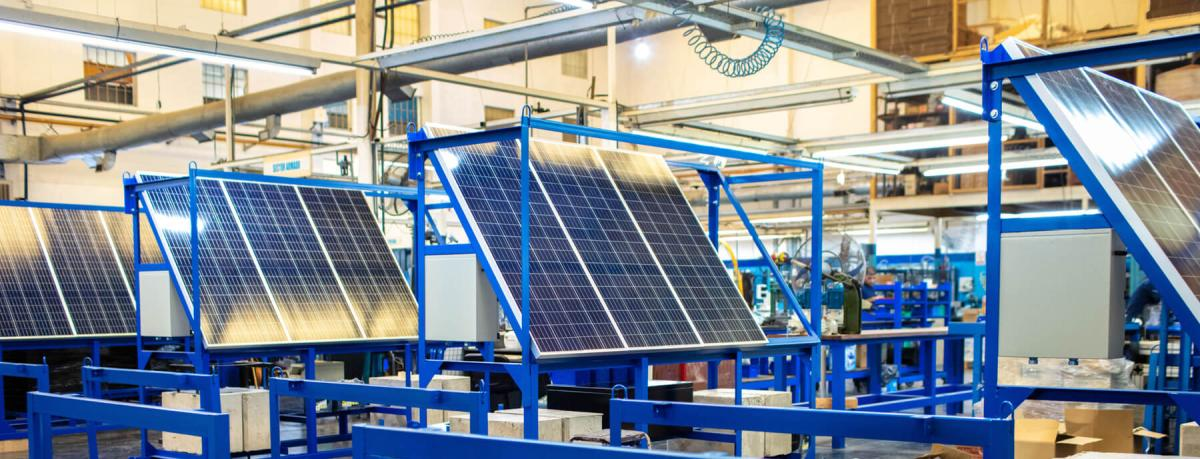
The continent’s abundant solar resources, expanding energy demand and accelerating policy reforms are driving investment into local manufacturing capacity, reducing reliance on imports and strengthening energy security.
Global solar deployment is projected to grow sharply over the next decade, but the geography of production is beginning to diversify beyond traditional manufacturing centres.
Africa’s emergence as a production hub reflects both strategic necessity and economic opportunity, as governments and investors seek to localise clean energy supply chains.
This transition is a defining industrial shift, where Africa evolves from a passive technology importer into an active participant in clean energy production and governance.
Structural Advantages Strengthen Africa’s Solar Competitiveness
Africa possesses multiple structural advantages that position it competitively within the solar manufacturing ecosystem.
The continent has the world’s highest solar irradiation levels, rapidly expanding electricity demand and large underserved energy markets that require scalable solutions.
At the same time, geopolitical supply chain diversification is encouraging investors to establish manufacturing facilities closer to emerging markets, reducing logistics risks and improving supply reliability.
Strategic Advantage | Industrial Significance | Economic Impact |
|---|---|---|
High solar irradiation | Enables efficient deployment and scalability | Accelerates renewable energy adoption |
Growing electricity demand | Creates a stable domestic market for solar products | Supports long-term manufacturing viability |
Supply chain diversification | Reduces dependence on single manufacturing regions | Strengthens energy security |
Policy reforms and incentives | Encourages industrial investment and localisation | Expands employment and industrial capacity |
Africa’s industrial participation in solar production is increasingly viewed not just as an energy transition strategy, but as a broader economic transformation opportunity.
Local Manufacturing Unlocks Economic Transformation Opportunities
Localising solar manufacturing offers Africa substantial economic and strategic benefits. Domestic production reduces import dependence, improves affordability and strengthens national energy resilience.
More importantly, solar manufacturing can catalyse industrial development by creating jobs, expanding technical expertise and strengthening supply chains across sectors such as metals, electronics and engineering.
The industrial opportunity extends beyond electricity generation. Solar manufacturing positions Africa as one of the fastest-growing global industries, allowing it to capture greater economic value from the energy transition.
Strategic Outcome | Economic Benefit | Long-Term Impact |
|---|---|---|
Domestic manufacturing expansion | Job creation and industrial growth | Stronger economic diversification |
Reduced import dependence | Improved energy affordability | Greater national energy sovereignty |
Expanded technical expertise | Workforce development and innovation | Strengthened industrial competitiveness |
Integrated supply chains | Increased local economic participation | Sustainable industrial transformation |
This shift redefines Africa’s role, from energy consumer to energy producer and technology manufacturer.
Strategic Investments Accelerate Africa’s Solar Industrialisation
Realising this opportunity requires coordinated action across policy, finance and infrastructure development.
Governments must strengthen industrial policy frameworks, provide incentives for manufacturing investment and ensure regulatory stability.
Private investors, development institutions and industrial partners must collaborate to finance manufacturing facilities, support technology transfer and strengthen technical capacity.
Infrastructure investments, including energy systems, transportation networks and industrial zones, are essential to support manufacturing scale-up and ensure competitiveness.
The solar manufacturing transition also reinforces Africa’s broader energy independence objectives, reducing vulnerability to external supply disruptions while accelerating climate goals.
Africa’s ability to integrate solar manufacturing into its broader industrial strategy will determine whether it captures long-term economic value from the global energy transition.
Path Forward – Industrial Policy Anchors Africa’s Solar Leadership
Africa’s solar future depends on strengthening industrial policy, expanding manufacturing investment and building technical capacity.
Coordinated action across governments, investors and development institutions is essential to localise production and strengthen supply chains.
By prioritising solar manufacturing, Africa can accelerate energy independence, strengthen economic resilience and position itself as a central actor in the global clean energy economy.
Culled From: The next solar wave is built in Africa not China