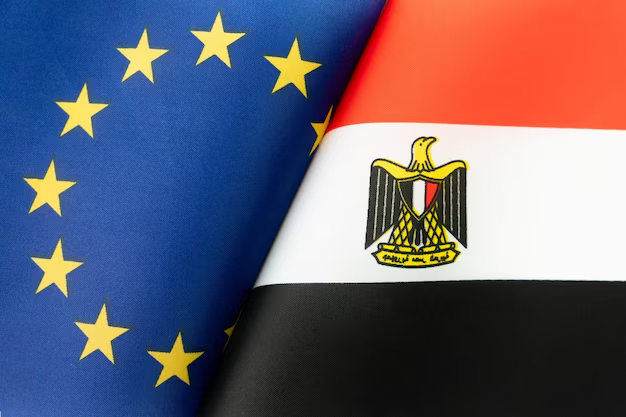
Egypt and the European Union (EU) have turned years of energy‑transition diplomacy into concrete deals, signing €124.3 million in green grants at the Egypt Sustainable Energy Outlook 2040 conference in Cairo.
The package enables a major grid upgrade programme and a flagship green ammonia project in Ain Sokhna, designed to integrate 22 GW of renewables and scale clean‑fuel exports.
Officials say the moves could cement Egypt’s role as a regional clean‑energy hub for Europe and Africa.
Mediterranean energy map quietly redrawn
The high-level conference, themed “Cooperation for Shared Prosperity,” marked a visible shift from memoranda to money, as the EU and Egypt translated their Strategic and Comprehensive Partnership into project‑level commitments.
With global energy markets still unsettled, officials framed the deal as a hedge against price shocks that also advance climate goals, positioning Egypt as a central node in future green power and hydrogen flows to Europe.
Egypt’s Minister of Planning, Economic Development and International Cooperation, Rania El‑Mashat, cast the transition to sustainable, secure and efficient energy systems as a core driver of inclusive development rather than an independent climate agenda.
She emphasised that concessional finance, guarantees and long-term EU partnerships are critical to balancing growth, energy security and emissions reduction in a volatile global context.
Inside the grants, grids and green ammonia
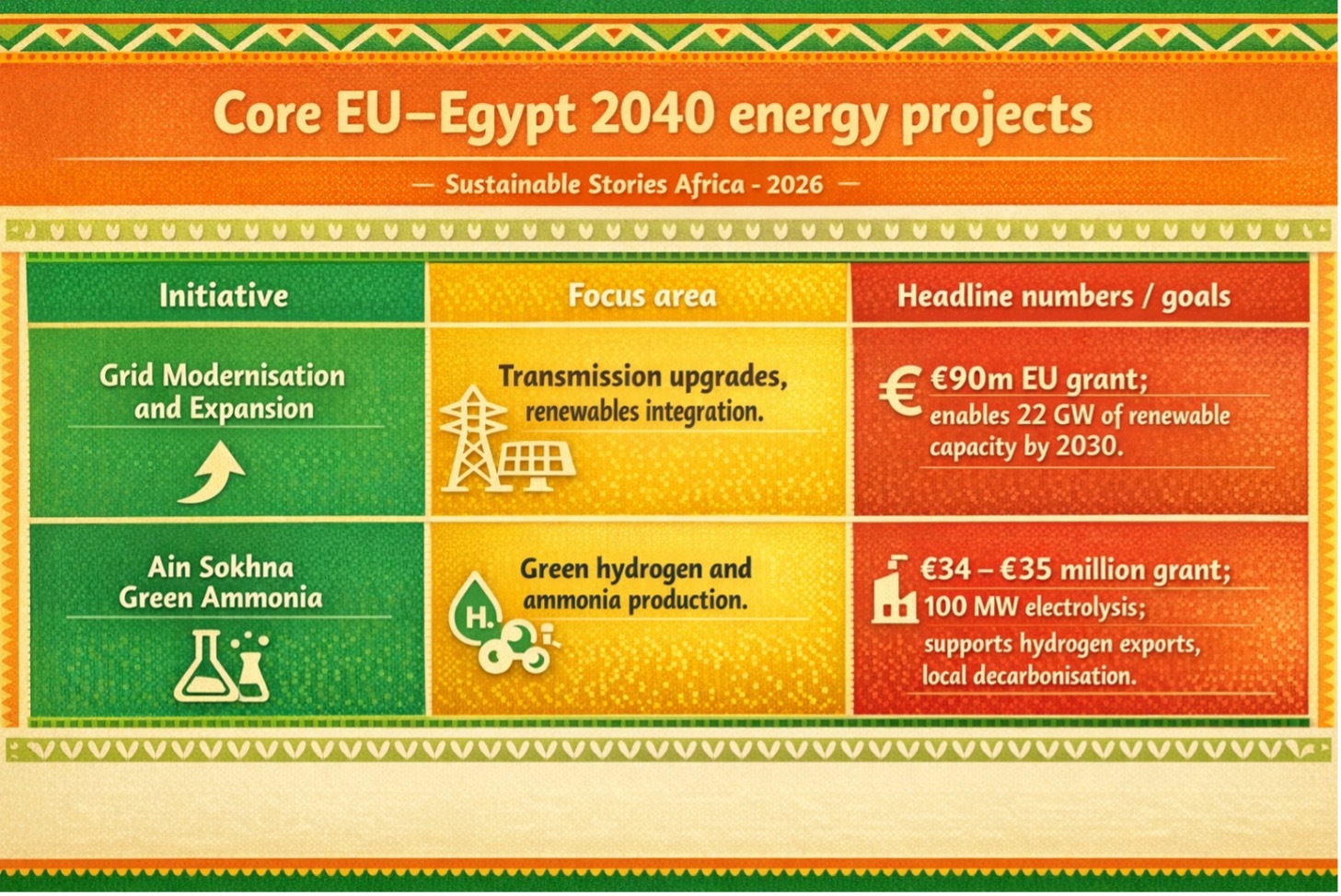
At the core of the new cooperation package are two flagship projects worth €124.3 million: a €90 million grant to upgrade Egypt’s electricity grid and between €34 and €35 million for a green ammonia facility in Ain Sokhna.
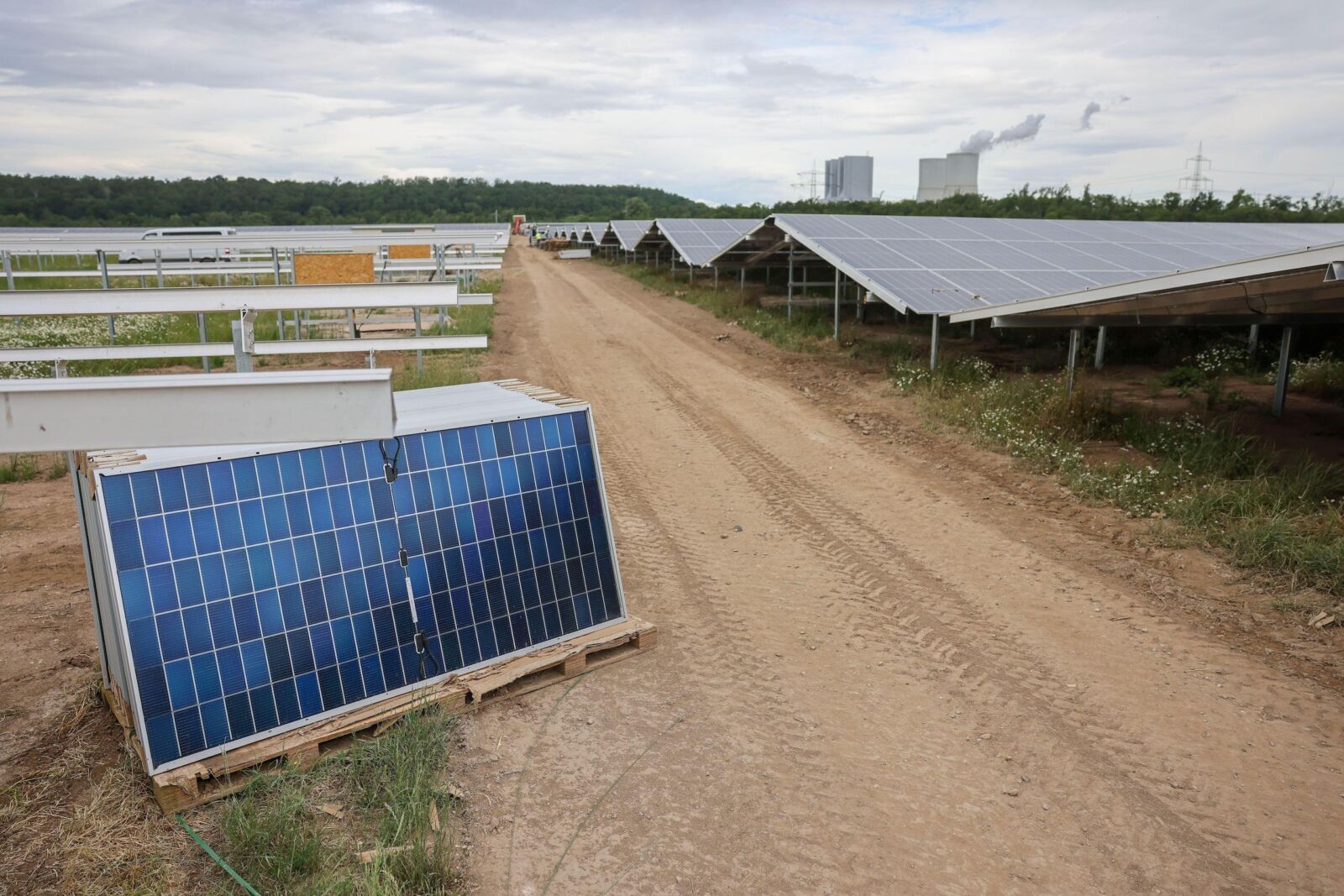
The grid upgrade aims to expand transmission capacity and integrate up to 22 GW of renewables by 2030.
The Sokhna project, led by Scatec and backed by the EU, will deploy 100 MW of electrolysis to produce renewable hydrogen for low-carbon ammonia exports.
Core EU–Egypt 2040 energy projects
| Initiative | Focus area | Headline numbers/goals |
|---|---|---|
| Grid Modernisation and Expansion | Transmission upgrades, renewables integration. | €90m EU grant; enables 22 GW of renewable capacity by 2030. |
| Ain Sokhna Green Ammonia | Green hydrogen and ammonia production. | €34 – €35 million grant; 100 MW electrolysis; supports hydrogen exports, local decarbonisation. |
Shared prosperity from a just transition
Egypt’s 2040 energy vision centres on expanding renewables, improving efficiency and maximising diverse resources to anchor its role as an Eastern Mediterranean energy hub.
For the EU, deepening clean energy relationships with North Africa promises more secure, lower-carbon supplies while actualising industrial decarbonisation and REPowerEU ambitions.
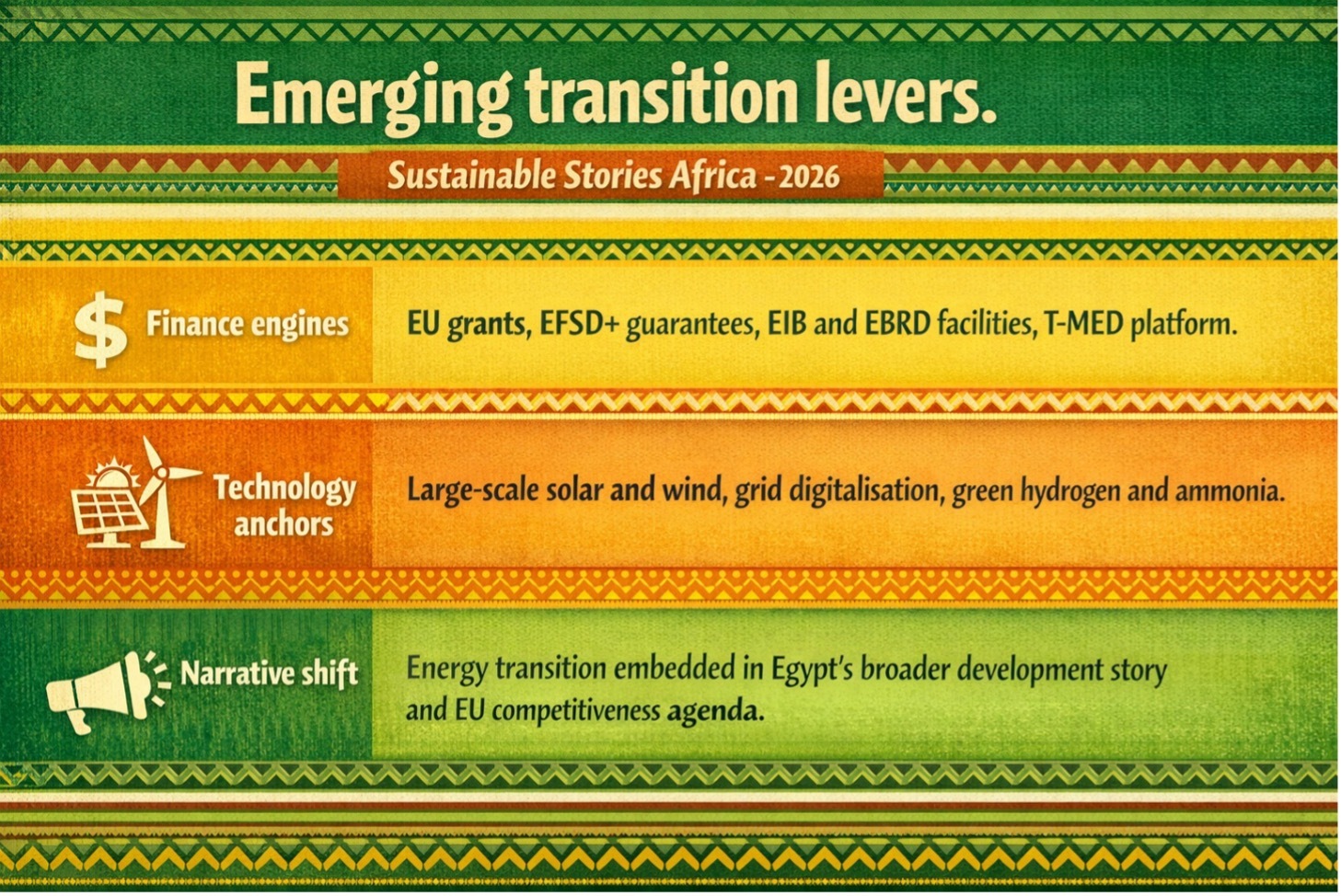
If the current pipeline is delivered, officials argue, the combination of grants, blended finance and guarantees under the upcoming T‑MED Investment Platform could unlock billions in private capital for solar, wind, grids and hydrogen across Egypt.
That, in turn, could translate into new green jobs, stronger local value chains and more resilient communities less exposed to fossil‑fuel volatility.
Emerging transition levers
Governance, pipelines and people at the centre
According to the report, policy certainty, transparent regulation and credible project pipelines will determine whether the partnership moves from promising headlines to bankable assets.
Priorities flagged include faster permitting, clear hydrogen standards, robust environmental and social safeguards, and skills programmes to prepare local workers for grid, renewables and hydrogen roles.
Civil society and private sector actors were urged to track implementation, monitor community impacts and push for just‑transition outcomes, especially in regions hosting large new projects.
With Europe eyeing long-term supply and Egypt seeking growth and resilience, both sides now have a shared interest in making this cooperation durable beyond electoral and market cycles.
Path Forward – Building a resilient Mediterranean corridor
By 2040, Cairo and Brussels aim to upscale current agreements to anchor a Mediterranean clean-energy corridor linking Egypt’s renewables with Europe’s net-zero agenda.
Realising that vision depends on the timely delivery of grid and hydrogen projects, scaled blended finance and robust social safeguards.
If sustained, the partnership could position Egypt as a flagship for aligning climate finance, industrial policy and regional diplomacy in a just transition. The coming project cycles will test execution discipline.
Culled From: Egypt and EU Deepen Strategic Energy Transition Cooperation at Sustainable Energy Outlook 2040