The European Union has confirmed a 90% greenhouse-gas emissions reduction target by 2040, signalling one of the most ambitious climate commitments globally.
At the same time, policymakers agreed to delay the launch of the new ETS2 carbon pricing system to 2028, easing near-term pressure on households and transport sectors.
The decision reflects Europe’s attempt to balance climate ambition with economic stability as the bloc accelerates its path toward net-zero emissions.
EU Sets Historic 2040 Climate Target
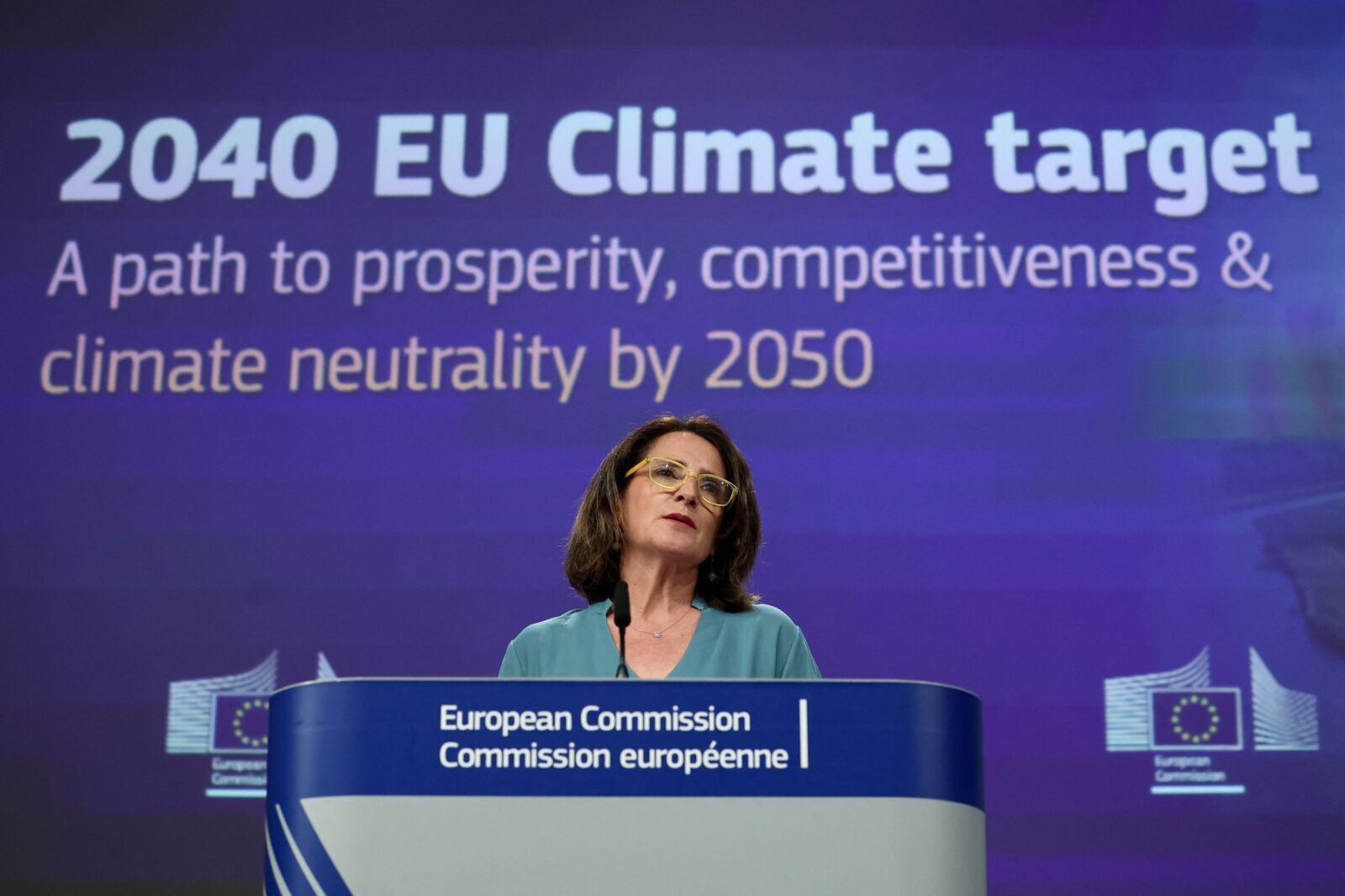
The European Union has formally endorsed a 2040 climate target to cut emissions by 90% from 1990 levels, reinforcing the bloc’s position as a global leader in climate policy and accelerating its pathway toward net-zero emissions by 2050.
The decision forms part of a broader policy package aimed at strengthening Europe’s decarbonisation strategy across industries, transport systems, and energy infrastructure. It also builds on the EU’s 2030 target of reducing emissions by at least 55%, a benchmark already embedded in the bloc’s “Fit for 55” legislative framework.
However, policymakers simultaneously confirmed a delay in launching the ETS2 carbon market until 2028, pushing back a policy that would extend carbon pricing to sectors such as road transport and building heating.
Officials say the delay is intended to protect consumers and businesses from energy price volatility and to ensure that the new system launches under stable economic conditions.
Climate Ambition Meets Economic Realities
Europe’s decision highlights a growing challenge faced by governments worldwide: how to accelerate decarbonisation while maintaining economic competitiveness and social stability.
The EU Emissions Trading System (ETS), which currently applies to heavy industry, power generation, and aviation, has been one of the world’s most influential carbon-pricing frameworks.
The planned ETS2 expansion is designed to extend carbon pricing to sectors responsible for a significant share of Europe’s emissions.
However, policymakers remain cautious about the potential impact on households.
Rising energy prices during the global energy crisis demonstrated how climate policies can trigger political resistance if social safeguards are not built into the transition.
Delaying ETS2, therefore, gives governments more time to develop compensation mechanisms, social climate funds, and infrastructure investments that support consumers while still reducing emissions.
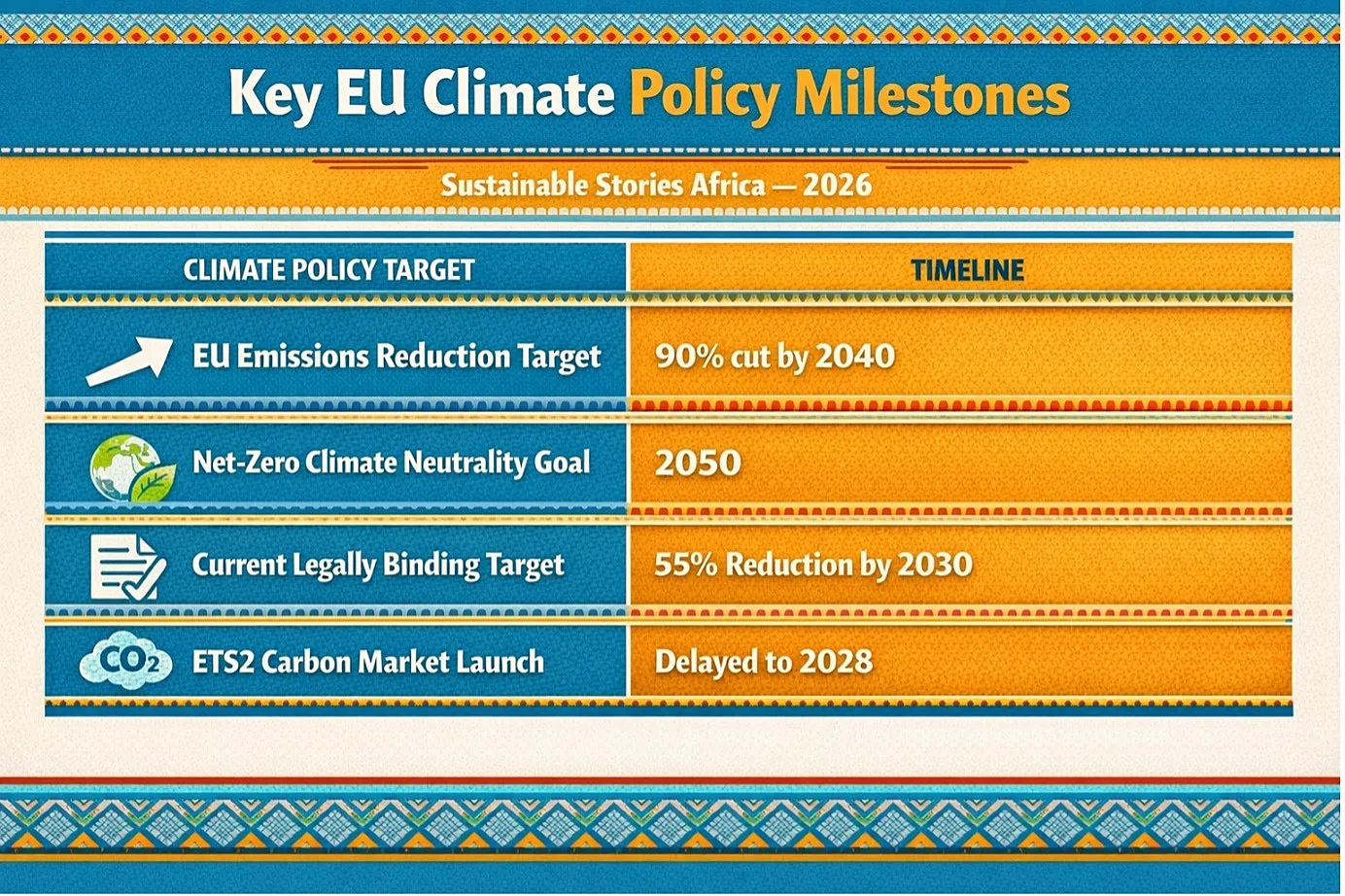
Key EU Climate Policy Milestones
Climate Policy Target | Timeline |
|---|---|
EU emissions reduction target | 90% cut by 2040 |
Net-zero climate neutrality goal | 2050 |
Current legally binding target | 55% reduction by 2030 |
ETS2 carbon market launch | Delayed to 2028 |
Policy Shift Signals Accelerated Energy Transition
The 2040 target will require significant active investments in renewable energy, electrification, hydrogen infrastructure, and carbon-capture technologies.
Energy analysts note that achieving a 90% reduction will depend on rapidly expanding renewable power generation while simultaneously transforming industrial processes and transport systems.
The EU is also expected to increase investments in clean technology manufacturing, battery supply chains, and grid infrastructure to ensure energy security and competitiveness.
For global markets, Europe’s move could influence climate policy beyond the region, as countries and corporations adapt to stricter emissions standards and evolving carbon-pricing mechanisms.
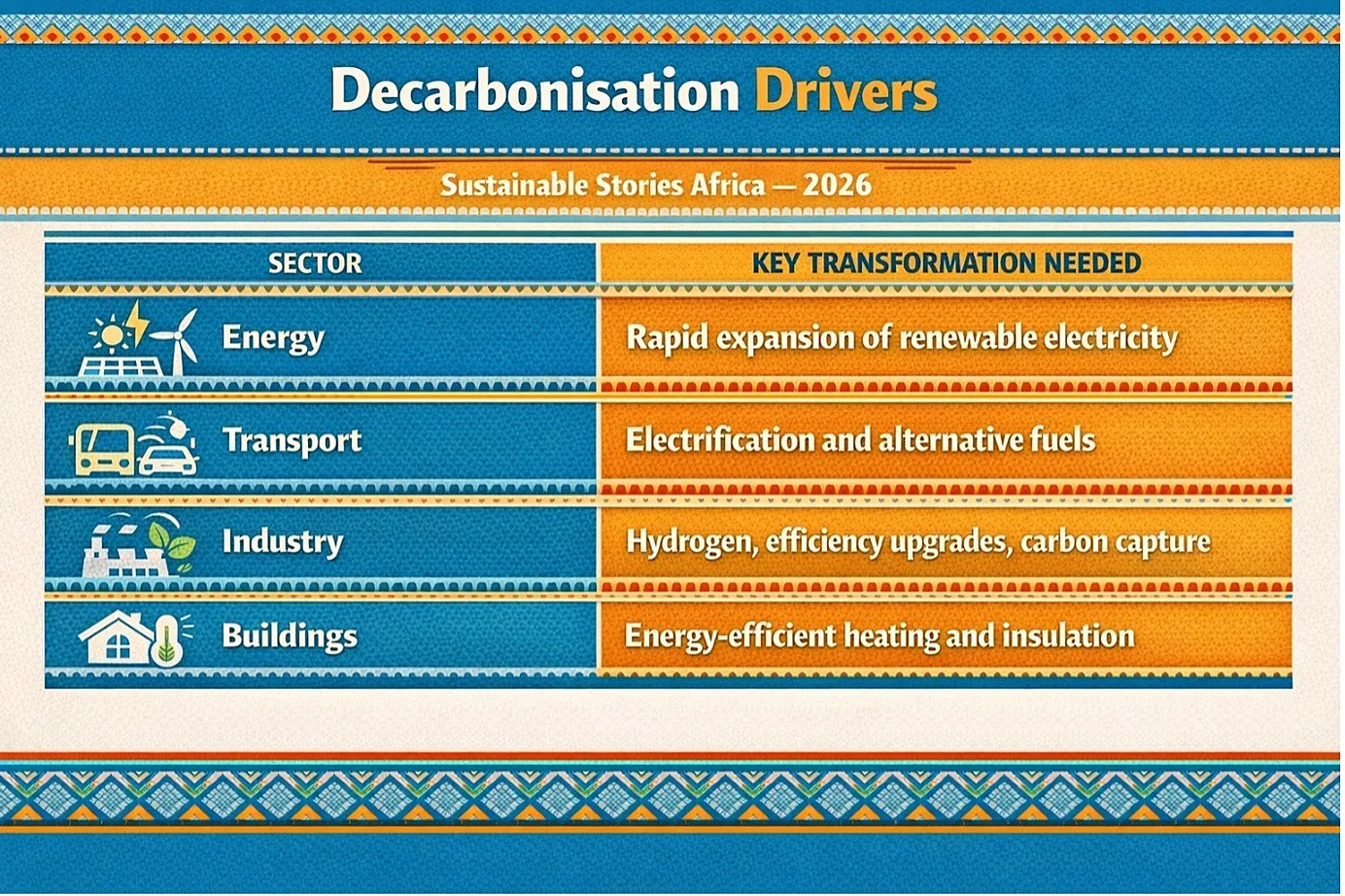
Decarbonisation Drivers
Sector | Key Transformation Needed |
|---|---|
Energy | Rapid expansion of renewable electricity |
Transport | Electrification and alternative fuels |
Industry | Hydrogen, efficiency upgrades, carbon capture |
Buildings | Energy-efficient heating and insulation |
Path Forward – Europe Strengthens Long-Term Climate Leadership
The EU’s 2040 climate target reinforces Europe’s commitment to deep decarbonisation while acknowledging the economic realities of the transition.
Policymakers aim to pair ambitious emissions reductions with investment strategies that support industries and households.
Delaying ETS2 to 2028 gives governments time to strengthen social protections and energy infrastructure, ensuring that Europe’s climate transition remains both politically sustainable and economically viable.
Culled From: EU Confirms 2040 Climate Target with 90% Emissions Cut and Delays ETS2 Launch to 2028