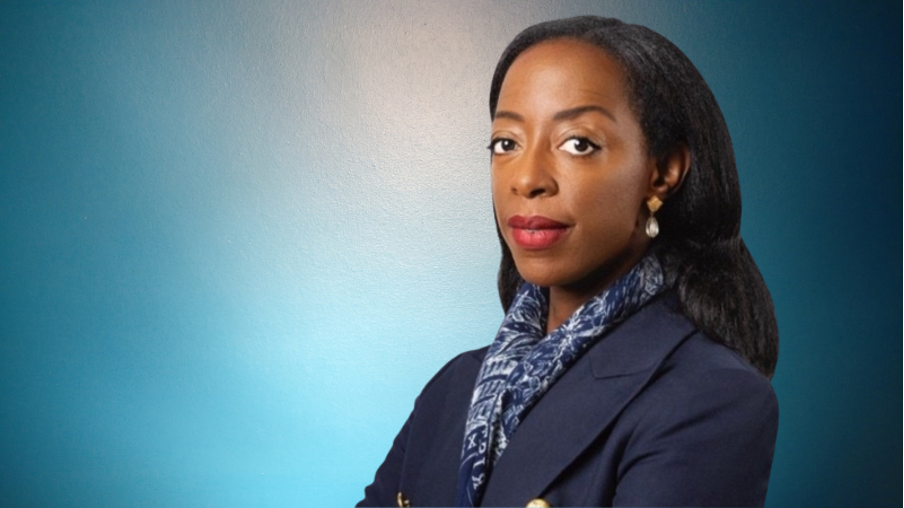
HSBC has appointed Denise Odaro to lead sustainable finance and transition efforts across Europe and the Americas, strengthening the bank’s global climate strategy.
The move comes as financial institutions accelerate investments supporting the net-zero transition and climate-aligned capital markets.
For businesses and emerging markets, the appointment emphasises how leadership in global banks increasingly shapes where sustainable capital flows and which regions benefit from the sustainable transition economy.
HSBC Strengthens Global Sustainable Finance Leadership
Global banking giant HSBC has appointed Denise Odaro as Head of Sustainable Finance and Transition for Europe and the Americas, reinforcing the bank’s strategy to mobilise capital for climate transition across two of the world’s largest financial regions.
The leadership appointment places Odaro at the centre of HSBC’s efforts to scale financing for low-carbon infrastructure, energy transition projects, and climate-aligned corporate strategies.
In her new role, Odaro will oversee the bank’s sustainable finance strategy across corporate, institutional and government clients, supporting businesses as they navigate decarbonisation pathways and align investment flows with global climate targets.
The move reflects growing pressure on global financial institutions to translate climate commitments into real-economy financing, particularly as governments and investors demand measurable progress toward net-zero emissions.
Why Sustainable Finance Leadership Matters
Banks are increasingly central to the global energy transition.
The International Energy Agency (IEA) estimates that more than $4 trillion annually will be needed by 2030 to finance clean energy systems and climate-resilient infrastructure worldwide.
Financial institutions such as HSBC play a critical role in mobilising this capital, structuring green bonds, sustainability-linked loans, and transition financing for industries ranging from energy and transport to manufacturing and agriculture.
Odaro’s appointment signals HSBC’s intent to deepen its leadership in sustainable finance, particularly across regions where capital markets, regulatory frameworks and climate policies are evolving rapidly.
Before this role, Odaro held several senior positions within HSBC’s sustainability and investment banking divisions, advising multinational corporations and governments on transition finance strategies, climate risk frameworks and sustainable capital market instruments.
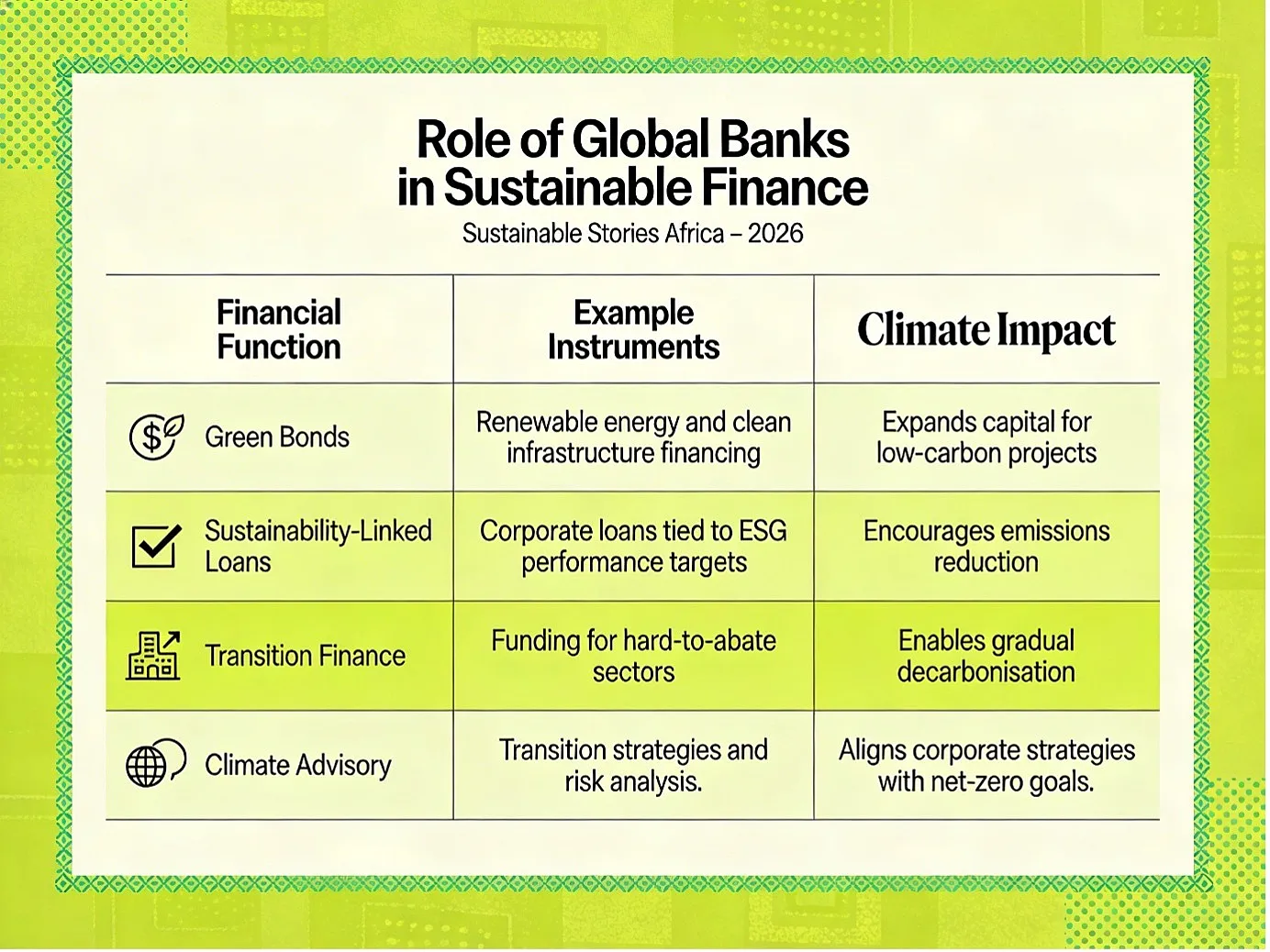
Role of Global Banks in Sustainable Finance
Financial Function | Example Instruments | Climate Impact |
|---|---|---|
Green Bonds | Renewable energy and clean infrastructure financing | Expands capital for low-carbon projects |
Sustainability-Linked Loans | Corporate loans tied to ESG performance targets | Encourages emissions reduction |
Transition Finance | Funding for hard-to-abate sectors | Enables gradual decarbonisation |
Climate Advisory | Transition strategies and risk analysis | Aligns corporate strategies with net-zero goals |
In emerging markets, particularly in Africa and the Global South, decisions in global financial institutions often align with the accessibility of climate capital.
When banks scale sustainable finance platforms, they can unlock funding for projects such as renewable energy grids, resilient agricultural systems and green infrastructure.
Unlocking Capital for the Transition Economy
Leadership changes within global banks rarely attract public attention, yet they often shape the global economy.
With Odaro overseeing sustainable finance across two major regions, HSBC aims to strengthen its ability to connect investors with projects driving the low-carbon transition.
This includes financing sectors undergoing structural change, including:
- renewable energy
- sustainable transport
- climate-resilient infrastructure
- circular economy industries
The opportunity is enormous.
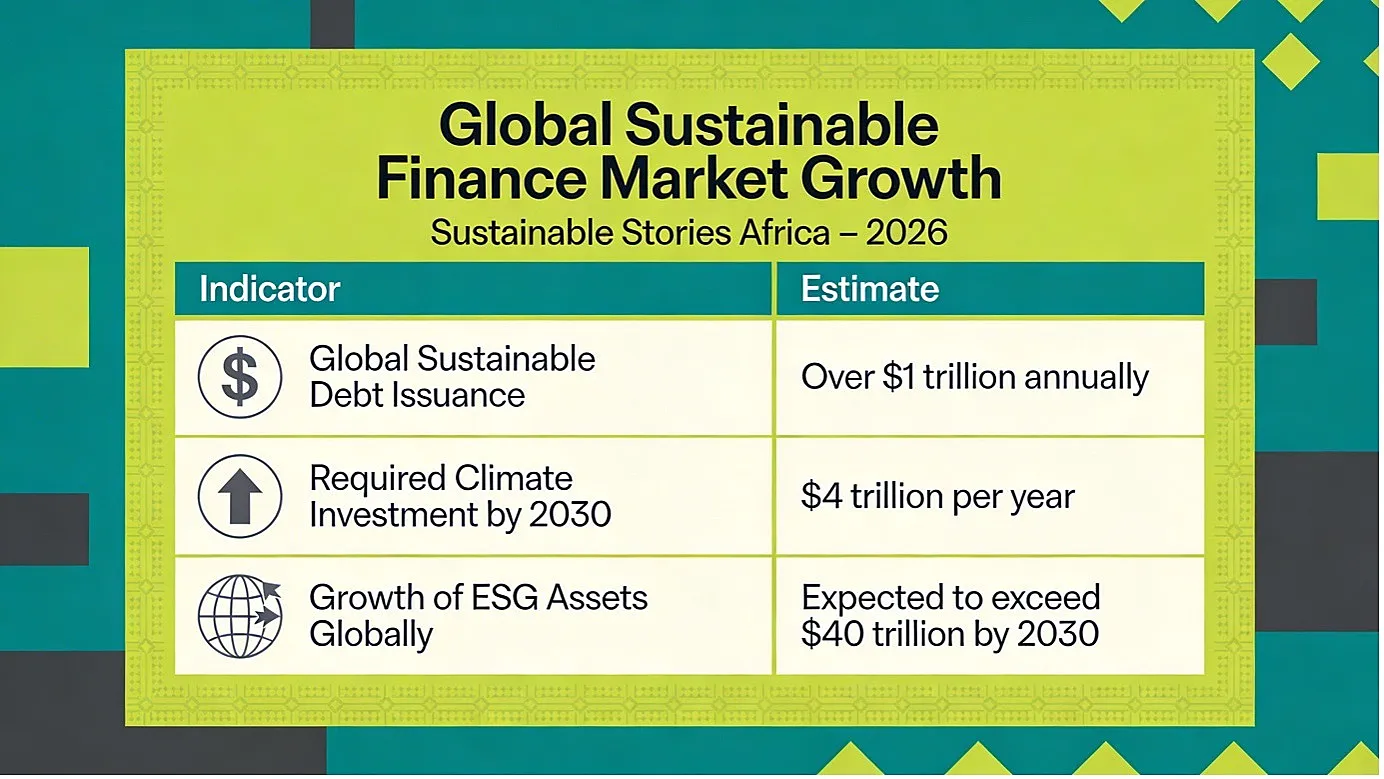
Global Sustainable Finance Market Growth
Indicator | Estimate |
|---|---|
Global Sustainable Debt Issuance | Over $1 trillion annually |
Required Climate Investment by 2030 | $4 trillion per year |
Growth of ESG Assets Globally | Expected to exceed $40 trillion by 2030 |
If banks successfully channel this capital into real-world projects, the results could reshape energy systems, industrial supply chains and urban infrastructure.
But failure to mobilise financing at scale could slow the transition, particularly for developing economies that face both energy access challenges and climate vulnerability.
Mobilising Finance for Climate Transition
Odaro’s appointment reflects a broader shift underway across the financial sector: the recognition that sustainable finance is no longer a niche segment, but a core pillar of global banking strategy.
For governments and businesses, the implication is clear: the energy transition will increasingly be shaped by partnerships between capital markets, development institutions and private investors.
Policymakers must continue strengthening regulatory frameworks that support sustainable finance, including:
- climate disclosure standards
- transition finance taxonomies
- carbon market mechanisms
Meanwhile, companies seeking investment will need to demonstrate credible decarbonisation strategies and transparent ESG reporting.
For Africa and other emerging markets, the challenge is to ensure that global climate capital flows are inclusive, equitable and accessible, supporting both development and decarbonisation.
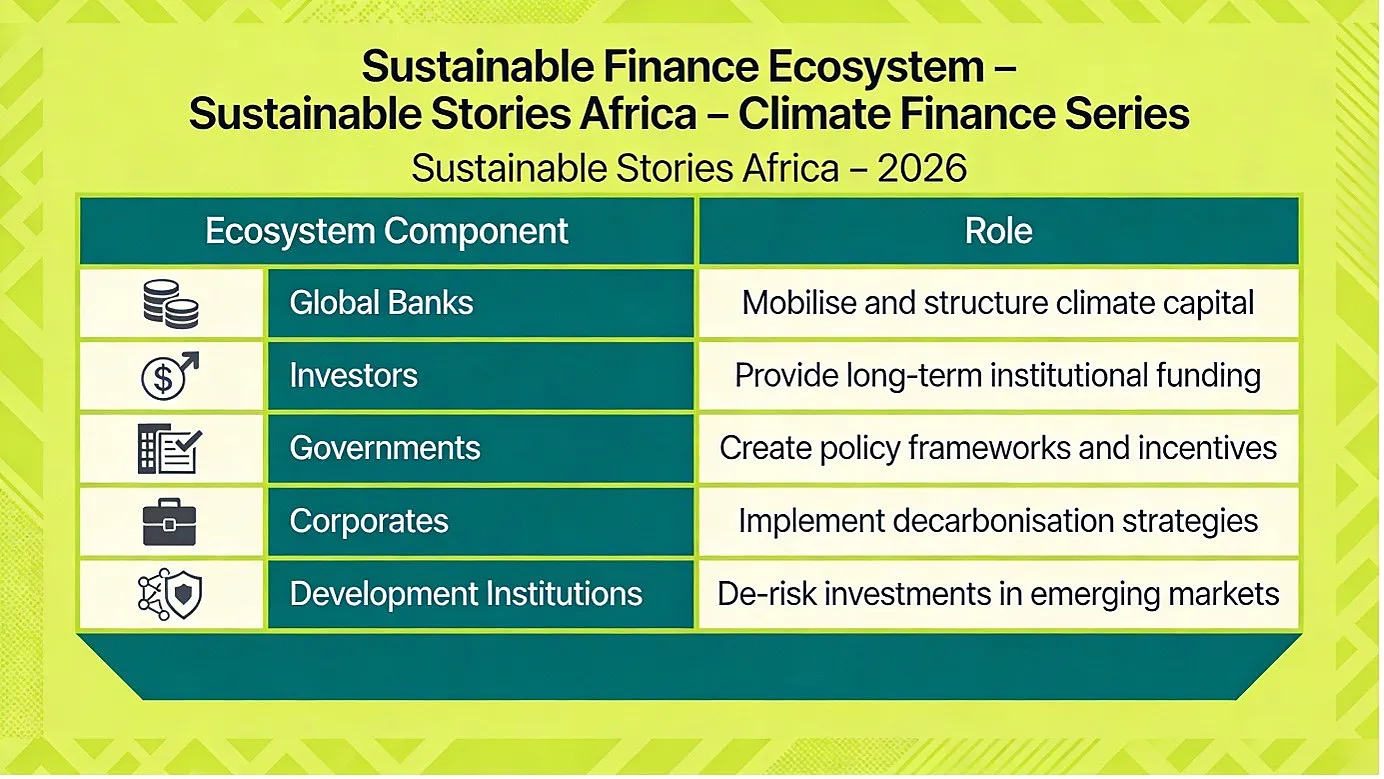
Sustainable Finance Ecosystem – Sustainable Stories Africa – Climate Finance Series
Ecosystem Component | Role |
|---|---|
Global Banks | Mobilise and structure climate capital |
Investors | Provide long-term institutional funding |
Governments | Create policy frameworks and incentives |
Corporates | Implement decarbonisation strategies |
Development Institutions | De-risk investments in emerging markets |
Path Forward – Global Finance Aligning With Climate Goals
HSBC’s appointment of Denise Odaro highlights how leadership within global banks is becoming central to the climate transition.
Financial institutions are increasingly expected to convert climate pledges into measurable financing outcomes.
For emerging economies, the opportunity lies in ensuring sustainable finance reaches projects that deliver both decarbonisation and development.
Strong governance, credible ESG reporting and policy alignment will determine how effectively global climate capital flows for Africa’s energy and infrastructure.
Culled From: HSBC Names Denise Odaro to Lead Sustainable Finance and Transition Across Europe and the Americas