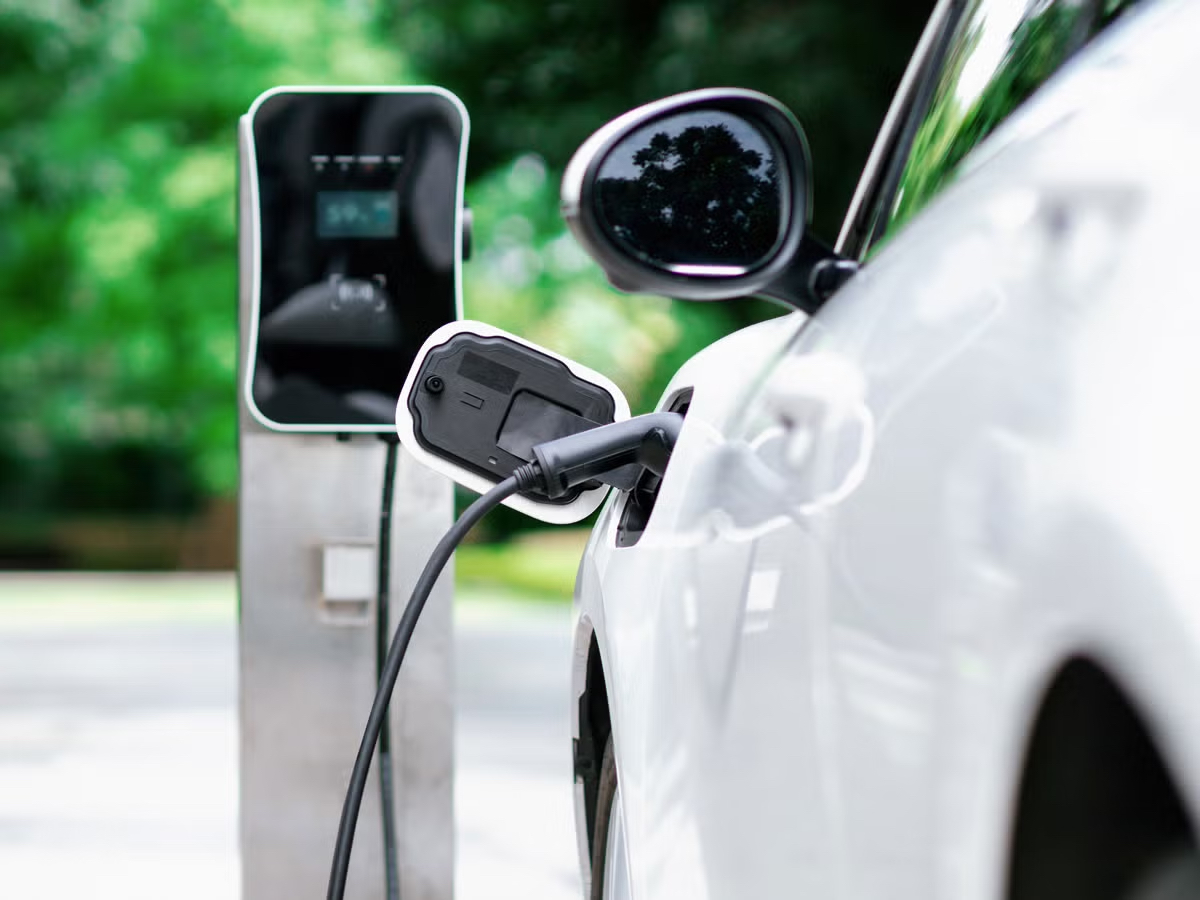
Electric vehicles are quietly moving from novelty to necessity in Nigeria’s urban corridors.
Despite sparse charging infrastructure and policy ambiguity, early adopters and private investors are accelerating market traction.
The shift signals more than a transport upgrade; it reflects Nigeria’s evolving energy, climate and industrial calculus.
Electric Vehicles Gain Traction Amid Infrastructure Gaps
Nigeria’s electric vehicle (EV) market is expanding despite limited public charging infrastructure, high upfront costs and regulatory uncertainty.
Industry players say demand is rising in Lagos and Abuja, driven by the removal of fuel subsidy, corporate sustainability commitments and volatile petrol prices.
Dealers and fleet operators report an increase in enquiries for electric buses, ride-hailing fleets and corporate mobility solutions.
While official national EV registration data remain limited, import volumes and pilot deployments have grown steadily over the past two years, according to industry associations and energy analysts.
The development reflects a broader recalibration of Nigeria’s energy transition strategy: as transport accounts for a significant share of urban emissions and fuel imports strain foreign exchange reserves, electrification is emerging as both a climate and fiscal lever.
Fuel Price Shocks Reshape Mobility
The removal of fuel subsidies in 2023 altered Nigeria’s transport economics. Petrol prices surged, pushing logistics operators and ride-hailing drivers to reassess cost structures.
For corporate fleets, total cost of ownership calculations increasingly favour EVs over five-year horizons, particularly when maintenance savings and lower energy costs are factored in.
Awareness has shifted from environmental advocacy to operational efficiency.
Infrastructure Remains a Bottleneck
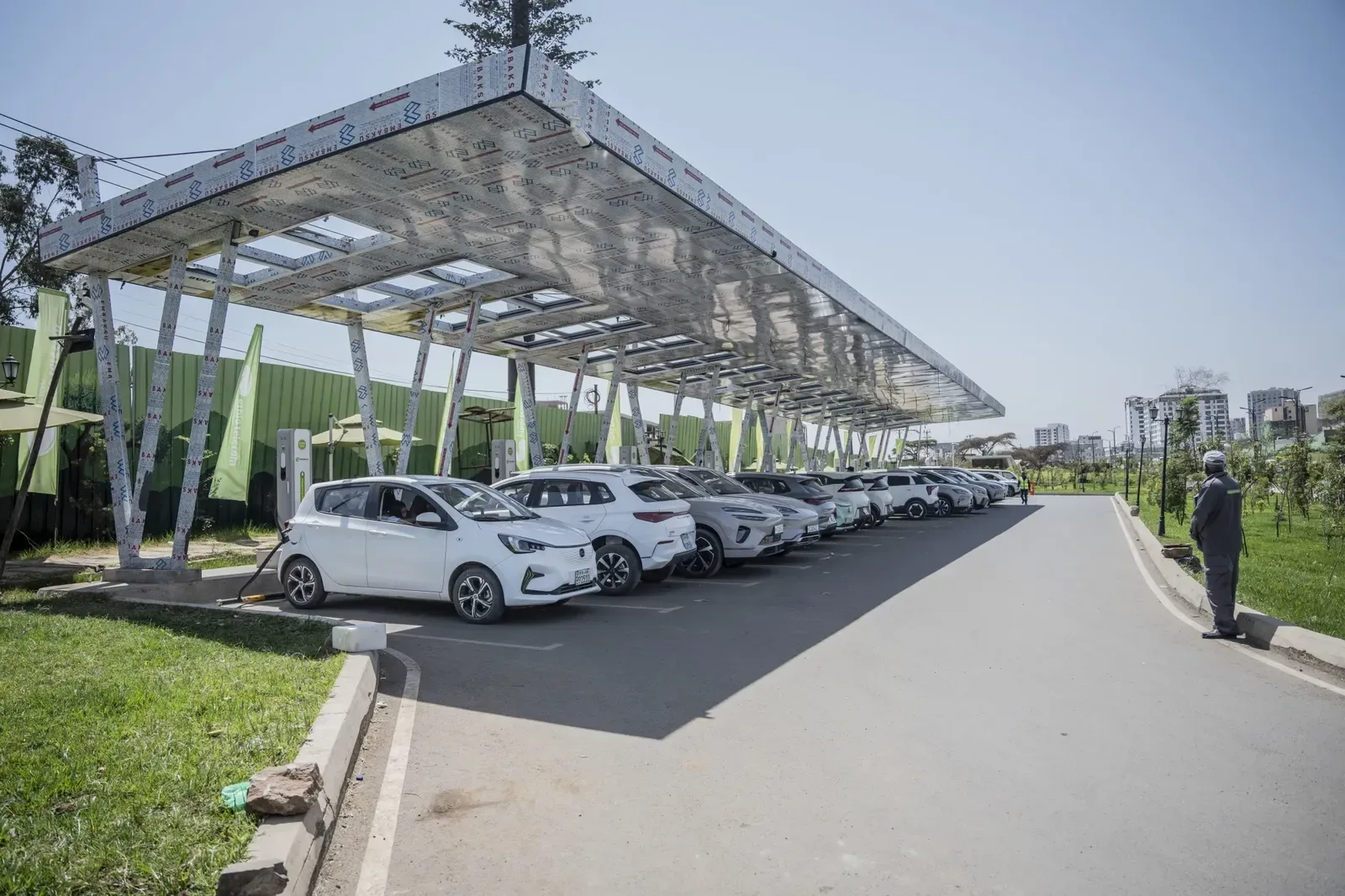
Charging infrastructure remains sparse. Most EV users rely on home or depot charging, with only a handful of public stations in Lagos and Abuja.
Private firms are experimenting with battery-swapping, solar-powered charging hubs and fleet-based charging depots. However, grid reliability and capital expenditure remain structural constraints.
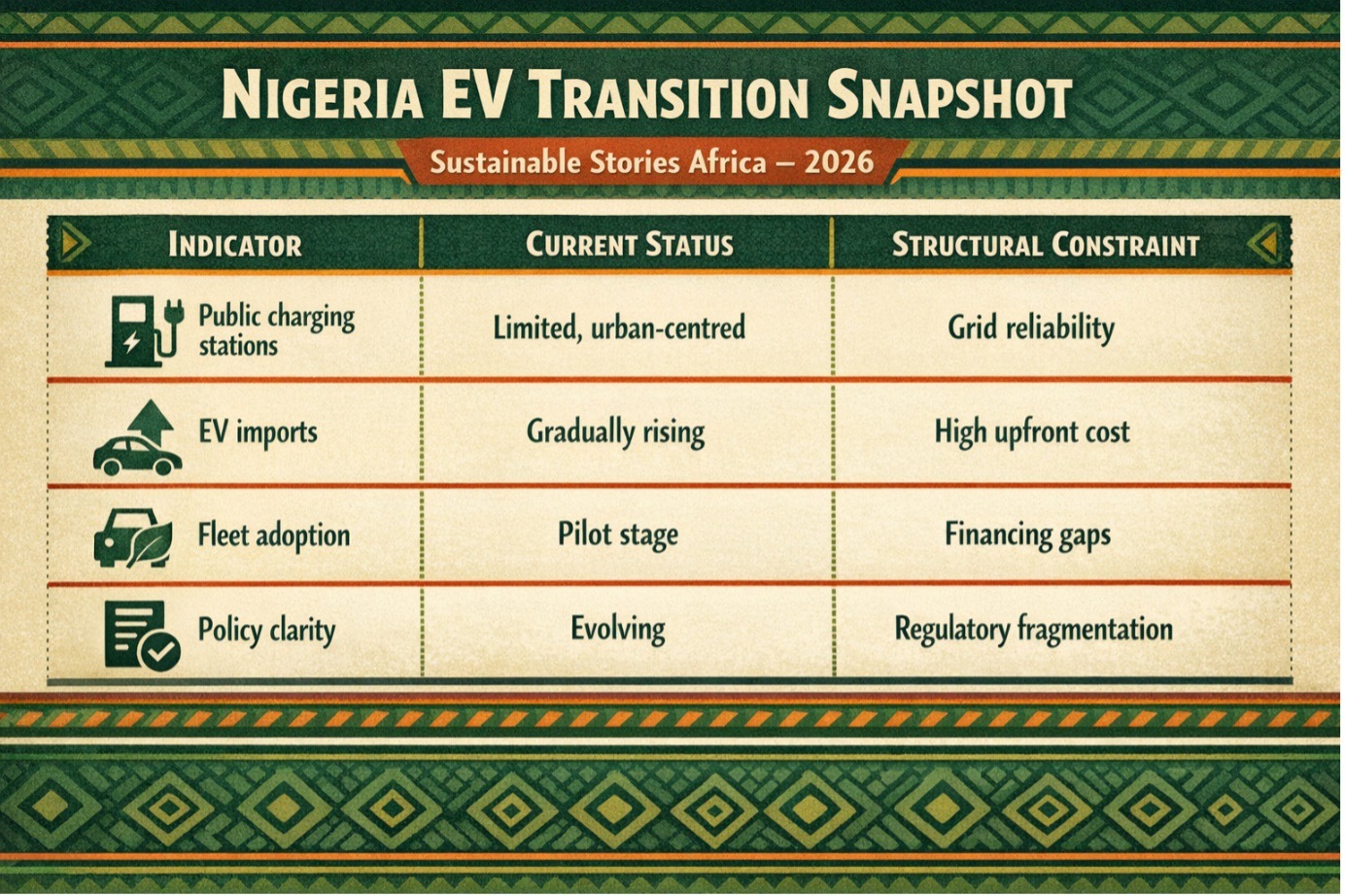
Nigeria EV Transition Snapshot
Indicator | Current Status | Structural Constraint |
|---|---|---|
Public charging stations | Limited, urban-centred | Grid reliability |
EV imports | Gradually rising | High upfront cost |
Fleet adoption | Pilot stage | Financing gaps |
Policy clarity | Evolving | Regulatory fragmentation |
Data – Market Signals Emerging
Although Nigeria lacks comprehensive EV registration statistics, industry estimates suggest that imports of electric buses and passenger vehicles have increased since 2023.
Corporate sustainability commitments and decarbonisation targets among financial institutions and multinationals are contributing to shifts in procurement
Meanwhile, ride-hailing companies are piloting EV fleets in response to driver demand and fuel volatility.
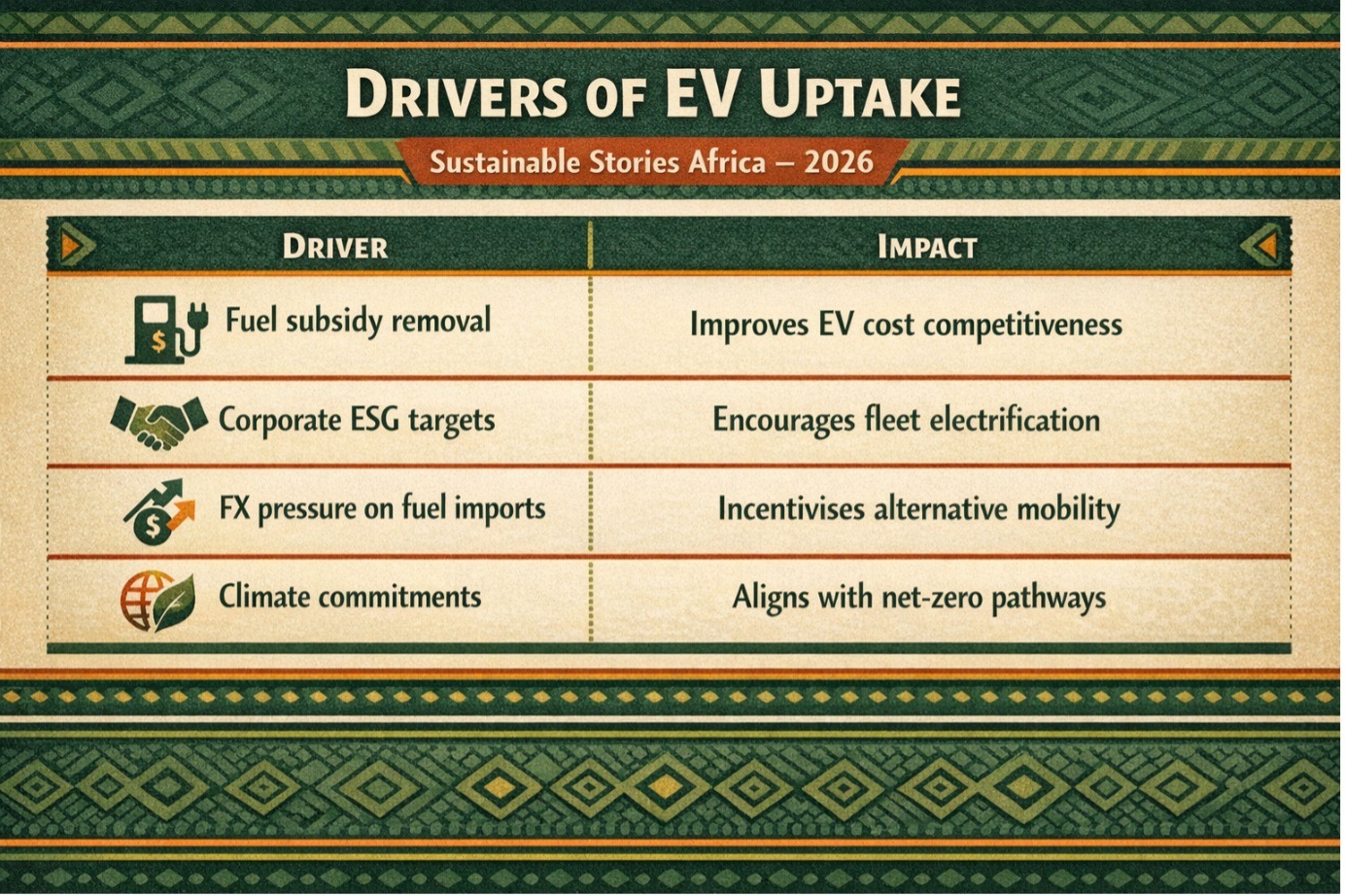
Drivers of EV Uptake
Driver | Impact |
|---|---|
Fuel subsidy removal | Improves EV cost competitiveness |
Corporate ESG targets | Encourages fleet electrification |
FX pressure on fuel imports | Incentivises alternative mobility |
Climate commitments | Aligns with net-zero pathways |
Transport electrification also aligns with Nigeria’s broader energy transition ambitions, including the expansion and growth of renewable energy and distributed solar.
Private Sector Steps In
With federal policy still in the process of consolidation, private capital is filling gaps. Start-ups are investing in charging hubs, battery leasing models and EV assembly partnerships.
Financial institutions are exploring green financing instruments to support the conversion of ride fleets.
Meanwhile, state governments are evaluating incentives such as reduced import duties and tax breaks.
Industry executives argue that coordinated standards, tariff clarity and grid upgrades will determine whether Nigeria scales from pilot projects to mainstream adoption.
Policy Alignment Could Accelerate Scale
Nigeria’s EV trajectory intersects with industrial policy. Local assembly ambitions could reduce costs and create employment, but require stable regulatory frameworks and investment certainty.
Energy planners note that EV adoption must be synchronised with grid reform and renewable capacity expansion to avoid carbon leakage from fossil-fuel-heavy power generation.
Analysts caution that without infrastructure scale-up, adoption may remain limited to corporate fleets and affluent consumers, slowing equitable transition outcomes.
Path Forward – Coordinated Infrastructure, Policy Certainty
Nigeria’s EV momentum hinges on three priorities:
- Expand charging infrastructure
- Align fiscal incentives
- Integrate transport electrification into national energy planning.
Clear import tariffs, concessional financing and public-private grid investments are emerging as decisive levers.
If executed cohesively, EV adoption could reduce exposures to fuel imports, stimulate green jobs and strengthen Nigeria’s climate credibility. Fragmented implementation, however, risks stalling progress at pilot scale.
Culled From: Electric vehicles gain traction in Nigeria despite limited charging infrastructure - Nairametrics