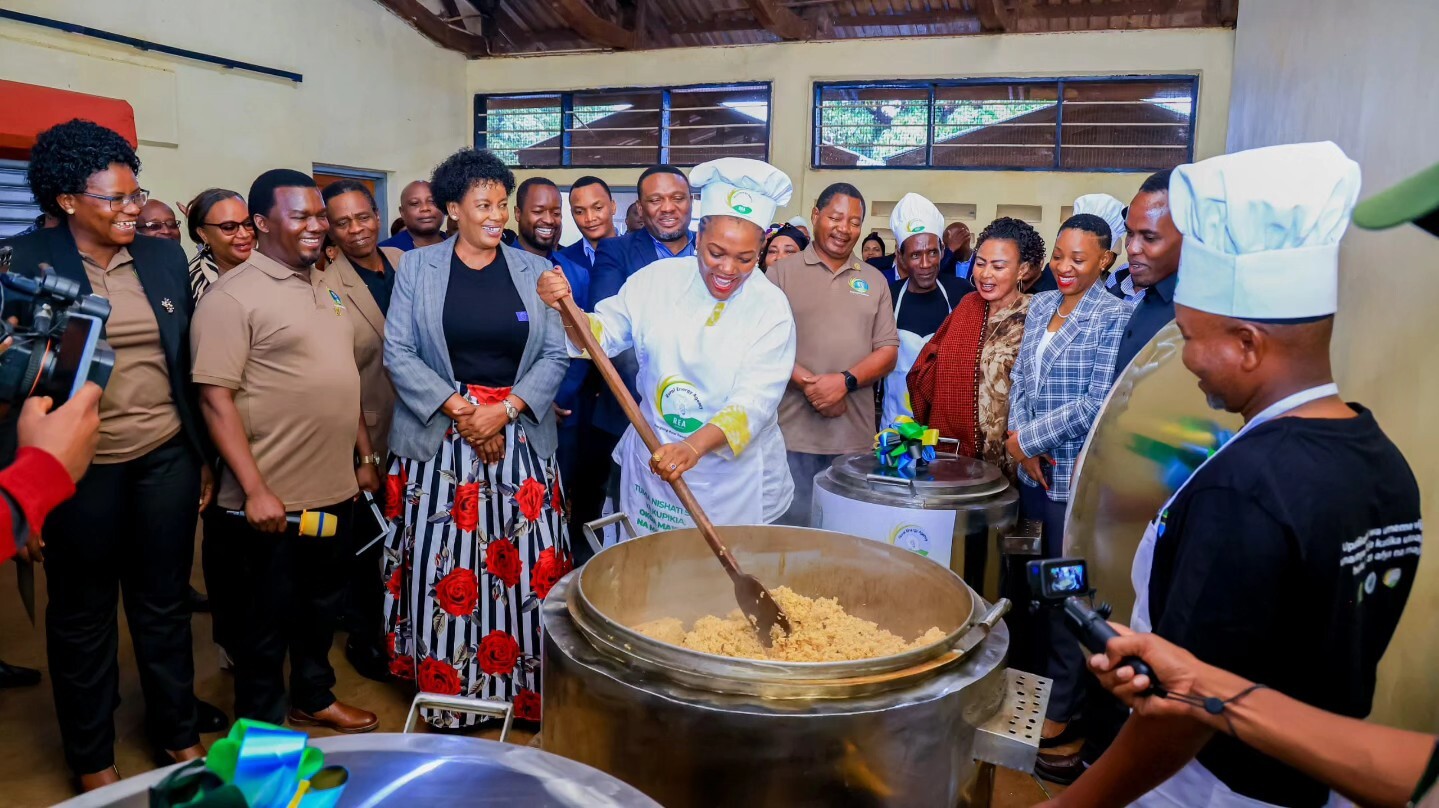
Tanzania has launched the first phase of its National Clean Cooking Energy Programme, targeting 453 public institutions nationwide.
The initiative aims to replace traditional cooking methods with cleaner and more efficient energy technologies.
Officials say the programme is a major step toward improving public health, reducing deforestation and advancing the country’s broader energy transition goals.
Tanzania Accelerates Clean Cooking Transition
Tanzania has begun implementing the first phase of its National Clean Cooking Energy Programme, targeting 453 public institutions including schools, hospitals and government facilities.
The initiative is designed to transition institutions away from traditional cooking fuels such as firewood and charcoal toward cleaner energy solutions.
Across much of sub-Saharan Africa, institutional cooking still relies heavily on biomass fuels, contributing to deforestation, air pollution and health risks.
By focusing on large public institutions, Tanzania aims to accelerate the adoption of modern cooking technologies while reducing environmental pressure from fuelwood consumption.
Officials say the programme also aligns with broader national goals to expand access to sustainable energy systems.
Institutional Energy Use Drives Reform
Public institutions are some of the largest consumers of cooking fuel in many African countries.
Schools, hospitals and military facilities often require large-scale cooking operations, making them key targets for energy-efficient reforms.
Tanzania’s programme seeks to modernise these systems by introducing clean cooking technologies such as liquefied petroleum gas (LPG), biogas and improved energy-efficient cooking systems.
Government officials say targeting institutions first allows the country to achieve significant environmental and economic benefits while demonstrating the effectiveness of cleaner technologies.
Experts note that institutional adoption can also accelerate behavioural change and encourage wider household adoption of modern cooking solutions.
Key Objectives Of Tanzania’s Clean Cooking Programme
Objective | Expected Outcome |
|---|---|
Reduce biomass fuel dependence | Lower demand for firewood and charcoal |
Improve public health | Reduced indoor air pollution exposure |
Increase energy efficiency | Lower fuel consumption in institutions |
Support climate goals | Reduced emissions from traditional cooking |
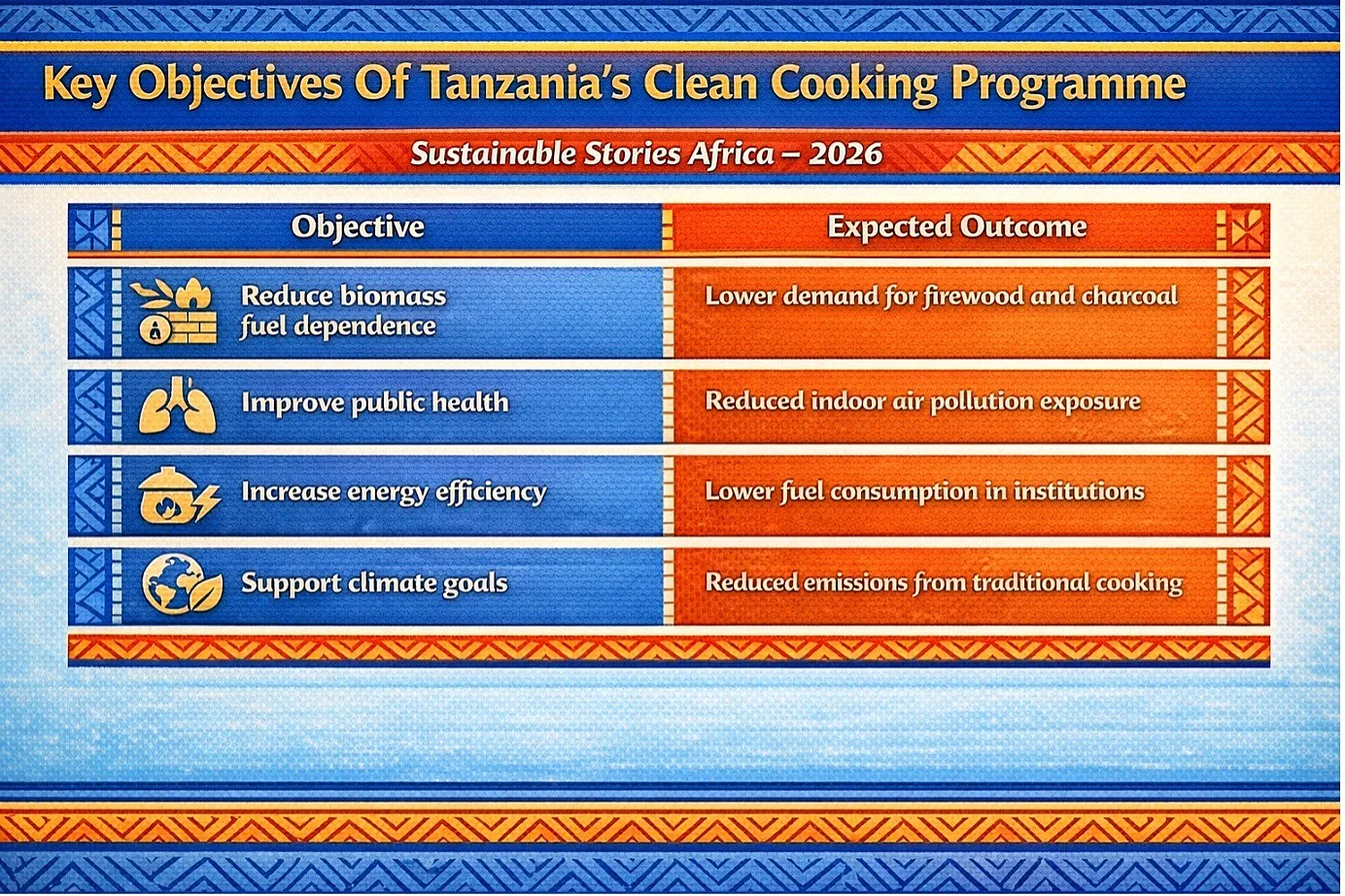
These objectives position clean cooking as both a health and climate policy priority.
Clean Cooking Remains a Major Energy Challenge
Across Africa, millions of households and institutions still rely on traditional biomass fuels for cooking.
The reliance on firewood and charcoal contributes significantly to deforestation and exposes communities to harmful indoor air pollution.
Transitioning to cleaner cooking technologies has become a priority for governments seeking to address public health concerns while reducing environmental degradation.
Tanzania’s programme highlights growing momentum among African governments to scale clean cooking initiatives through policy reform and institutional investment.
Benefits Of Institutional Clean Cooking Adoption
Benefit | Impact |
|---|---|
Reduced deforestation | Lower pressure on forest resources |
Health improvements | Reduced respiratory illnesses from smoke |
Lower long-term costs | Improved fuel efficiency in institutions |
Climate mitigation | Reduced emissions from biomass combustion |
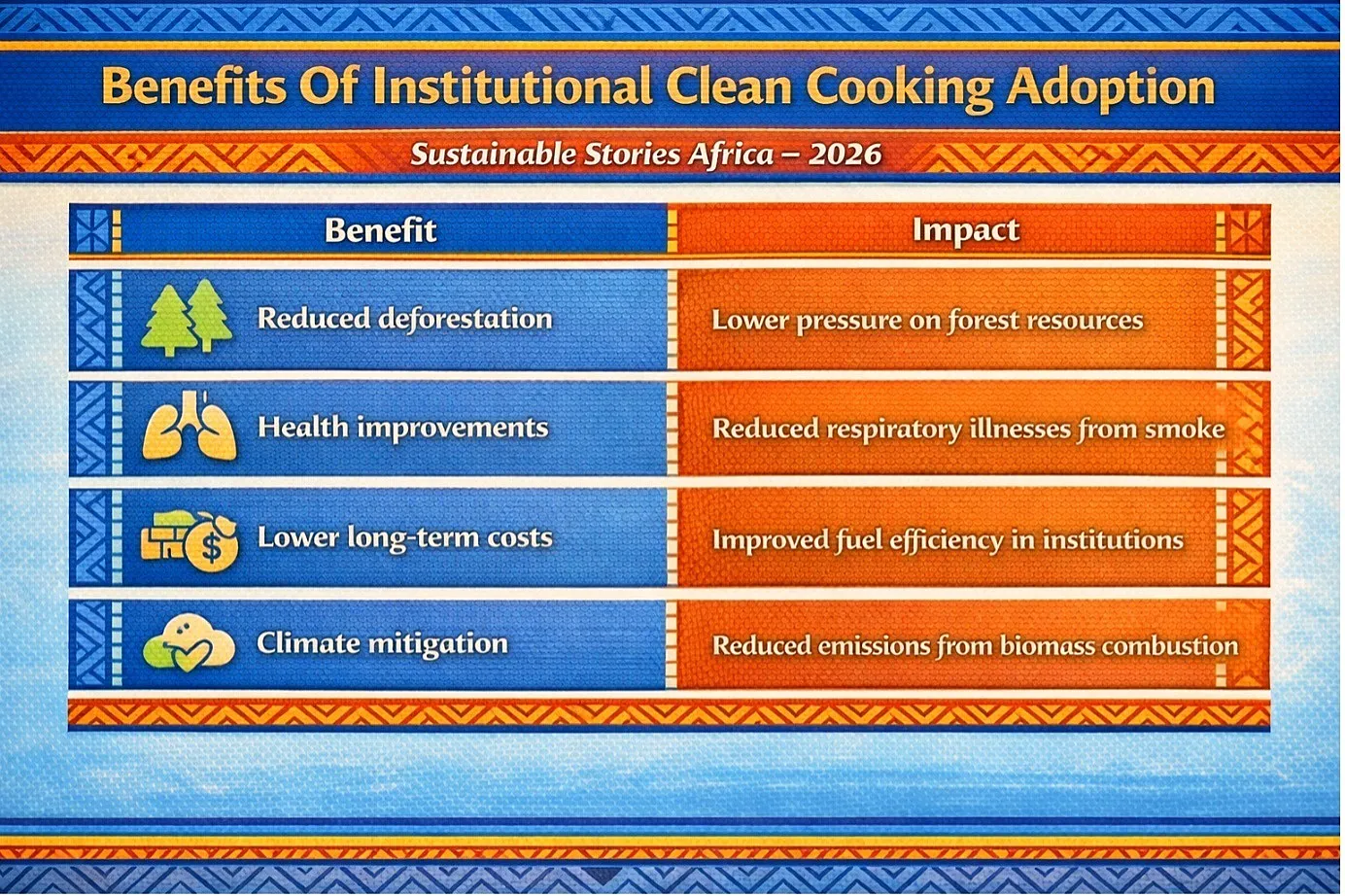
These benefits underline why clean cooking programmes are increasingly central to energy transition strategies.
Expanding Clean Energy Access Nationwide
Tanzania’s government plans to expand the programme beyond the initial 453 institutions as part of a broader national clean cooking strategy.
Officials say scaling adoption will require collaboration between government agencies, energy providers and development partners.
Investment in supply chains, technology deployment and institutional training is essential to ensure the programme’s success.
Energy experts argue that institutional programmes like Tanzania’s could play a crucial role in accelerating the adoption of clean cooking methods across Africa.
Path Forward – Scaling Institutional Clean Cooking Nationwide
Tanzania’s clean cooking initiative marks an important step toward reducing the dependence on biomass energy while improving health and environmental outcomes.
If successfully expanded, the programme could help build a nationwide transition toward modern cooking technologies while strengthening the country’s broader sustainable energy strategy.
Culled From: Tanzania Rolls Out Phase One of National Clean Cooking Energy Programme for 453 Institutions - URT Updates