Nigeria has unveiled a comprehensive Marine Litter Policy and a 2025 – 2040 Roadmap, marking its most coordinated attempt yet to confront plastic pollution that threatens coastlines, fisheries and economic resilience.
The framework shifts marine protection from fragmented cleanup efforts to a structured national compliance, prevention and circular economy strategy.
Officials say the roadmap positions Nigeria to align environmental protection with economic growth, unlocking investment while safeguarding marine ecosystems critical to livelihoods.
Nigeria’s Marine Litter Roadmap Signals Environmental Economic Turning Point
Nigeria has formally launched its National Marine Litter Policy and a 2025 – 2040 Roadmap, establishing the country’s first long-term institutional framework to prevent, reduce and manage marine pollution.
The policy signals a decisive shift from reactive cleanup programmes toward systemic prevention, regulatory enforcement and circular economy integration.
The roadmap prioritises waste reduction at source, extended producer responsibility, improved waste infrastructure, and stronger enforcement across Nigeria’s coastal and inland waterways.
With plastic pollution threatening fisheries, coastal livelihoods and maritime commerce, the initiative reframes environmental protection as both an ecological and economic imperative.
Nigeria Confronts Escalating Ocean Pollution Crisis
Marine litter has emerged as one of Nigeria’s fastest-growing environmental risks, driven by rapid urbanisation, plastic consumption and inadequate waste management systems.
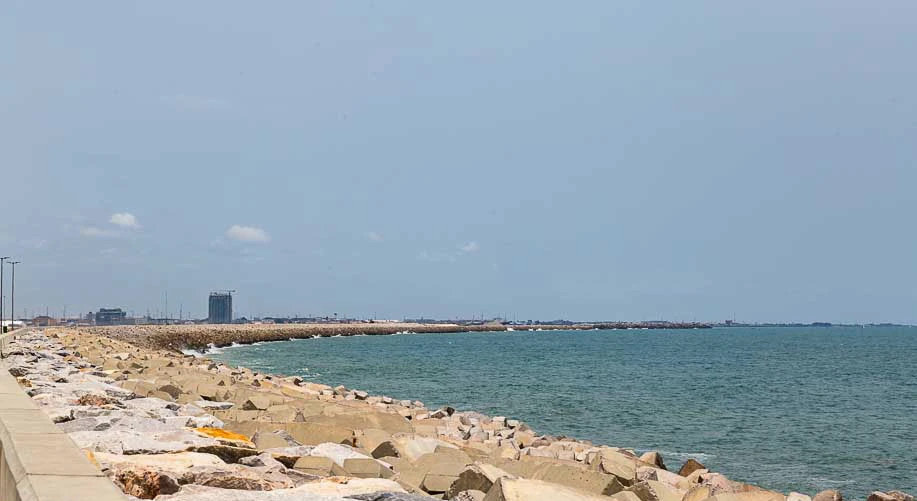
Nigeria’s 853-kilometre coastline and extensive river systems now face mounting plastic inflows that threaten its fisheries, tourism and stability of the coastal ecosystem.
The new roadmap recognises marine litter not merely as an environmental hazard, but as a structural governance challenge affecting economic sustainability, public health and climate resilience.
Policy Creates Integrated Prevention Enforcement Framework
The Marine Litter Policy introduces coordinated national interventions across production, waste collection, recycling and enforcement.
It integrates regulatory agencies, state governments, private sector actors and communities into a unified prevention and compliance architecture.
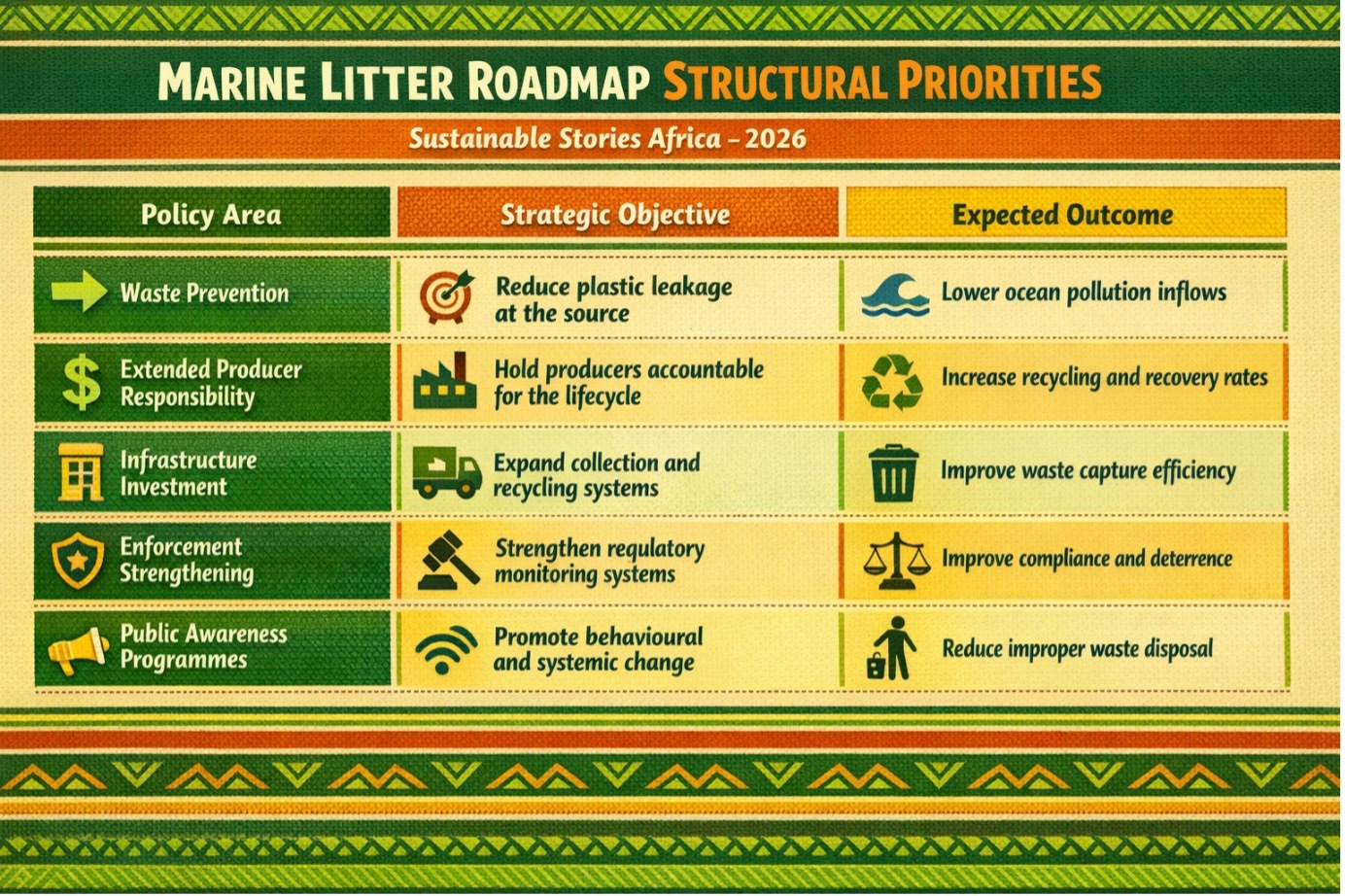
Marine Litter Roadmap Structural Priorities
Policy Area | Strategic Objective | Expected Outcome |
|---|---|---|
Waste prevention | Reduce plastic leakage at the source | Lower ocean pollution inflows |
Extended producer responsibility | Hold producers accountable for the lifecycle | Increase recycling and recovery rates |
Infrastructure investment | Expand collection and recycling systems | Improve waste capture efficiency |
Enforcement strengthening | Strengthen regulatory monitoring systems | Improve compliance and deterrence |
Public awareness programmes | Promote behavioural and systemic change | Reduce improper waste disposal |
The roadmap also aligns Nigeria with global commitments on marine protection, enhancing its credibility in international environmental compliance and investment frameworks.
Circular Economy Unlocks Environmental Economic Value Creation
Beyond environmental protection, the roadmap positions marine litter management as an economic opportunity.
By expanding recycling capacity and advancing circular production models, Nigeria can create new industries, generate employment and reduce resource dependency.
Circular economy integration transforms waste from an environmental liability into a productive asset.
Recycling industries, material recovery systems and sustainable packaging innovations can stimulate investment and strengthen economic diversification.
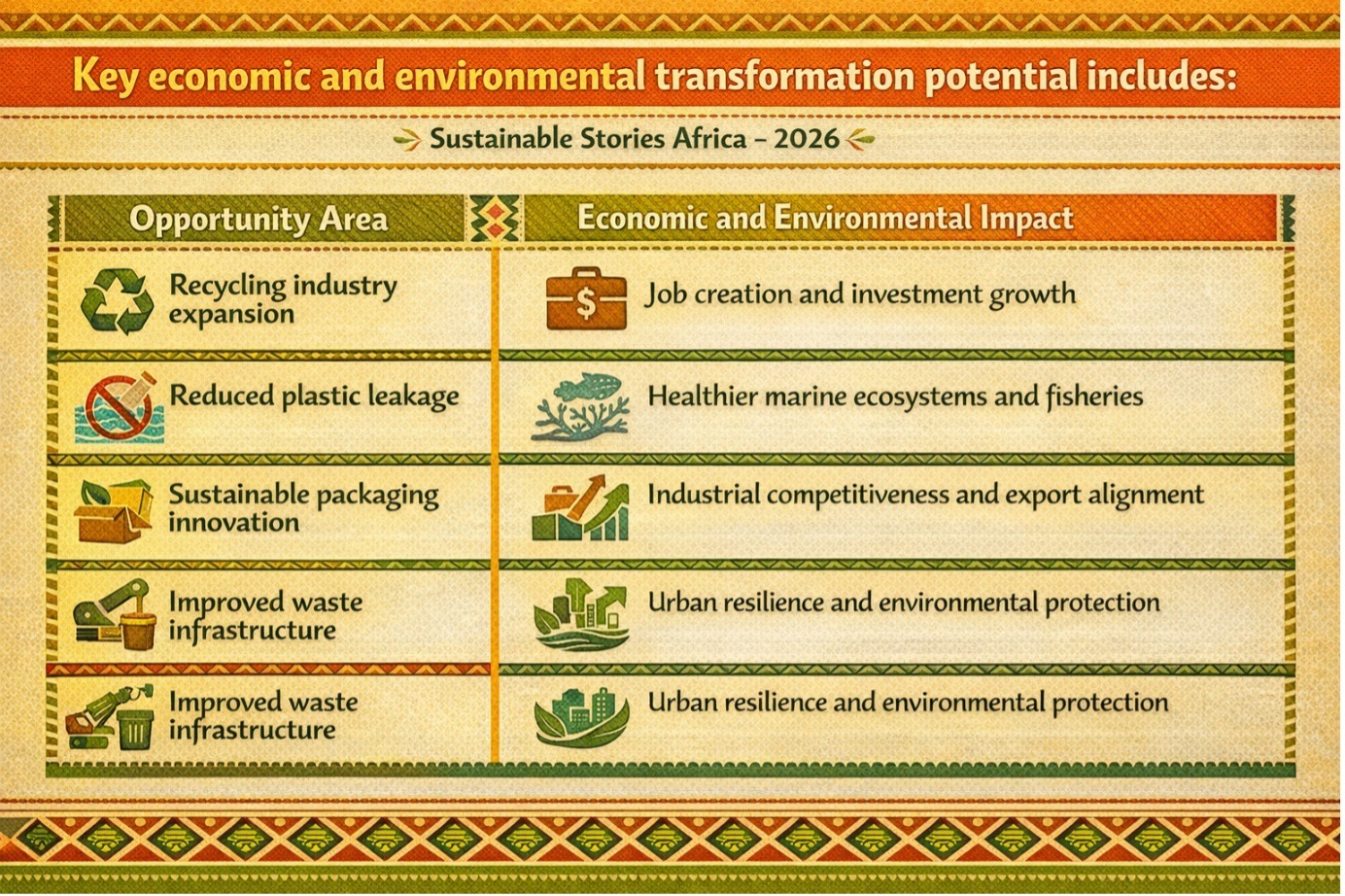
Key economic and environmental transformation potential includes:
Opportunity Area | Economic and Environmental Impact |
|---|---|
Recycling industry expansion | Job creation and investment growth |
Reduced plastic leakage | Healthier marine ecosystems and fisheries |
Sustainable packaging innovation | Industrial competitiveness and export alignment |
Improved waste infrastructure | Urban resilience and environmental protection |
These measures also enhance Nigeria’s environmental compliance profile, strengthening its position in global trade and investment ecosystems increasingly influenced by ESG performance.
Government Mobilises Institutions, Industry and Communities
The roadmap’s success depends on coordinated implementation across government agencies, industries and communities. Authorities emphasise the need for stronger regulatory enforcement, infrastructure investment and private sector accountability.
Producers, manufacturers and importers are expected to integrate lifecycle accountability into product design, packaging and waste recovery systems.
Meanwhile, public education and community engagement will play critical roles in reducing behavioural drivers of pollution.
The roadmap also creates a policy foundation capable of attracting international climate finance, sustainability-linked investments and development partnerships aligned with marine protection and circular economy objectives.
Path Forward – Coordinated Action Will Drive Implementation
Nigeria’s Marine Litter Roadmap establishes a long-term institutional framework that integrates prevention, enforcement and circular economy development.
By aligning regulatory compliance, infrastructure expansion and private sector accountability, the policy creates the structural foundation needed to reduce marine pollution sustainably.
Its success will depend on consistent enforcement, investment mobilisation and cross-sector collaboration.
If effectively implemented, the roadmap could transform marine protection into a driver of economic resilience, environmental recovery and sustainable industrial development.
Culled From: Nigeria unveils bold Marine Litter Policy and 2025–2040 Roadmap