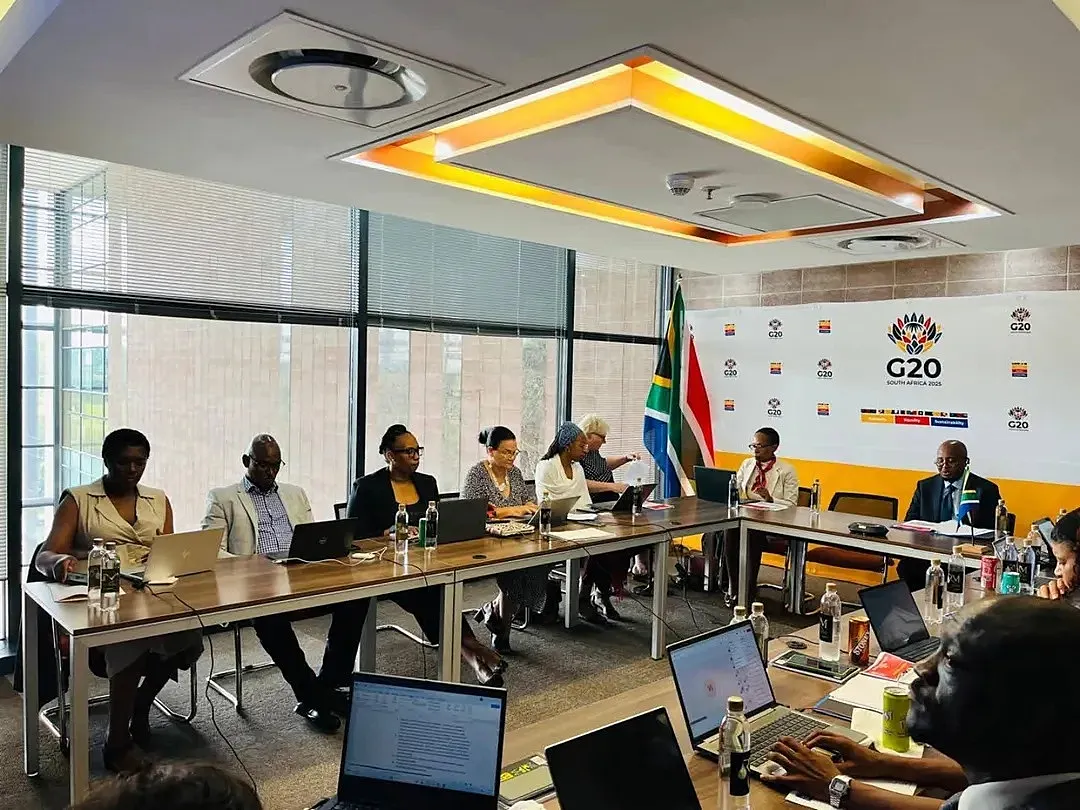
Africa's voice on the global stage has never been louder, but influence is not the same as impact. As geopolitical competition intensifies and multilateral systems strain, Foresight Africa 2025–2030 argues that the next five years will test whether Africa's partnerships translate into agency, not dependency.
When Influence Finally Meets Responsibility
Africa enters the latter half of the decade with unprecedented global visibility. The African Union's permanent seat at the G20, South Africa's leadership of the bloc, and renewed attention from major powers signal that the continent is no longer at the margins of global decision-making.
However, pages 106–135 of Foresight Africa 2025–2030 offer a sobering reminder: presence alone does not equal power. Global partnerships can either reinforce Africa's development priorities or entrench new forms of dependence if not strategically managed.
With the SDG deadline looming and global economic fragmentation accelerating, these chapters argue that Africa's diplomacy, trade strategy, and geopolitical positioning must now be judged by outcomes: jobs created, industries built, resilience strengthened.
A Fragmenting World Raises the Stakes
The global environment confronting Africa is more volatile than at any point in recent decades. Trade protectionism is rising, multilateral cooperation is weakening, and geopolitical rivalry increasingly shapes finance, technology, and security flows.
Foresight Africa notes that Africa faces a paradox: while global demand for its critical minerals, markets, and diplomatic alignment is growing, the rules of engagement are becoming more transactional and competitive. The risk is clear: Africa could be courted rhetorically yet sidelined materially.
The report suggests that the moment we are in today will determine whether Africa leverages competition among partners to advance its priorities or becomes an arena for proxy interests.
What Global Partnerships Really Mean Now
Pages 106–135 dissect Africa's external relationships across three critical dimensions.
- Multilateral reform and African agency – Africa’s expanded role in institutions such as the G20 creates an opening to shape global rules on debt relief, climate finance, and development banking. But influence depends on coordination. Fragmented African positions weaken negotiating power, particularly on financial architecture reform and concessional finance access.
- The evolving U.S.–Africa relationship – The report highlights uncertainty surrounding U.S. engagement, including the future of AGOA and shifting political priorities. While recent years saw increased investment pledges and strategic initiatives, the durability of these commitments will hinge on whether Africa can anchor partnerships in trade, industrialisation, and private-sector development—not aid dependence.
- China, emerging powers, and strategic balance – China, Gulf states, and other emerging partners continue to expand their footprint in infrastructure, energy, and mining. The report stresses that diversification of partnerships is an asset—but only if African governments maintain transparency, debt sustainability, and alignment with long-term development goals.
Africa's Global Engagement Landscape
| Dimension | Strategic Question |
|---|---|
| Multilateral forums | Can Africa shape rules, not just attend? |
| Trade partnerships | Do deals enable value addition? |
| Climate finance | Are flows predictable and accessible? |
| Geopolitics | Is Africa setting terms or reacting? |
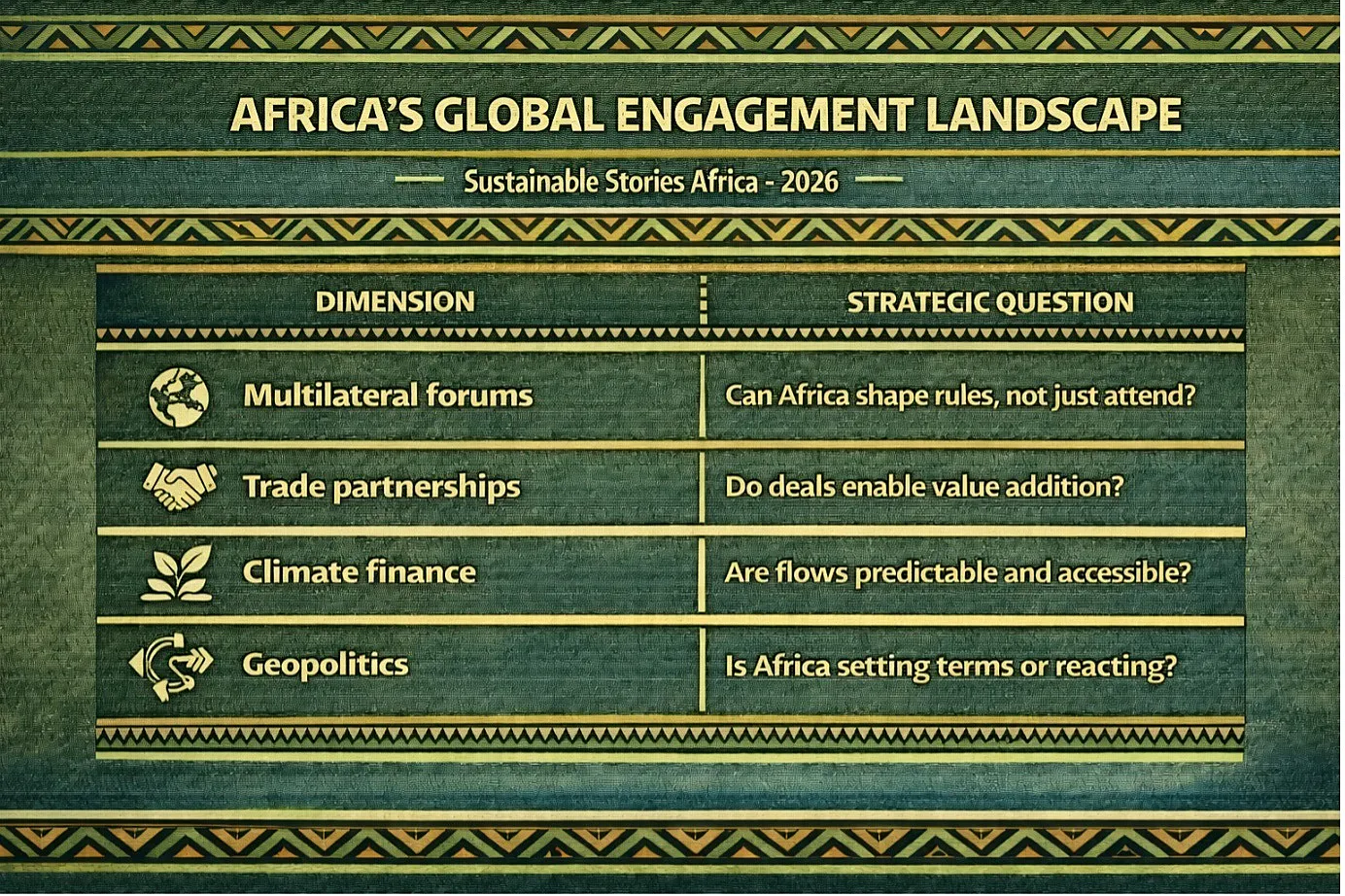
From South Africa's G20 presidency to shifting U.S.–China engagement and the politics of climate, trade, and security, the report reframes global partnerships as a strategic tool that must now deliver concrete outcomes for African economies and citizens.
The evolving U.S.–Africa relationship – The report highlights uncertainty surrounding U.S. engagement, including the future of AGOA and shifting political priorities. While recent years saw increased investment pledges and strategic initiatives, the durability of these commitments will hinge on whether Africa can anchor partnerships in trade, industrialisation, and private-sector development—not aid dependence.
China, emerging powers, and strategic balance – China, Gulf states, and other emerging partners continue to expand their footprint in infrastructure, energy, and mining. The report stresses that diversification of partnerships is an asset—but only if African governments maintain transparency, debt sustainability, and alignment with long-term development goals.
From Diplomacy to Development Results
The report is clear that global partnerships matter most where they unlock productive capacity.
Well-structured partnerships can accelerate industrialisation, support regional value chains, and mobilise climate finance at scale.
Africa's mineral endowment, youthful workforce, and expanding consumer markets give it leverage, when translated into strategic bargaining positions.
Examples highlighted include corridor-based infrastructure projects, regional manufacturing platforms, and climate-adaptation partnerships that prioritise local institutions. These approaches move beyond extractive models toward shared value creation.
Crucially, the report frames partnerships as complements, not substitutes, for domestic reform. External engagement amplifies outcomes only when governance, skills, and policy coherence are in place.
What African Leaders Must Do Differently
Foresight Africa outlines a pragmatic agenda for engagement.
- Speak with fewer, stronger voices. Continental coordination through the AU and RECs is essential to avoid dilution of influence.
- Anchor diplomacy in economics. Trade, investment, and industrial policy, not symbolism, must define external relationships.
- Insist on mutual accountability. Partnerships should include transparency on financing terms, local content, and development impact.
- Align global engagement with domestic priorities. External deals must reinforce, not bypass, national development strategies.
The report emphasises that Africa's credibility abroad depends increasingly on coherence at home.
Path Forward – Partnerships That Deliver, Not Distract
Africa's growing global presence creates opportunity, but also obligation. Over the next five years, partnerships must be judged by tangible development outcomes, not diplomatic visibility.
By coordinating positions, prioritising value creation, and aligning global engagement with domestic reform, Africa can convert influence into impact. The window is open, but it will not stay that way.