
The Commonwealth Secretariat's Strategic Results Framework marks a decisive shift toward proving real-world outcomes and institutional accountability.
Cutting through legacy weaknesses, this multi-tiered framework emboldens the drive for sustainable, inclusive development, pushing the Secretariat to measure, adapt, and communicate impact with unprecedented transparency for 2.7 billion citizens.
Measuring Impact, Not Just Ambition
Too often, grand multilateral plans stall out in a haze of intention, ambitious but not measured.
This is where the Commonwealth Secretariat's Strategic Results Framework could chart a radical course, transforming vague promises into evidence-based progress.
Over the next five years, every Secretariat initiative will be tested by demanding performance metrics, regular reviews, and risk-based adjustments, ensuring that the Secretariat's work is felt beyond boardrooms.
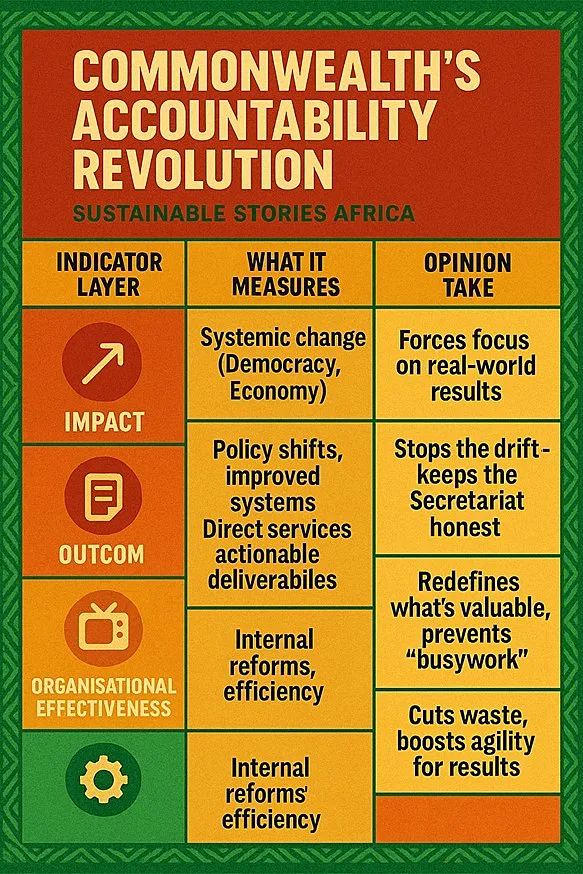
There are four core layers of accountability: Impact indicators, which track progress on democracy, economics, and environment; Outcome indicators, which monitor policy and systemic change; Output indicators, capturing direct Secretariat actions; and Organisational effectiveness, anchoring internal resources and agility.
What matters most? That impact, better governance, prosperity, climate resilience, and gender/youth inclusion, is not just projected, but evidently delivered within countries and communities.
The new approach would signal more than just monitoring. It is a bet that the Commonwealth can credibly align its ambitions with its capacity to deliver. By uniting robust data, responsive communications, and inclusive engagement, the Secretariat is stating: "Accountability is our core currency. Measure us, challenge us, and let our real impact show."
Turning Promises into Proof – Commonwealth's Accountability Revolution
With more citizens growing increasingly sceptical of international "talk shops," the Commonwealth's framework grabs attention by requiring evidence for every claim.
No longer can progress be celebrated without proof; data comes first, and after that storytelling follows.
| Indicator Layer | What It Measures | Opinion Take |
| Impact | Systemic change (Democracy, Economy) | Forces focus on real-world results |
| Outcome | Policy shifts, improved systems | Stops the drift—keeps the Secretariat honest |
Output Organisational Effectiveness | Direct services, actionable deliverables | Redefines what's valuable, prevents "busywork" |
| Internal reforms, efficiency | Cuts waste, boosts agility for results |
Where the Framework Wins – And Where Risks Remain
What seems compelling is that the system is built with flexibility. Monitoring, Evaluation, Learning (MEL) cycles ensure that course corrections can be made, amplifying what works and pivoting from what does not.
However, there are risks. Attribution remains tricky, especially as impact is shared with governments and partners. Internal culture must keep pace, or already seen bureaucracy and bottlenecks could reduce progress.
| Layer | Strengths | Risks |
| Impact | Transparent targets, global benchmarks | Attribution is complex—many actors involved |
| Outcome | Adaptive to policy shifts | May be slow to capture grassroots change |
| Output | Tracks Secretariat's real activities | Risk of quantity over quality |
| Organisational Effectiveness | Drives governance reform | Vulnerable to internal bottlenecks or resource gaps |
Why Citizens, Donors Should Care – Credibility, Data, and Tangible Outcomes
The case for the Strategic Results Framework is clear: it's a game-changer for donors, policy leaders, and ordinary citizens tracking whether change is real.
The Commonwealth is offering its stakeholders a promise they say is built on evidence, not anecdotes. This desire for proof is essential if trust and transparency is to be rebuilt and resources justified.
| Stakeholder | Desired Outcome | Framework's Promise |
| Governments | Track reforms, manage risks | Timely, relevant reporting |
| Citizens | Real service delivery, inclusion | Regular updates, clear results |
| Donors | Accountability, visibility in outcomes | Data-driven decision-making |
How Results Are Delivered, Monitored, and Maintained
Actions flow through annual delivery plans, MEL reviews, digitised performance dashboards, and reformed stakeholder engagement.
Grant mechanisms will use the Framework to optimise funding, while risk management will keep ambitions realistic and reputation intact.
| Delivery Path | Mechanism | Real-world Example |
| Core Mandate | Evidence-based planning | Service roll-out prioritized by data |
| New Initiatives | Grant platform, MEL | Faster, targeted responses |
| Efficiency Reform | Digitization, audits | Budget savings reinvested in mission |
Path Forward – Measured Change – Where the Commonwealth's Results Framework Takes Us
Truly transformative change rests on an unflinching commitment to learn, adjust, and prove results, layer by layer.
The real progress of this new plan will depend on holding the Secretariat to its own set of transparent standards, adapting to each challenge.
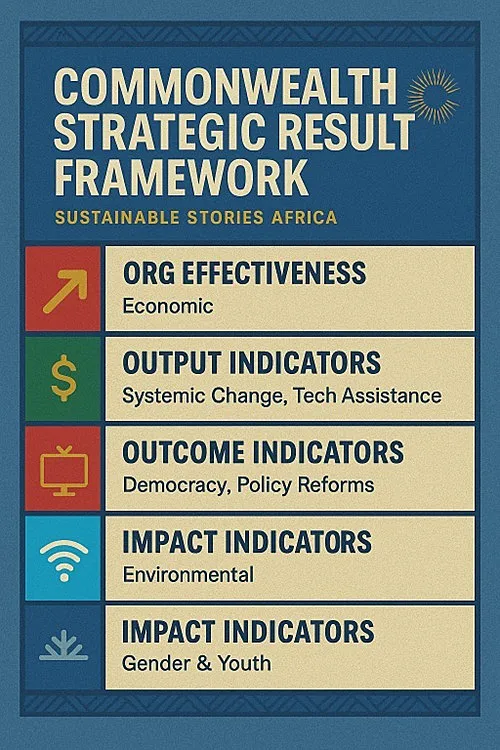
The Commonwealth's results framework is a map for measurable, meaningful change. Testing every plan against data and stakeholder needs.
Its step-by-step approach to impact, outcomes, outputs, and internal reforms sets a new benchmark for international accountability.
With MEL cycles and risk management in place, progress will be seen and felt on the ground.
It is not just about a better Secretariat. It is about ensuring transparency, trust, relevance, and real-world results for every Commonwealth citizen.