Green finance is no longer just about funding solar panels or issuing green bonds. It is increasingly seen as a powerful bridge between environmental protection and economic inclusion.
As countries struggle with inequality, climate risks, and financing gaps, green finance offers a pathway to link sustainability with jobs, income, and social progress, especially in developing economies.
Green finance, inclusive growth, sustainable futures
The global economy is facing a dual crisis: rising inequality and accelerating environmental degradation. While economic growth has lifted millions out of poverty, it has also intensified resource depletion, climate risks, and social exclusion.
Traditional development models, built on linear "take-make-waste" systems, are struggling to deliver long-term prosperity for both people and the planet.
The United Nations' Sustainable Development Goals (SDGs) were designed as a shared roadmap to address these challenges. However, progress has been uneven. Climate shocks, financing shortfalls, and persistent inequality continue to slow momentum, particularly in developing regions.
Against this backdrop, green finance has emerged as more than a climate tool. It is increasingly viewed as a bridge between environmental action and economic inclusion, which can mobilise capital, creating jobs, expanding financial access, and accelerating SDG delivery.
The question is no longer whether green finance matters, but how effectively it can reshape growth to include those historically left behind.
Green finance meets global inequality challenge
The world's biggest economic challenge in the 21st century is no longer just growth. It is balanced growth. Rising inequality, environmental stress, and climate instability have exposed the limits of traditional development models.
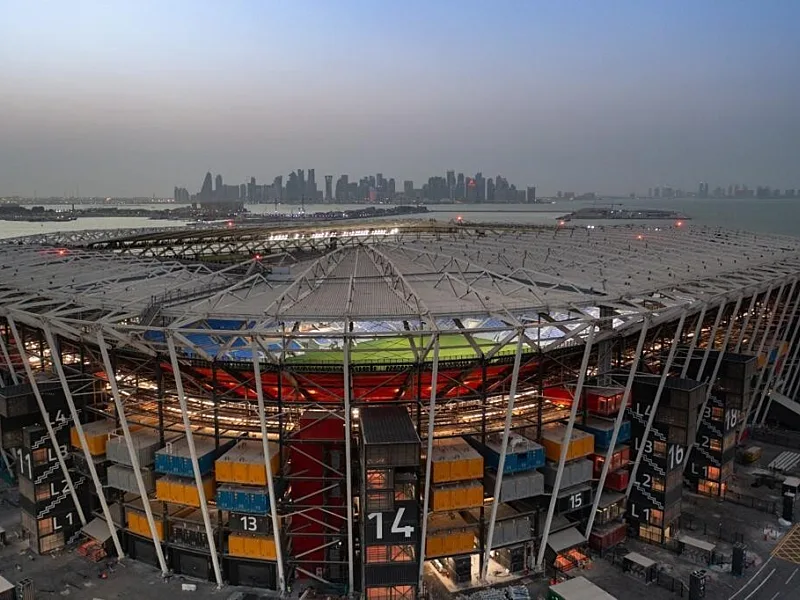
Green finance has emerged as a response to this imbalance. It channels capital into projects that protect ecosystems, reduce emissions, and support sustainable infrastructure.
However, its real power lies in its ability to link climate action with economic inclusion.
According to the research, green finance can serve as a "bridge" between two extremes: investors seeking sustainable returns, and communities seeking access to jobs, income, and opportunity.
When aligned with the SDGs, it becomes a tool for long-term, regenerative growth rather than short-term extraction.
How green finance drives economic inclusion
Green finance refers to financial products, services, and investments that support environmentally sustainable and socially responsible activities.
This includes green bonds, green loans, climate finance, sustainability-linked loans, impact investing, and ESG-aligned funds.
What makes green finance different is not just what it funds, but who benefits.
The research highlights several ways green finance can promote economic inclusion:
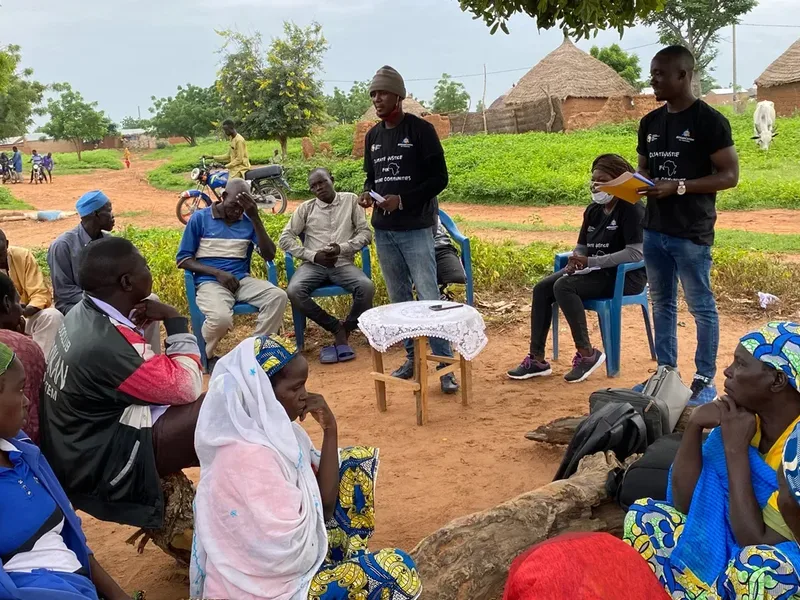
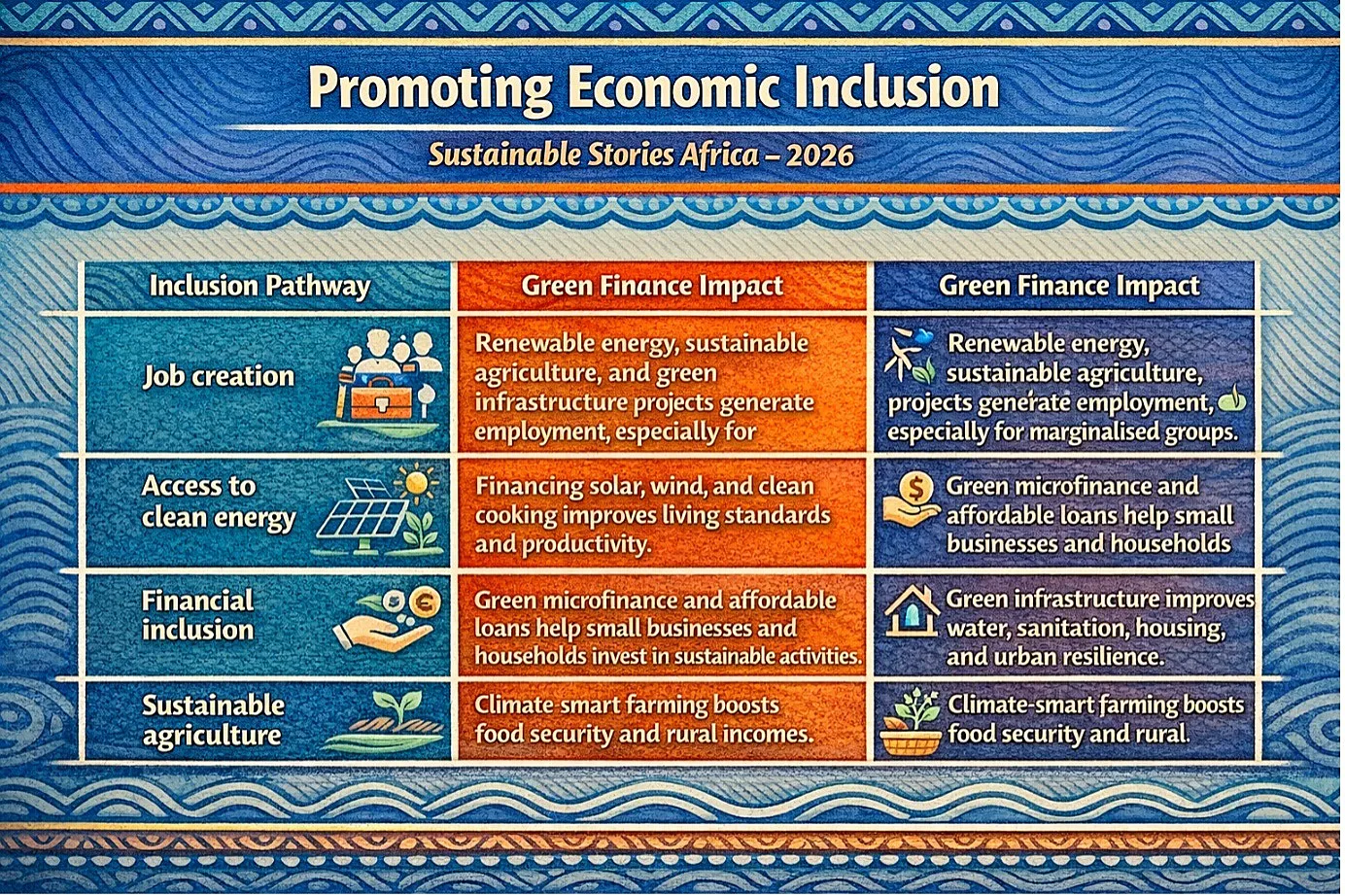
Promoting Economic Inclusion
| Inclusion Pathway | Green Finance Impact |
|---|---|
| Job creation | Renewable energy, sustainable agriculture, and green infrastructure projects generate employment, especially for marginalised groups. |
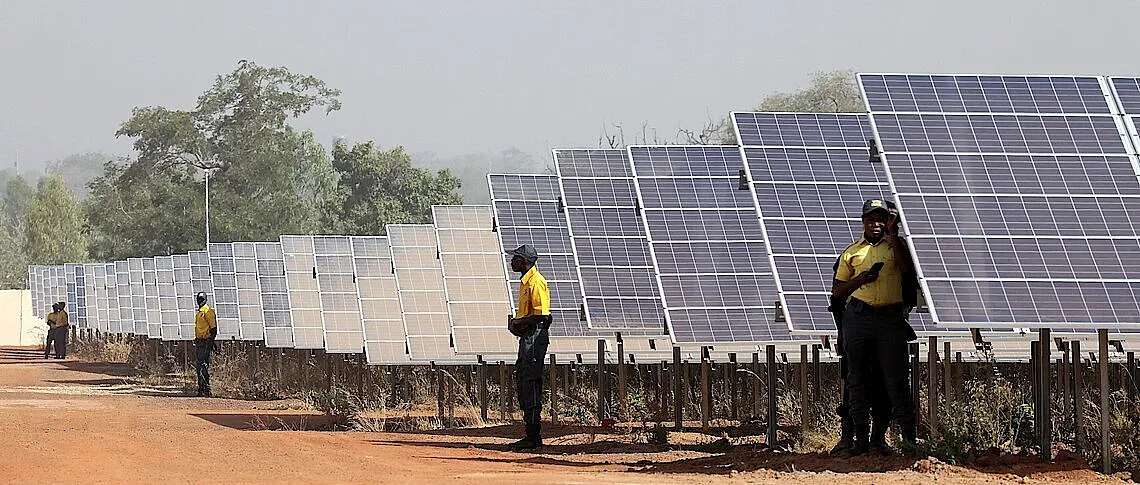
| Access to clean energy | Financing solar, wind, and clean cooking improves living standards and productivity. |
| Financial inclusion | Green microfinance and affordable loans help small businesses and households invest in sustainable activities. |
| Community development | Green infrastructure improves water, sanitation, housing, and urban resilience. |
| Sustainable agriculture | Climate-smart farming boosts food security and rural incomes. |
Unlike conventional finance, green finance prioritises long-term value, linking environmental protection with social outcomes.
It aligns closely with inclusive growth, where people are involved in the growth process, not just its rewards.
Why green finance matters for SDGs
The SDGs aim to address poverty, inequality, climate change, and environmental degradation simultaneously. Green finance strengthens this agenda by mobilising capital toward projects that deliver economic, social, and environmental benefits.
The research identifies strong links between green finance and key SDGs:
- SDG 7 – Clean Energy: Renewable investments expand access to affordable energy.
- SDG 8 – Decent Work: Green sectors create jobs and support inclusive growth.
- SDG 9 – Innovation & Infrastructure: Green technologies modernise industries.
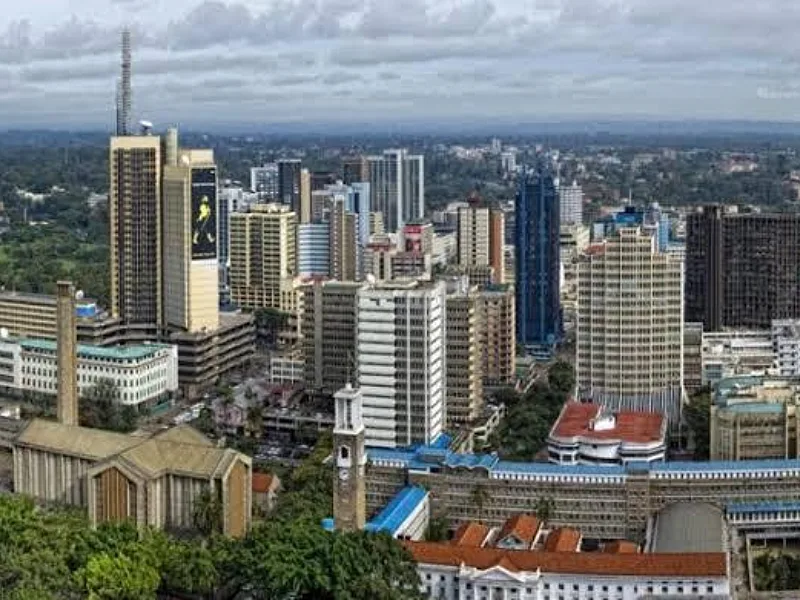
- SDG 11 – Sustainable Cities: Climate-resilient urban projects improve living conditions.
- SDG 12 – Responsible Consumption: Circular economy investments reduce waste.
- SDG 13 – Climate Action: Financing emissions reduction and adaptation projects.
Despite rapid growth in green bonds – from about $93bn in 2016 to nearly $1 trillion in 2025, green finance still represents only a small share of global capital flows.
A major financing gap remains, especially for nature-based solutions and climate adaptation.
This gap reflects regulatory hurdles, risk perceptions, limited project pipelines, and weak institutional capacity in many developing countries.
Bridging finance, communities, and climate
To unlock the full potential of green finance for economic inclusion, several actions are needed:
- Strengthen green financial systems – Green banks, climate funds, and sustainable finance frameworks can lower the cost of capital for clean projects and attract private investment.
- Mobilise institutional investors – Pension funds and insurers hold long-term capital well-suited for green infrastructure and climate projects.
- Expand green financial products – Microfinance, green loans, and inclusive investment funds can reach underserved communities.
- Leverage FinTech and digital finance – Digital platforms and blockchain can improve access, transparency, and efficiency.
- Support policy alignment – Governments must align climate, financial, and development policies to reduce risk and crowd in capital.
Green finance works best when it supports employment-intensive, community-based projects such as renewable energy, sustainable agriculture, waste management, and water systems that directly improve livelihoods.
The goal is not just environmental protection, but shared prosperity.
PATH FORWARD – Building inclusive green financial ecosystems
Green finance, economic inclusion, and the SDGs form a powerful triangle. The SDGs define the destination, inclusive growth defines the outcome, and green finance provides the bridge.
For developing economies, the challenge is turning climate ambition into bankable, inclusive projects. With the right policies, institutions, and partnerships, green finance can help deliver cleaner growth, broader opportunity, and more resilient societies.
The future of sustainable development depends not just on how green our investments are, but on how inclusive they become.