Nigeria's climate innovation landscape is undergoing a seismic shift, and Kaltani is positioning itself at the heart of this transition. In this exclusive Sustainable Stories Africa interview with Engr. Obi Charles Nnanna, the founder and CEO of KALTANI, the waste-to-value company, outlines how biochar production, verified plastic credits, and smart M&E systems are reshaping waste economics in Abia State and beyond.
From GPS-tracked collection to job-creating recycling hubs, Kaltani argues that African climate action must be locally engineered, economically inclusive, and globally benchmarked.
Turning Africa's Waste into Wealth
Nigeria's waste economy is changing rapidly, but few companies embody this transition with the level of operational clarity and climate ambition that Kaltani now projects.
In a continent where waste management systems are often fragmented, Engr. Obi Charles Nnanna noted that the company's waste-to-biochar and verified plastic credit model is emerging as both a climate breakthrough and a scalable economic solution.
Across Abia State, where more than five million residents require daily waste services, Kaltani has begun rolling out a decentralised system rooted in digital verification, community-level inclusion, and real-time environmental reporting. The company's interview answers reveal a strategy engineered for scale, prioritising transparency, measurable impact, and job creation at every stage.
This is not merely a recycling project. It is a structural shift: a model seeking to transform African waste into durable climate assets while creating new micro-economies for farmers, youth, women, and MSMEs.
A New Waste Economy Emerges in Abia
When Kaltani received its Letter of No Objection from the Nigerian Climate Change Secretariat, the signal was clear: climate-positive waste management is entering a new chapter in Nigeria.
But the company's operational strategy reveals a bigger story: one where waste becomes a bankable climate asset through biochar production, verified plastic credits, and digitised traceability systems.
According to Engr. Obi Charles Nnanna, Katlani, converts organic waste into biochar "that sequesters carbon for up to a thousand years," while "mechanically recycling plastics into verified plastic credits" for global markets.
The ambition is both commercial and environmental: create permanent carbon storage, reduce pollution, and generate new revenue streams for state governments and local communities.
Inside Kaltani's Climate-Positive Operating Model
Kaltani's Abia State concession is its live test case. A full-scale ecosystem expected to service over five million residents, Engr. Obi Charles Nnanna said.
In the first 100 days, the company says it is mapping communities, training residents, deploying digital tracking, and optimising collection routes.
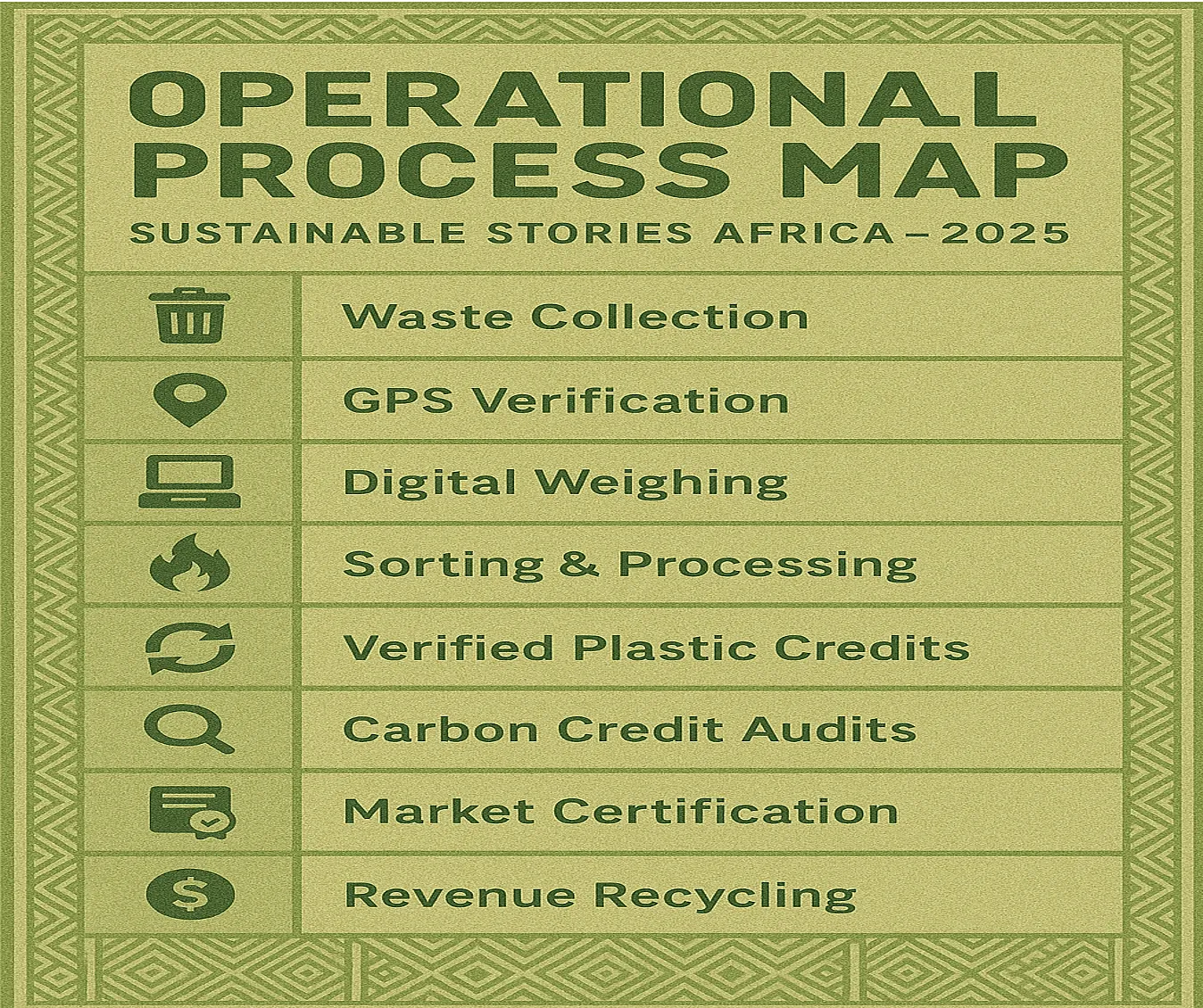
Operational Process Map
Monitoring, Reporting & Verification (MRV) System
Engr. Obi Charles Nnanna ascribed this to Kaltani embedding a "robust MRV system" enabling every kilogram of waste to be digitally verified from door-to-door pickup to processing centres. The model includes:
- GPS-enabled verification
- Digital load tracking
- Independent audits of carbon and plastic credits
- Traceability dashboards for regulators
Environmental & Social Standards
Kaltani reports adoption of:
- ISO 14001 – Environmental management
- ISO 45001 – Worker health & safety
- Transparent community engagement frameworks
This ensures global compliance while strengthening local trust.
Who Gains When Waste Becomes Climate Capital?
The social and economic upside is one of the interview's strongest threads. Engr. Obi Charles Nnanna projects that its Abia model will generate:
- Hundreds of new jobs across collection, recycling, and processing.
- MSME participation in logistics, aggregation, and community sensitisation.
- Improved soil quality through biochar redistribution to farmers.
- New revenue streams for state and local governments.
- Climate resilience benefits through reduced pollution and durable carbon storage.
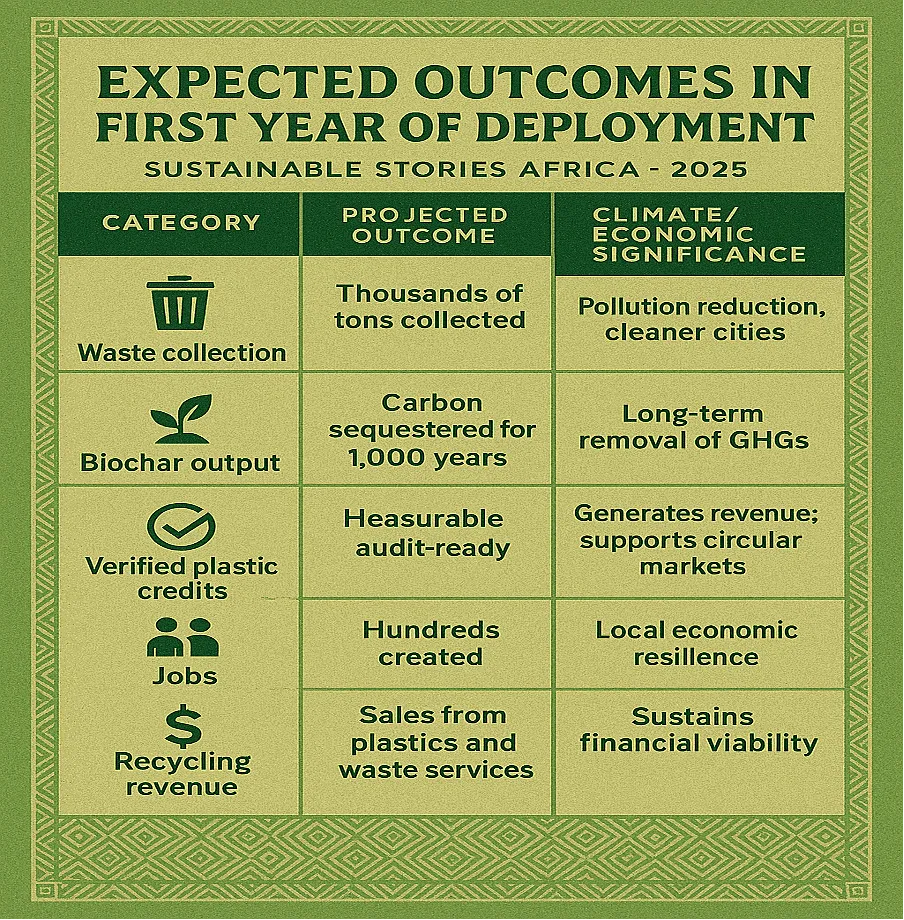
Expected Outcomes in First Year of Deployment
| Category | Projected Outcome | Climate/Economic Significance |
|---|---|---|
| Waste Collection | Thousands of tons collected | Pollution reduction, cleaner cities |
| Biochar Output | Carbon sequestered for 1,000 years | Long-term removal of GHGs |
| Verified Plastic Credits | Measurable, audit-ready | Generates revenue; supports circular markets |
| Jobs | "Hundreds created" | Local economic resilience |
| Recycling Revenue | Sales from plastics and waste services | Sustains financial viability |
Biochar as a Dual Benefit
Engr. Obi Charles Nnanna emphasises that biochar not only locks carbon permanently but enhances soil fertility, water retention, and crop productivity, improving farmer incomes while supporting climate adaptation.
This dual environmental–economic benefit positions biochar as a transformational asset for food systems.
Building Africa's Next Waste-to-Wealth Frontier
Engr. Obi Charles Nnanna Kaltani's model is deliberately engineered for replication. He acknowledges that delays in state-led waste concessions are common, but argues that pre-deployed infrastructure, digital project management, and workforce training reduce risk and accelerate implementation.
Africa-Wide Expansion Strategy
Engr. Obi Charles Nnanna outlines an ambitious market expansion roadmap:
- Replicate the model across Nigerian states facing similar waste challenges
- Extend to African markets where carbon sequestration and plastic recycling hold strong value
- Build a network of climate-positive waste infrastructure across the continent
He frames this as a generational opportunity: turn African waste into scalable climate capital, create green jobs, and decarbonise communities without relying exclusively on external technologies.
PATH FORWARD – Scaling Climate Assets Across African Markets
Engr. Obi Charles Nnanna noted that the way forward is clear: digitised waste-to-value systems must become integral to Africa's climate and economic planning.
Kaltani's model, rooted in MRV transparency, job creation, and carbon permanence, offers a replicable template for state governments and climate financiers.
From Abia to broader African markets, the priorities remain the same: streamline concession execution, embed traceability, scale biochar production, unlock carbon finance, and empower communities through sustainable, circular-economy participation.