Africa's development debate often separates energy access, climate action, and food security. Foresight Africa 2025–2030 argues that this separation is precisely the problem. With five years left to meet the SDGs, the continent's success hinges on integrated systems that deliver power, resilience, and livelihoods simultaneously.
Five Years To Secure Survival Systems
Africa enters the final stretch to 2030, facing overlapping crises that no longer move in isolation. Energy poverty constrains growth, climate shocks erode livelihoods, and food insecurity undermines social stability.
Together, they form what Foresight Africa 2025–2030 describes as a systems challenge, not a sectoral one.
Pages 168–194 of the report shift the lens decisively toward climate, energy, and food systems, arguing that Africa's development trajectory will now be shaped by how well it adapts to climate risk while expanding access to power and nutrition.
The report's central message is blunt: incremental progress is no longer sufficient. Without integrated action, climate stress will overwhelm gains elsewhere, pushing millions back into poverty even where growth persists.
Africa Is on the Front Line
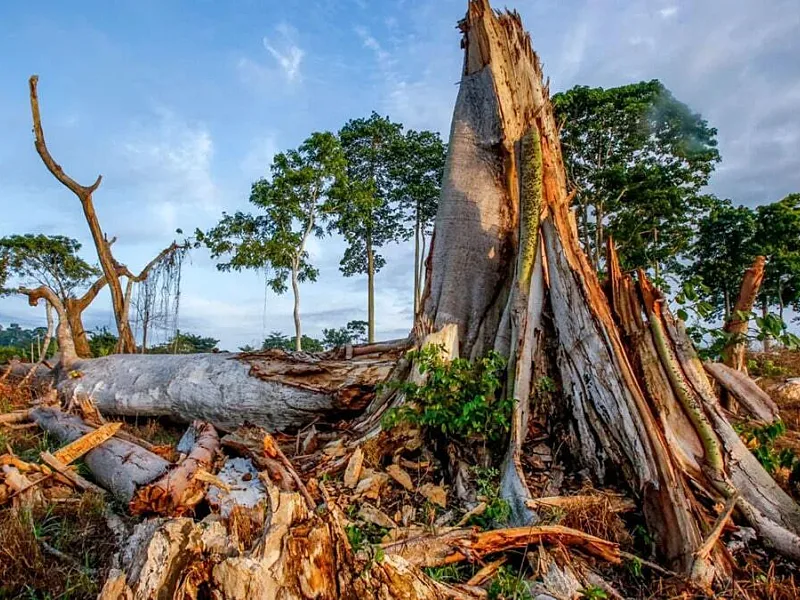
Africa contributes less than 4% of global greenhouse gas emissions; however, it is the region which is most exposed to climate challenges globally. By 2050, nearly 900 million Africans would face severe climate hazards, including droughts, floods, and extreme heat.
These shocks are already translating into real economic costs. Agricultural yields are falling in climate-exposed regions, hydropower output is becoming more volatile, and urban heat stress is rising rapidly. At the same time, over 600 million Africans still lack access to electricity, thereby limiting adaptation, productivity, and service delivery.
The report warns that treating climate as an environmental issue rather than a development one risks locking Africa into a cycle of fragility.
Why Energy, Climate, and Food Are Inseparable
Energy access as adaptation infrastructure
Energy is not just a growth input; it is a resilience tool. Reliable electricity enables irrigation, cold storage, healthcare, early-warning systems, and digital services. However, Africa's energy gap remains vast, and investment continues to fall short of global needs.
Foresight Africa argues that the energy transition in Africa must be development-first, expanding access while reducing the intensity of emissions. Rigid pathways that prioritise mitigation over access risk are slowing poverty reduction.
Food systems under climate stress
Agriculture employs a large share of Africa's workforce and underpins food security, yet it is highly climate-sensitive. Recurrent droughts and floods are already driving up food prices and malnutrition.
The report highlights climate-smart agriculture, irrigation, resilient seed systems, and regional food trade as urgent priorities. Without them, climate volatility will continue to translate directly into hunger and fiscal pressure.
Adaptation finance: the missing pilla
Despite Africa's vulnerability, adaptation finance remains a fraction of total climate flows. The report notes that most global climate finance still targets mitigation, even though adaptation yields some of the highest social returns in African contexts.
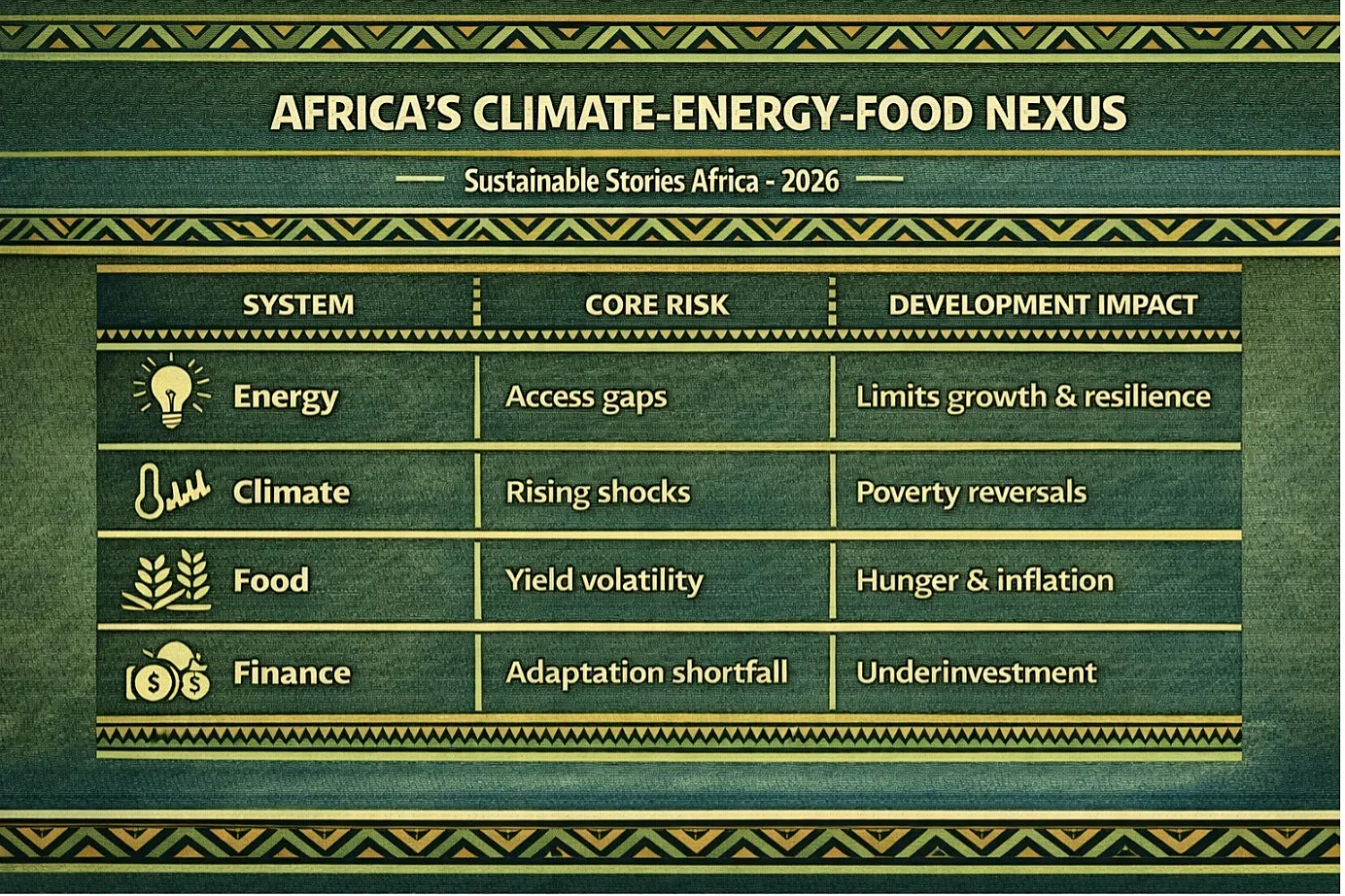
Africa's Climate-Energy-Food Nexus
| System | Core Risk | Development Impact |
|---|---|---|
| Energy | Access gaps | Limits growth & resilience |
| Climate | Rising shocks | Poverty reversals |
| Food | Yield volatility | Hunger & inflation |
| Finance | Adaptation shortfall | Underinvestment |
What Integrated Action Could Unlock
The report is cautiously optimistic. Africa is not short of opportunity; it is short of coordination.
Well-designed investments can deliver triple dividends: jobs, resilience, and emissions reduction. Renewable energy mini-grids can power agro-processing. Climate-resilient transport can stabilise food markets. Urban cooling, green spaces, and efficient buildings can protect health while reducing energy demand.
The report identifies green manufacturing, climate-resilient infrastructure, and sustainable agriculture as sectors capable of generating hundreds of thousands of jobs while strengthening adaptation.
Crucially, it stresses that Africa's climate response must not replicate past extractive models. Local value creation, skills development, and institutional capacity are central to durable outcomes.
What Must Change Now
Foresight Africa sets out a clear agenda for the next five years.
Governments are urged to integrate climate risk into fiscal planning, infrastructure investment, and energy policy, treating adaptation as core economic policy, not emergency response.
Development partners and financiers are called to rebalance portfolios toward adaptation, simplify access to funds, and support project preparation capacity so African countries can move from plans to bankable pipelines.
The private sector is positioned as a key delivery partner, particularly in renewables, agri-processing, logistics, and climate services—provided policy frameworks are predictable and risks are shared.
Without these shifts, the report warns, Africa will remain trapped in a cycle of reactive spending rather than proactive resilience.
Path Forward – Resilience Before the Window Closes
Africa's development future will be decided by how it manages climate risk while expanding energy and food systems.
Integrated action linking power, adaptation, and agriculture can protect livelihoods and unlock growth. With five years left, resilience is no longer optional. It is the foundation on which every other development ambition now rests.