Eight decades after the United Nations (UN's) birth, the promise of shared progress is colliding with a harsher reality of fragmentation, climate anxiety, and fraying trust.
However, the story is not simply one of drift and decline. From small island nations on the climate frontlines to young people demanding fairer economies, a new multilateralism is quietly taking shape, messier, more contested, but perhaps more honest about what it will take to leave no one behind.
Multilateralism's Make‑Or‑Break Decade Ahead
The United Nations turned 80 in 2025, navigating a huge paradox: never has the case for collective action been clearer; however, multilateralism has seldom felt more fragile.
The UN's own stocktake of "eight decades of progress towards sustainable development for all" reads like both a victory lap and a warning flare for a world that could still squander hard‑won gains.
At the heart of this reckoning is a shift from tackling economic, social and environmental (ESG) issues as separate tracks to understanding them as a combined system, codified in the 2030 Agenda and its 17 Sustainable Development Goals (SDGs), which binds rich and poor countries to the same universal, integrated framework.
The message is blunt: if the world retreats into national silos now, it will miss the SDGs, whilst undermining peace, trust and intergenerational fairness for decades to come.
The United Nations turn
The UN's anniversary report opens with a stark message: this decade's choice isn't between ambition and realism; it is between moving forward together or falling apart.
For decades, the UN has been the stage where nations debated, compromised, and set norms that reshaped economies and societies.
That multilateral spirit is now fraying, replaced by short-term deals and political drift. The report makes a renewed case for sustainable development, not just as a moral imperative, but as an economic one that builds trust, resilience, and shared prosperity.
How Multilateralism Actually Shifted Reality
Beneath the UN's ceremonial language lies a concrete record of how global rules, data and diplomacy have changed lives, from vaccines and schools to ozone recovery and poverty reduction.
The arc runs from growth‑obsessed "Development Decades" to a more sober understanding that without equity, rights and planetary health, growth alone can deepen vulnerability rather than resolve it.
Key Multilateral Turning Points
| Milestone moment (decade) | What changed in practice | Why it still matters now |
|---|---|---|
| 1960s–1970s Development Decades | Set growth targets and created UNDP, UNICEF and WFP to turn mandates into operational support on the ground. | Showed that multilateral institutions can move money, ideas and technical help at scale, not just produce resolutions. |
| 1990s Conference decade | Rio, Cairo, Copenhagen and Beijing reframed development around sustainable development, rights, gender equality and social inclusion. | Locked in people‑centred norms that still underpin debates on care economies, social protection and gender justice. |
| 2000–2015 MDG era | Time‑bound goals helped drive down extreme poverty and child mortality while sharpening data systems and accountability. | Proved that clear global targets, backed by monitoring, can focus attention and resources—even if inequality and environment were underplayed. |
| 2015 2030 Agenda and Paris | SDGs integrated economic, social, environmental and governance goals; the Paris Agreement set a universal climate framework. | Established that no country is "finished" with development and that climate, inequality and institutions must be tackled together. |
| 2002–2025 Financing for Development | From Monterrey to Addis and Sevilla, financing frameworks expanded beyond aid to taxes, debt, trade and private capital. | Acknowledged that without systemic reform of finance and tax rules, the SDGs and climate goals will remain unfunded promises. |
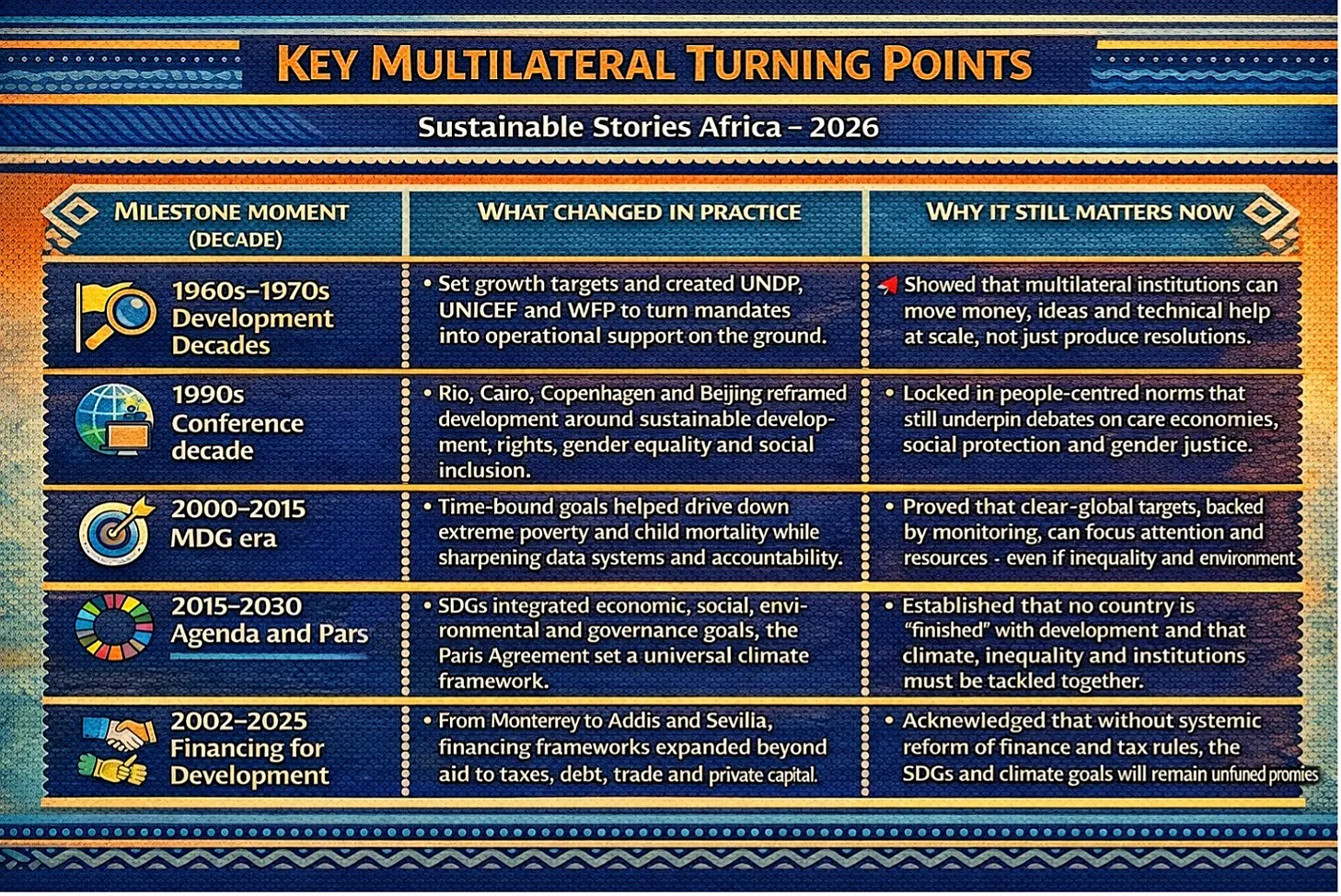
Behind every UN milestone is an engine of analysis, economic forecasts, identifying risks before crises, showing visible early warning signals on inequality, and relating trust to governance, helping turn global ideals like sustainability and inclusion into tangible policy changes.
Why Shared Rules Still Beat Fragmentation
If multilateralism feels beleaguered, it is partly because it has raised expectations: communities now measure progress not just in GDP, but in dignity, inclusion and a liveable climate.
The report distils eight decades of experience into five core lessons, each pointing to what could be gained, not only avoided, if states double down on cooperation rather than walk away.
Lessons That Could Rebuild Confidence
Collective action multiplies impact: Integrated responses to climate, health, debt and inequality are more cost‑effective than piecemeal efforts, especially where policies intentionally leverage synergies between SDGs, such as clean energy that boosts health, jobs and resilience at once.
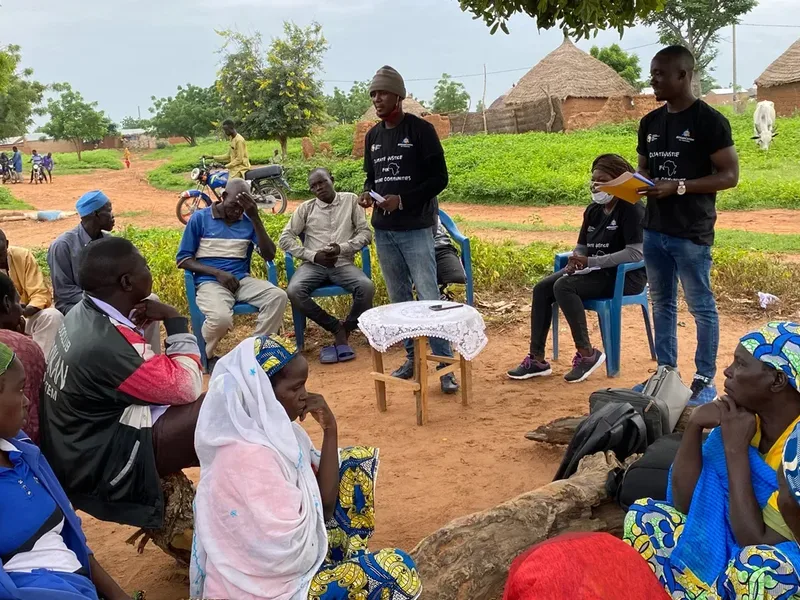
Inclusive multilateralism is non‑negotiable: Small island states, least developed countries and landlocked economies fought for recognition because generic models were failing them; today's agendas for SIDS, LLDCs and LDCs show that differentiated support can be codified into global compacts.
Norms and frameworks catalyse change: From CEDAW and the CRPD to the Global Compacts on migration and refugees, UN norms have become rallying points for civil society and youth movements pushing for fairer, more rights-based national policies.
Adaptation and innovation keep institutions relevant: Efforts like UN 2.0 and the UN80 initiative aim to modernise data, embrace digital governance and rethink how multilateral bodies operate in an era of platforms, misinformation and contested narratives.
Intergenerational equity is the real bottom line: The Pact for the Future and youth‑led campaigns insist that today's choices on climate, debt and biodiversity must be judged by their impact on people who are not yet voting but will be living with the consequences.
In that light, the current push for a global tax convention under UN auspices is not just a technocratic fix. It is a test of whether the rules of the global economy can be rewritten to give developing countries a fair shot at mobilising the revenues they need for their own just transitions.
Roadmap For The Next Eighty Years
The anniversary report leans toward a quiet but forceful call to action: to save multilateralism, its defenders must make it perform faster, fairer and closer to people's daily realities.
Snapshot Of "Advancing Together"
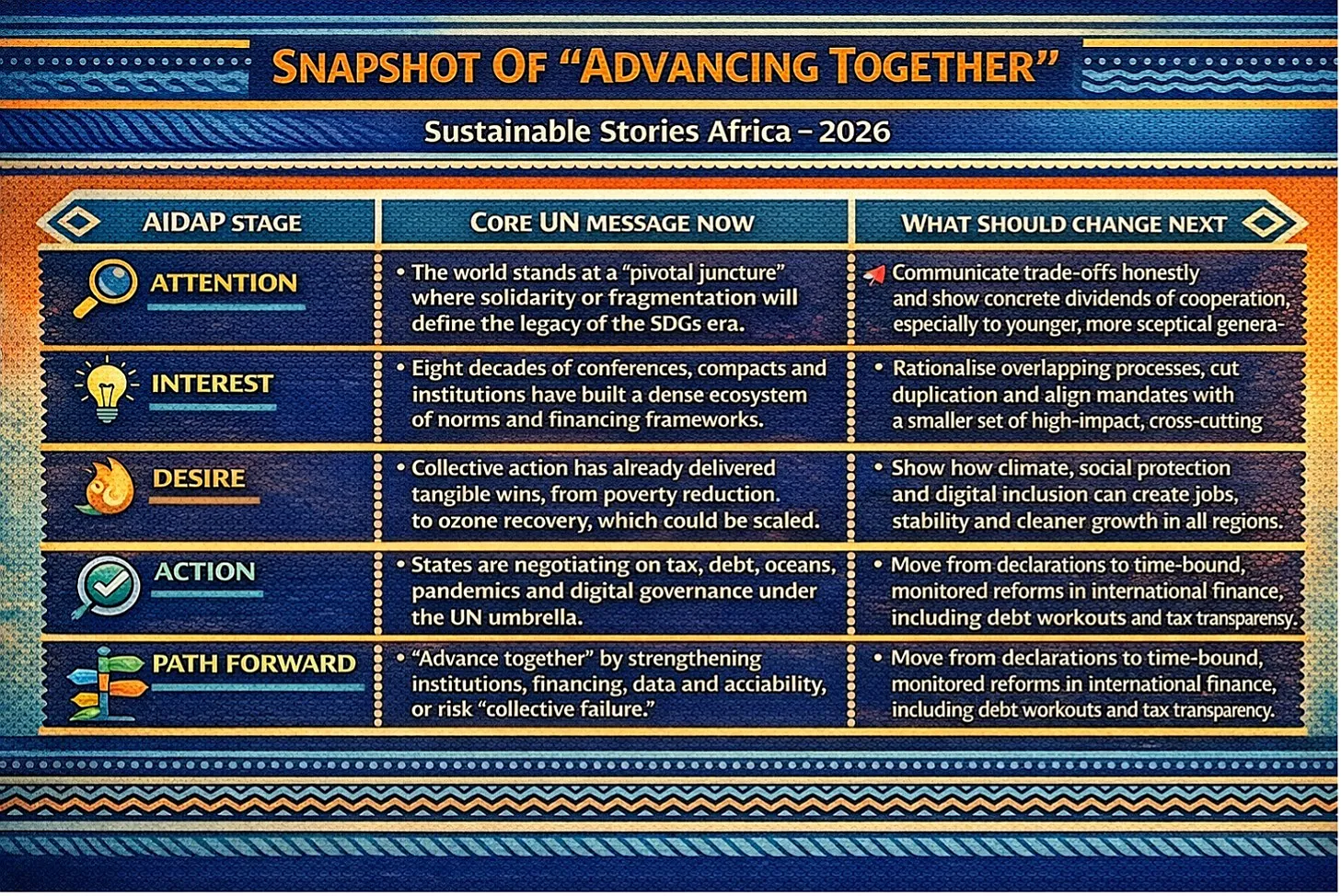
The report is clear that success will depend on more than resolutions. It calls for predictable financing, stronger analytical capacity, and domestic institutions able to translate lofty commitments into grounded local change—from city‑level SDG plans to inclusive social compacts that rebuild trust between citizens and the state.
Path Forward – Shared Future, Shared Responsibility – Building Trust, Reforming Rules, Delivering Results
Looking beyond 2030, the UN imagines a future where multilateralism endures not out of nostalgia, but because no nation can face cascading global risks alone.
Its vision rests on aligning finance with sustainable growth, narrowing digital divides, and regaining youth trust in global institutions.
Advancing Together is less a memoir than a call to choose fragmentation or renewal.
On its 80th anniversary, the UN asks for one last act of confidence, that reformed cooperation remains humanity's most pragmatic path to a livable future.